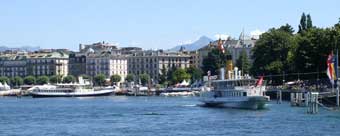
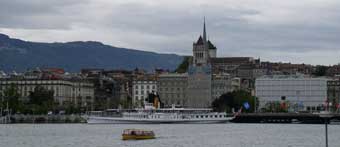
 With its quays lining the end of Lake Geneva (Lac Leman), with the Alps
and Jura mountains as a backdrop, Geneva is a beautiful city, rated at the
top of world cities for its quality of life.
With its quays lining the end of Lake Geneva (Lac Leman), with the Alps
and Jura mountains as a backdrop, Geneva is a beautiful city, rated at the
top of world cities for its quality of life. In addition to my international travels, I am trying to get to know more
and more of my country of adoption, Switzerland. The omnipresent mountains
give it a three-dimensionality and beauty that is hard to match. It is the
one country I have seen that looks like its postcards.
Switzerland is also a country of amazing diversity that is culturally
very enriching, not only with its German, French, Italian and Romanch
national languages and cultures, but also with people from around the
world. I was amazed to learn that it is the first country of Europe for
its level of immigration, well ahead of many countries where this has
become a political issue. 24% of the people living in Switzerland were
born somewhere else, and half of the foreigners in Switzerland are second
generation immigrants born here. Assimilation has in general worked well.
Geneva is really an international city, and its population has been about
30% immigrants for four hundred years. My own commune of Vernier
is about half foreigners, another quarter Swiss from other cantons, and
only a quarter Genevois. You can literally feel the diversity during the
European football cup. When the Portuguese make a goal, a roar rises in my
neighborhood and flags appear; then an Italian goal brings another roar,
etc. It is easy to feel at home here. On the Swiss National Day in 2010,
my municipality of Vernier chose Portugal as the guest of honour, with
Portuguese music and dancing, to celebrate its diversity, since more than
10% of its population is Portuguese. In 2012, the national day celebrated
Kosovo, from which one of the most recent waves of immigrants has come.
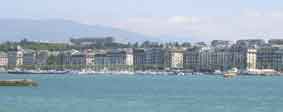
With its quays lining the end of Lake Geneva (Lac Leman), with the Alps
and Jura mountains as a backdrop, Geneva is a beautiful city, rated at the
top of world cities for its quality of life.
With my work with the United Nations and the international community, it is the perfect place to be.
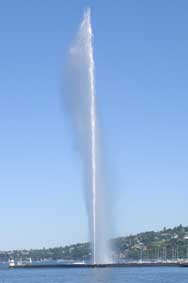
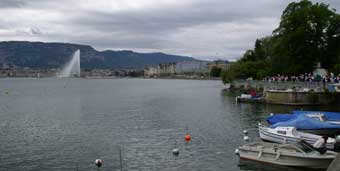
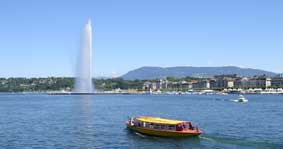
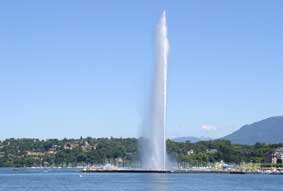
The Jet d'Eau in the lake has become a symbol of Geneva.
 .
. 
 .
. 
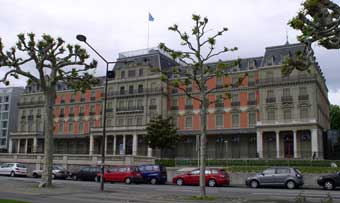 The Palais Wilson on the lakeside, was the first seat of the League of
Nations. It is now the Human Rights House occupied by the United Nations
High Commissioner for Human Rights. There had been plans to make it the
Environment House where I should have had my office, but with the move of
the Climate Change Convention to Bonn and the Biodiversity Convention to
Montreal, the Secretary General decided to use if for human rights, and the
Swiss Government purchased the present International Environment House in
Chatelaine, where I was one of the first to move in for UN Environment.
The Palais Wilson on the lakeside, was the first seat of the League of
Nations. It is now the Human Rights House occupied by the United Nations
High Commissioner for Human Rights. There had been plans to make it the
Environment House where I should have had my office, but with the move of
the Climate Change Convention to Bonn and the Biodiversity Convention to
Montreal, the Secretary General decided to use if for human rights, and the
Swiss Government purchased the present International Environment House in
Chatelaine, where I was one of the first to move in for UN Environment.
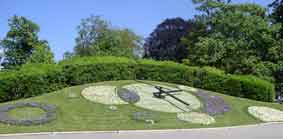 Clock in the English Park
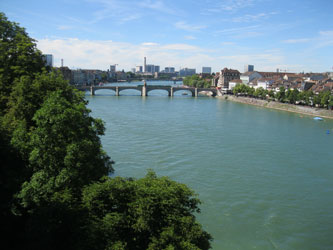
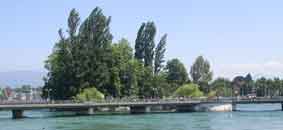 Rousseau Island in the Rhone River - Ile Rousseau dans le Rhone
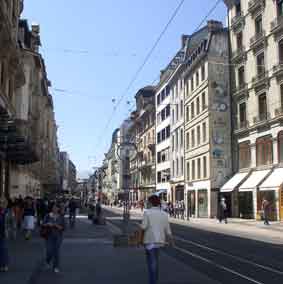 Rue du Rhone
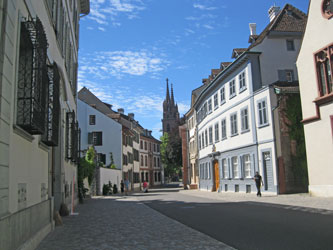
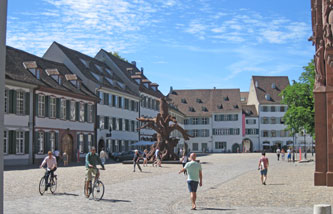
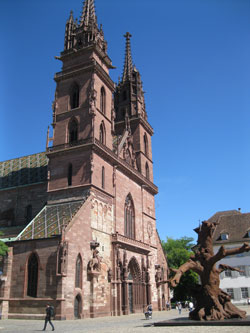
 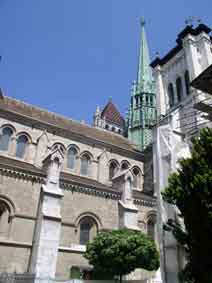 Cathedral
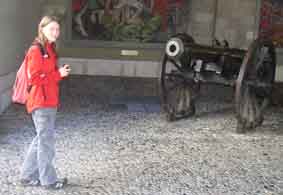
 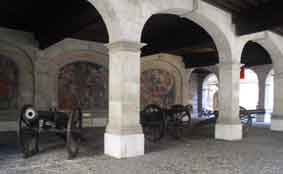 Armory
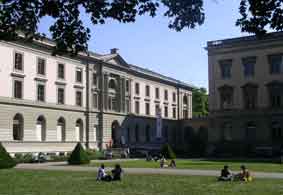 University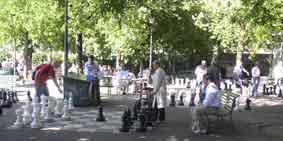
 .
. 
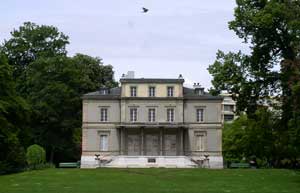
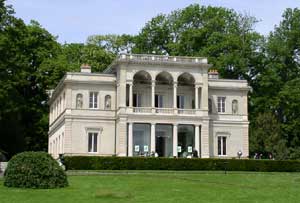
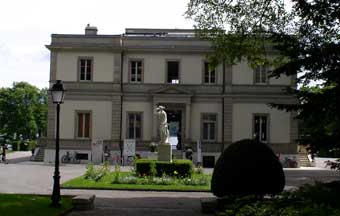
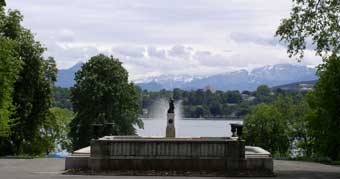
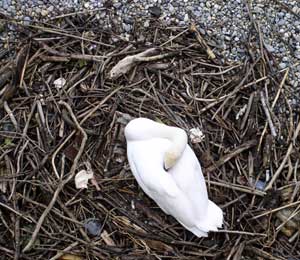
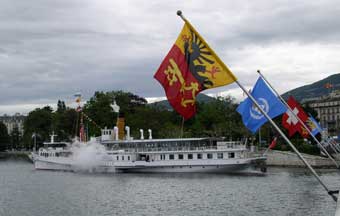
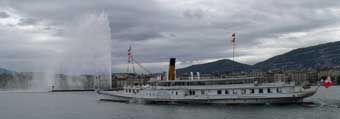
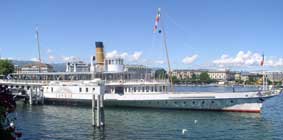 La Savoie
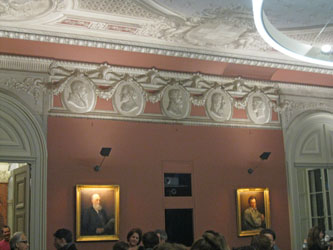
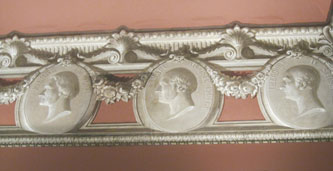
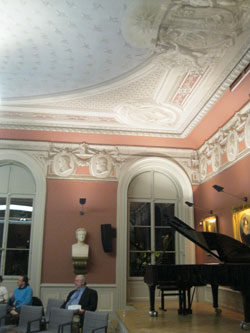
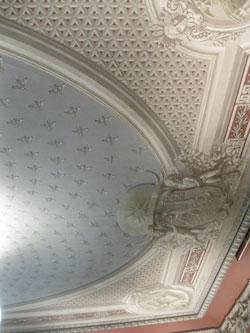
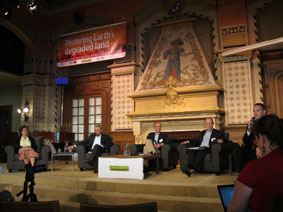
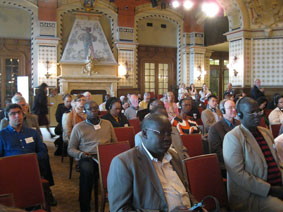
ebbf - Ethical Business Building the Future, Geneva, held its commemoration of the bicentenary of the birth of Bahá'u'lláh in 2017 in the beautiful Salle des Abeilles (room of the bees) in the Athenée, the elegant home of the Geneva Society of Arts (see separate page)
 .
. 
 .
.  .
. 
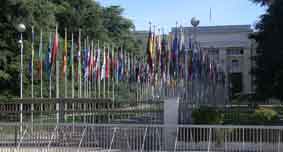
The Palais des Nations, built in the 1930s to be the seat of the League of Nations, helps make Geneva the most important world centre for intergovernmental conferences.
 .
. 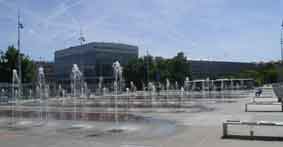
Palais from Place des Nations
Place des
Nations
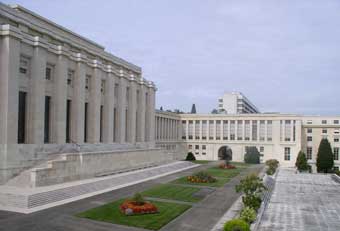
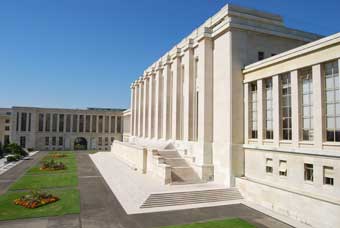
Palais des Nations facade towards the lake
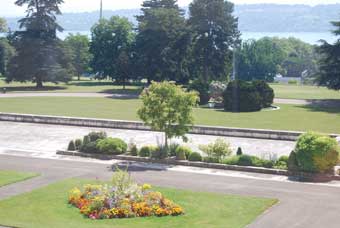
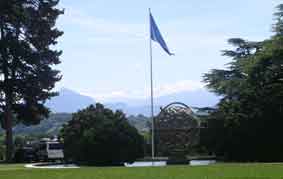
The Palais is set in beautiful gardens overlooking the lake and the Alps. On a clear day you can see Mont Blanc, the highest mountain in Europe, in the distance.
 .
. 
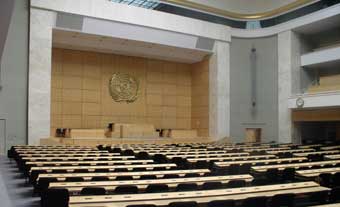
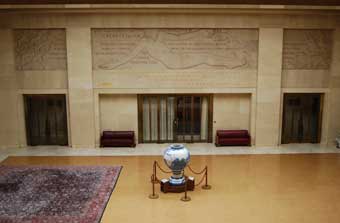
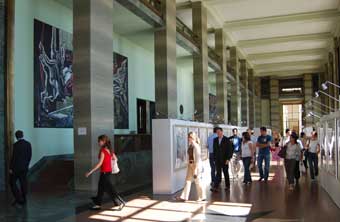
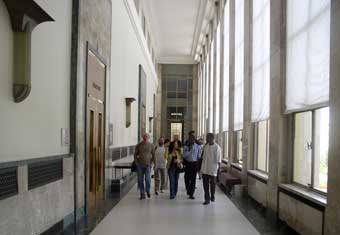
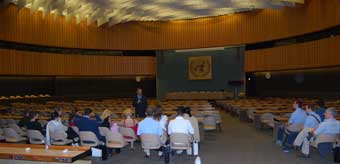 There are many conference rooms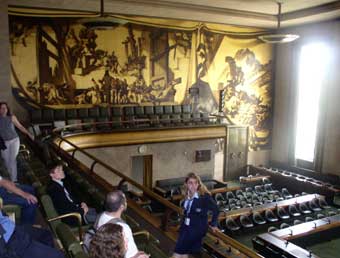
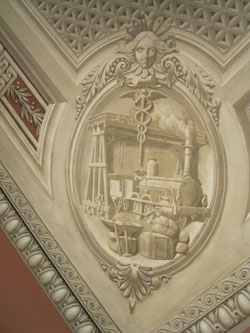
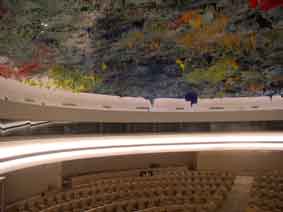
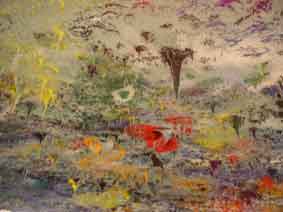
The Council Chamber is used for the most important diplomatic events. All the walls and even the ceiling are covered by murals symbolic of the roles of international diplomacy.
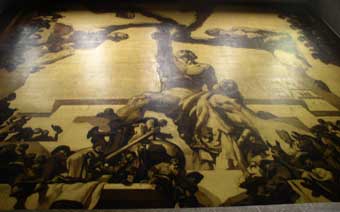
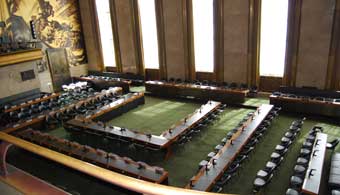
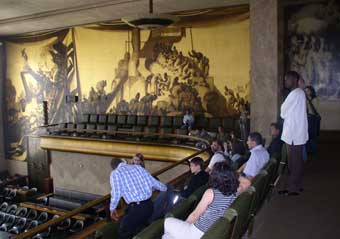
 .
. 
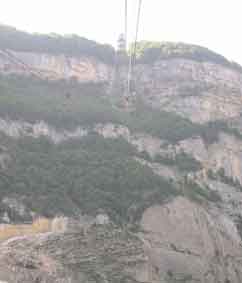
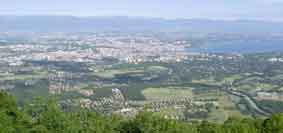
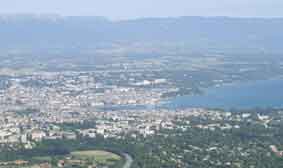
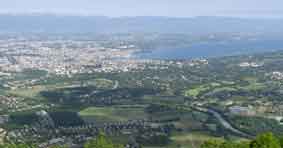
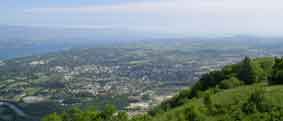
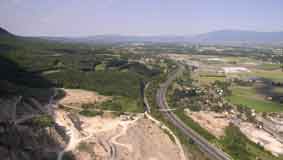
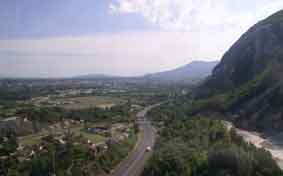
Geneva is dominated on the south-east by Mount Saleve, a favourite place for day outings. There is a telepherique (cable way) to the summit, with spectacular views over Geneva and its lake, and the Alps.
 .
. 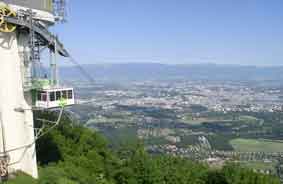 telepherique
Views of Geneva and the lake are spectacular
 .
. 
 .
. 
 .
. 
View southwest
View northeast
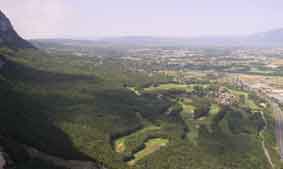 golf course
The lake empties into the Rhone River which flows through France to
the Mediterranean. The dam at Verbois is an important source of
hydroelectricity for Geneva, which obtains 100% of its electricity from
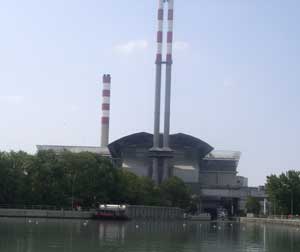
renewable sources. The river is also used to bring wastes to the big
incinerator where it is burned to the highest environmental standards to
produce electricity. At the same time, the natural ecology of the river
is respected and habitats for wildlife are being restored. Fish are able
to migrate up a fish ladder around the dam.
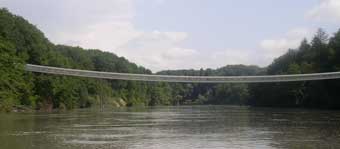
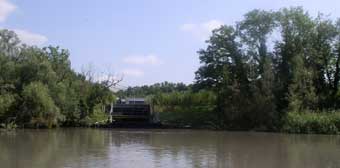
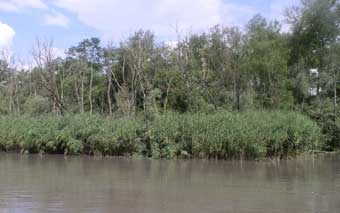 Natural
habitats like reed beds are being restored along the shores to provide
nesting places for birds. Rafts have been added to give the sterns a
safe place to nest away from predators. Shallow basins have been added
to provide a haven for fish when the dam below has to be emptied of its
accumulated sediment.
Natural
habitats like reed beds are being restored along the shores to provide
nesting places for birds. Rafts have been added to give the sterns a
safe place to nest away from predators. Shallow basins have been added
to provide a haven for fish when the dam below has to be emptied of its
accumulated sediment.
The waste incinerator is just above the dam
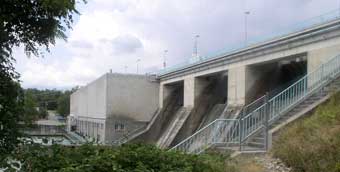
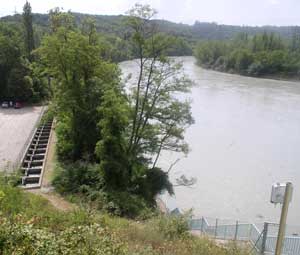
Verbois Dam and hydroelectric plant
Fish ladder
below the dam
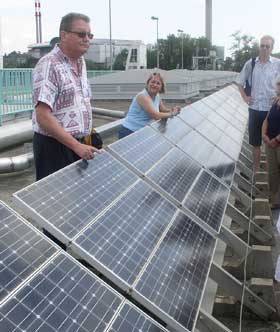
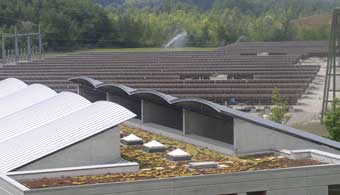
The electric utility is developing solar power. Renewable energy
sources provide all of the canton's electricity as of 2017.
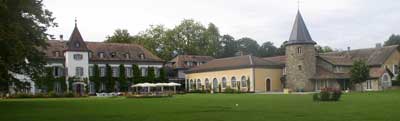
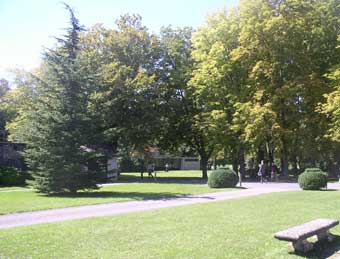
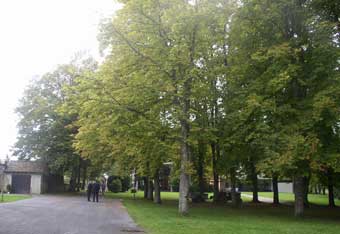
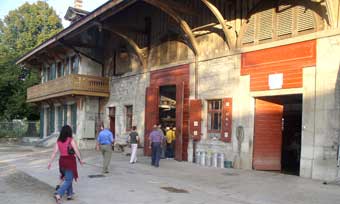
The Chateau de Bossey in the countryside north of Geneva above the lake is now an Ecumenical Centre belonging to the World Council of Churches and the University of Geneva. The courses in Environmental Diplomacy that I coordinated for 5 years were held in this beautiful setting.
 .
. 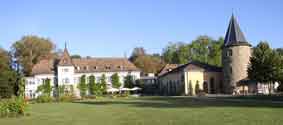
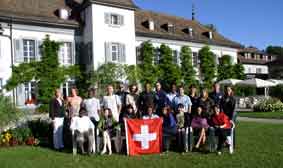
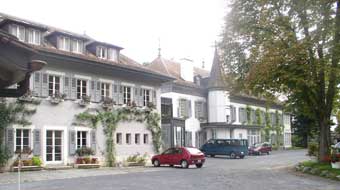
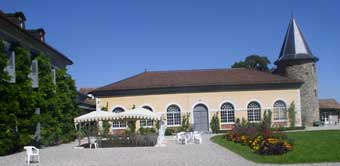
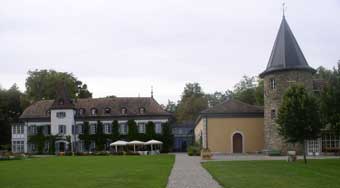
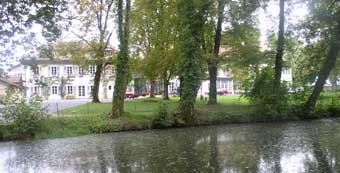
The Chateau is set in beautiful gardens with a view over the lake to the Alps beyond, including Mont Blanc
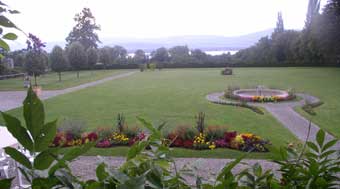
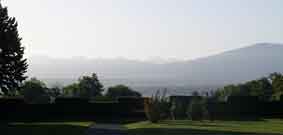 view in different light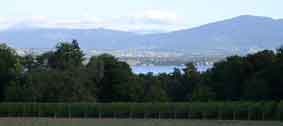
 Below
the chateau is a traditional Swiss farm producing milk and wine.
Below
the chateau is a traditional Swiss farm producing milk and wine.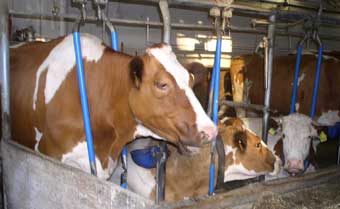
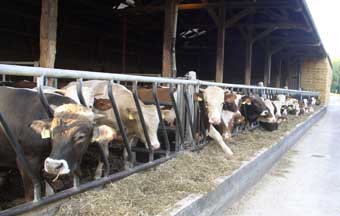 Cows are after all a symbol of Switzerland, which has maintained its rural
traditions in harmony with its advanced state of development.
Cows are after all a symbol of Switzerland, which has maintained its rural
traditions in harmony with its advanced state of development.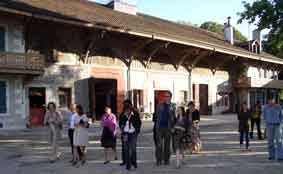 Belle Ferme
August 1 is the national holiday, commemorating more than 700 years of the Swiss nation. It is a time to listen to speeches, blow alp horns, toss flags, parade with cow bells, light bonfires, and celebrate all things Swiss.
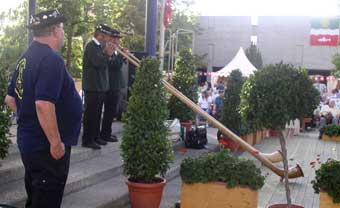
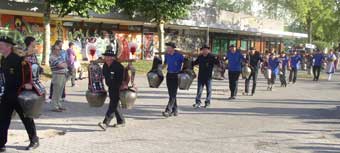
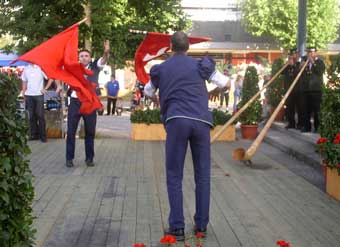
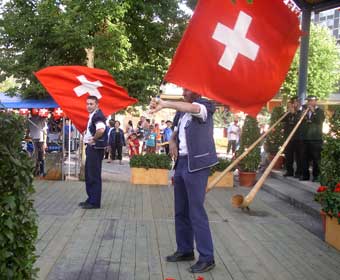
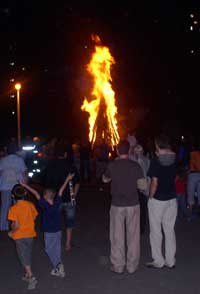 The celibration ends with a traditional bonfire and fireworks displays
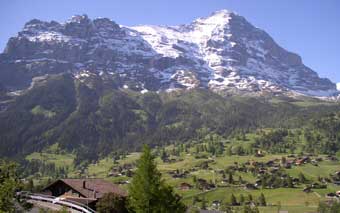
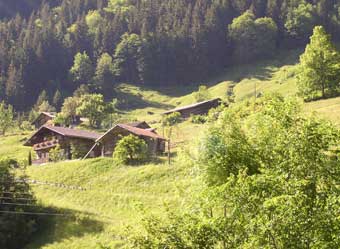
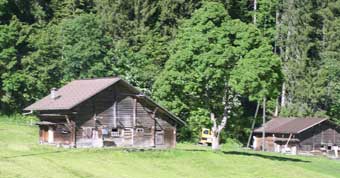
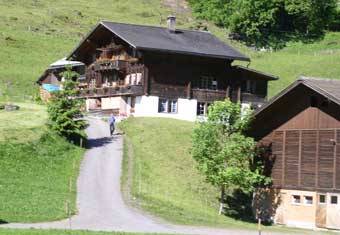
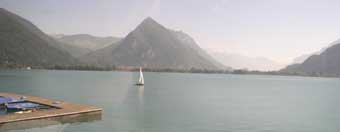
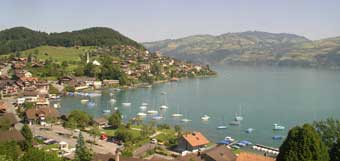
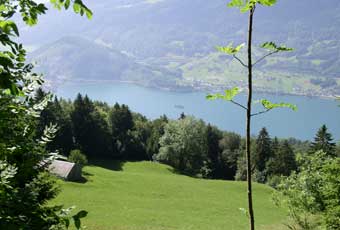
I was invited to the alpine village of Grindelwald to speak at an AIESEC national seminar in June 2006. It was the perfect time of year to appreciate alpine meadows, farms and lakes nestled between the mountain peaks.
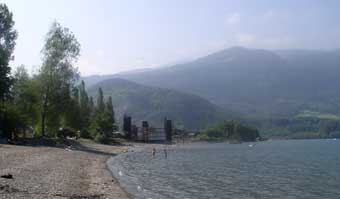
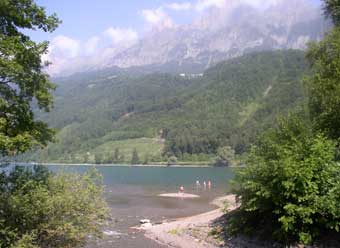
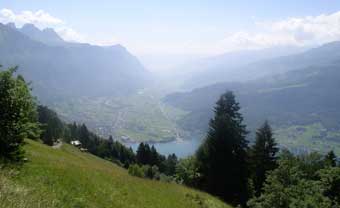 In June 2006, I spoke at an International Peace Education Seminar at
Walenstadt on the Walensee, another alpine area in eastern Switzerland
near Liechtenstein, with mountains surrounding a beautiful lake.
In June 2006, I spoke at an International Peace Education Seminar at
Walenstadt on the Walensee, another alpine area in eastern Switzerland
near Liechtenstein, with mountains surrounding a beautiful lake.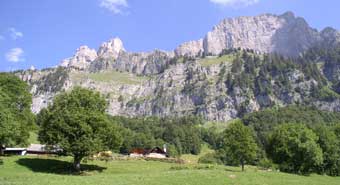
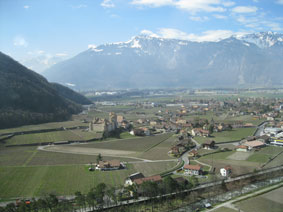
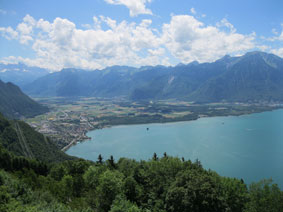
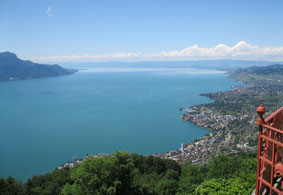
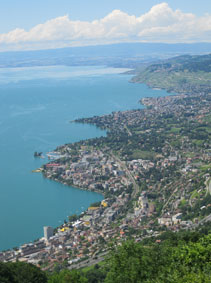
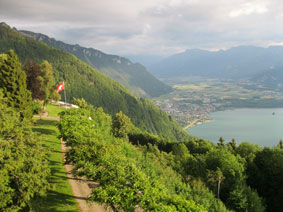
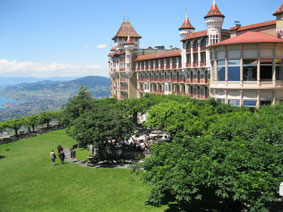
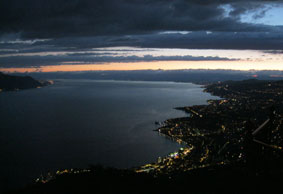
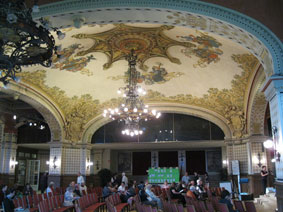
At the end of March 2012, AIESEC again invited me to speak at their national conference, this time in Leysin above Aigle, in the Valais, the upper watershed of the Rhone River. From Aigle, a cog railway winds up the steep valley side to the ski resort of Leysin.
 .
. 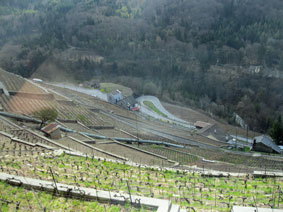
View down to Aigle in the Valais; looking down from the railway
carriage on the steep vinyards below
 .
.  .
. 
 .
.  .
. 
 .
.  .
. 
 .
.  .
. 
 .
.  .
. 
 .
.  .
. 
 .
.  .
. 
 .
.  .
. 
 .
.  .
. 
 .
.  .
. 
 .
. 
 .
.  .
. 
 .
.  .
. 
 .
.