VERNIER
In the city, I live in the municipality of Vernier, adjacent to the city of Geneva, and not far from the airport. More than half the population is of foreign origin, which makes for an interesting diversity which is well integrated into the community. The population of Vernier of over 32,000 makes it the 15th largest city in Switzerland. The city is very environmentally conscious, as is normal in Switzerland. It has met an international gold standard for energy economy, and has many parks and gardens (see below).
The city is made up of several neighbourhoods, the village of Vernier to the west, two large housing estates of Les Avanchets to the north and Le Lignon to the south by the river, some smaller neighbourhoods, industrial areas and streets with single family homes, and Châtelaine to the east along the limit with the city of Geneva, where I live. It takes about 40 minutes to walk from Châtelaine to Vernier Village (the bus is faster).
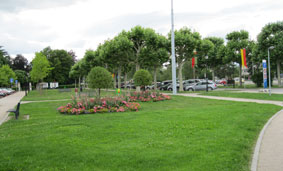
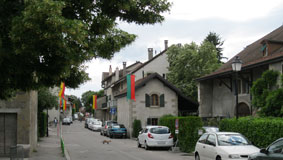
The village of Vernier has kept some of the charm of an eighteenth century village on a bluff overlooking the Rhone River.
 .
.  .
. 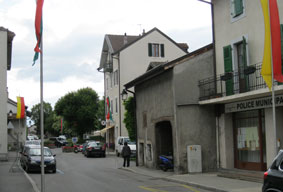
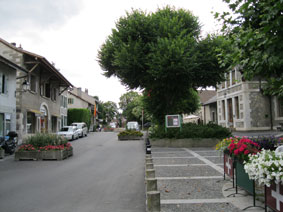
Entrance to Vernier Village, and the main street (Rue du Village)
 .
.  .
. 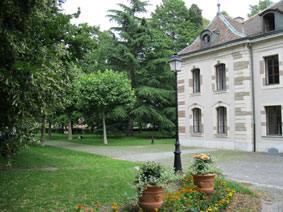
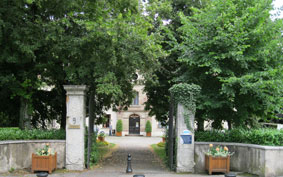
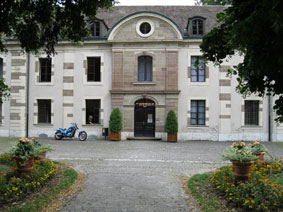
The Mairie (city hall) was a stately home set in a beautiful park on the Rue du Village
 .
.  .
. 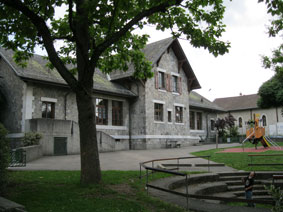
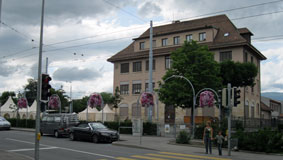
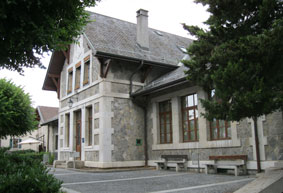
The village school and kindergarden
 .
.  .
. 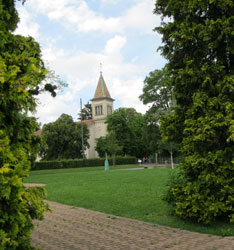
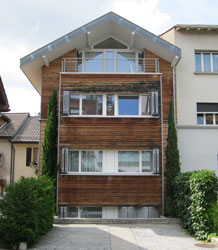
The centre of the village; the first house in the canton of Geneva to meet the Minergie standard for energy economy; the Parc de l'Esplanade and the Catholic church
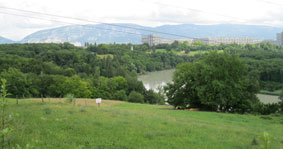
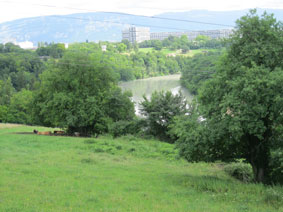
From the Parc de l'Esplanade in the village, there are beautiful views of the Rhone River as it loops along the south side of Vernier, nearly cutting it in two.
 .
. 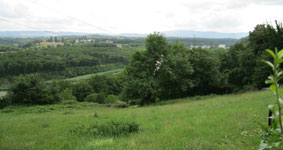
Just behind the village are cow pastures and natural vegetation along the Rhone River, an important nature conservation area and Ramsar site for migratory birds.
 .
. 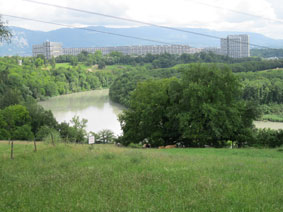
On the far side of the river, the apartment block of Le Lignon, 14 storeys high, extends for more than a kilometre. When it was built in the 1970s, it was the world's longest apartment building.
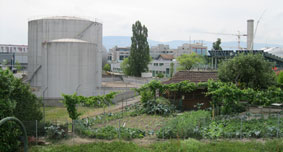
Not all of Vernier is green
 .
. 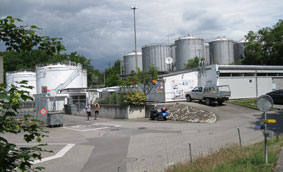
Much of the fuel for western Switzerland is stored in tank farms in Vernier, at the end of a 600 km pipeline from Marseilles
August 1, Swiss National Day
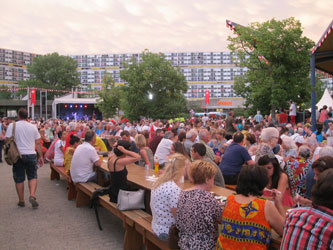
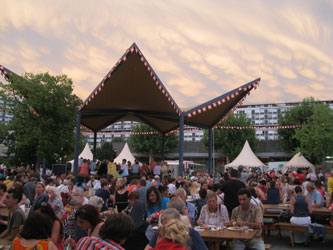
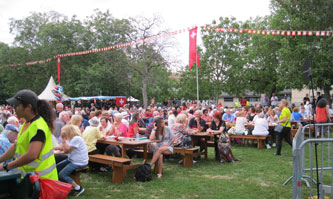
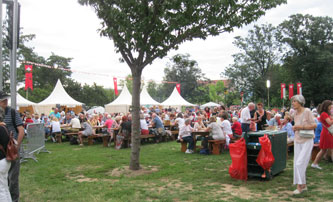
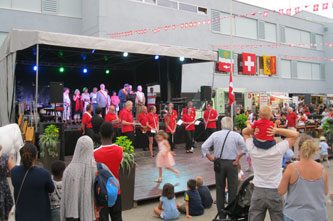
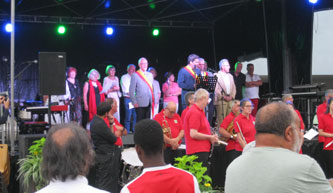
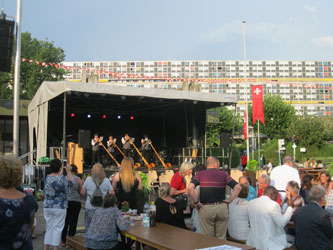
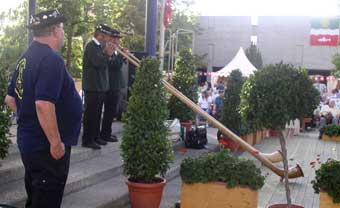
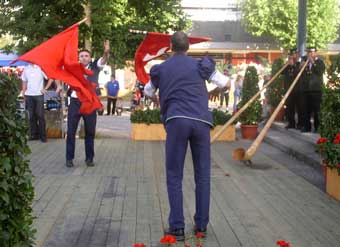
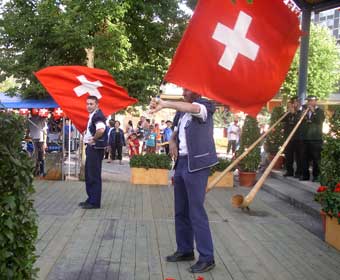
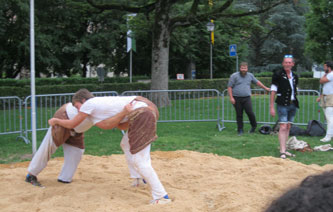
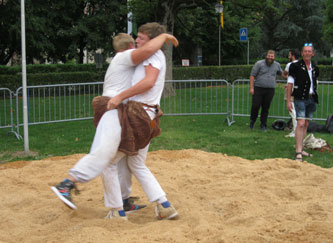
The Swiss national day, August 1, is celebrated each year in Vernier, usually at Le Lignon or in Vernier village. There is free soup for the elderly, and different associations serve food from many countries. The mayor and other dignitaries give speeches, the town band plays, everyone sings the national anthem (not very well, it is not easy), the flag is raised, and the evening ends with fireworks, a bonfire and dancing. There are usually typically Swiss things like alp horns, flag tossing, cowbells, or Swiss wrestling, although one year there was Portuguese music and dancing because more than 10% of the residents of Vernier are of Portuguese origin, and another year Kosovo was honoured to welcome the new immigrants from that country.
 .
.  .
. 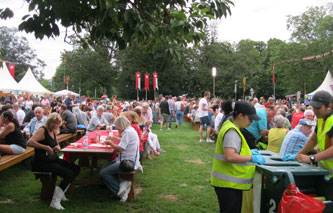
There is a large turn out each year, here in 2018 and 2019
 .
.  .
. 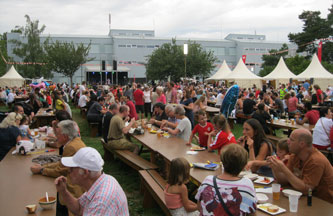
Everyone eats together at long tables
 .
.  .
. 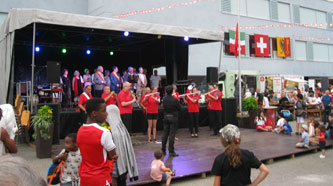
Speeches by local authorities; the flag is raised and the band plays the national anthem
 .
.  .
. 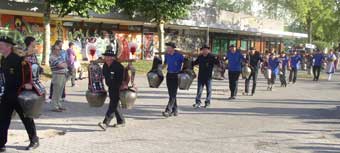
The bandstand with an alp horn concert; a parade of cow bells
 .
.  .
. 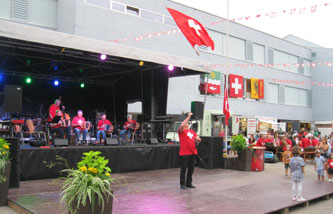
Flag tossing is an old Swiss tradition
 .
.  .
. 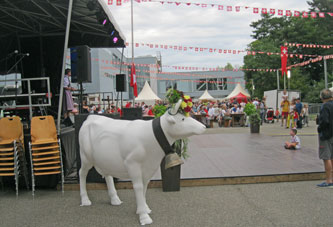
Demonstration of Swiss wrestling; even urban communities need a reminder of rural Switzerland, here a plastic cow
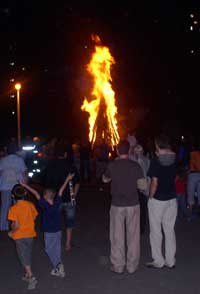
The evening ends with a bonfire and fireworks
PARKS AND NATURE IN VERNIER
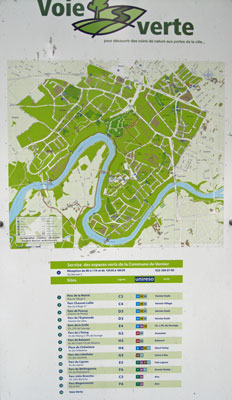 The
city has traced a Green Way (Voie Verte), a walking path connecting the parks, forests, river bank, green spaces and quiet streets around the town.
The
city has traced a Green Way (Voie Verte), a walking path connecting the parks, forests, river bank, green spaces and quiet streets around the town.
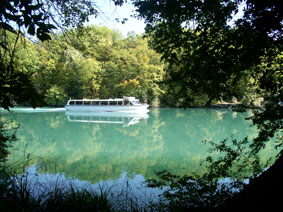
Vernier is bordered on one side by the Rhone River with tree-shaded banks
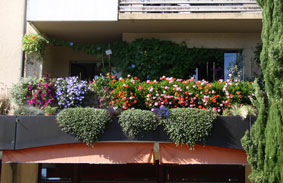
My Baha'i friends the Stendardo's won third prize for their flowered balcony in 2010, and first prize in 2011
 .
.  .
. 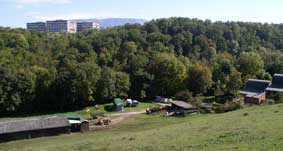
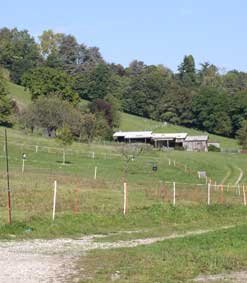
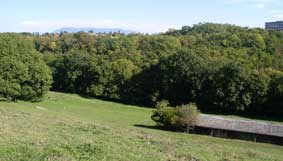
There are still some farms in Vernier, but the city buildings are not very far away
Another Green Way is being developed across the whole canton of Geneva, from the French city of Annemasse on the East to Ferney-Voltaire on the West, although it will take a long time to complete. There are parts along the railway right-of-way between Annemasse and Eaux-Vives in Geneva, and a section is now being planned through my own community passing near my apartment in Chatelaine. I have contributed to the participatory public planning process.
During my convalescence after hip surgery in 2011, I finally had time to walk around my neighbourhood (on crutches) and discover a surprising amount of nature and beauty in the middle of the city, all within a half-hour walk of where I live. The pictures below show what I discovered.
BALEXERT PARK
 When
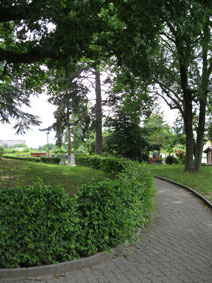
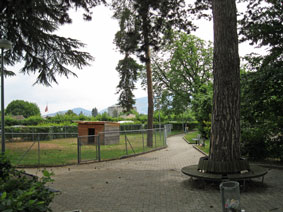
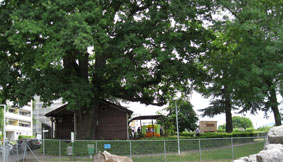
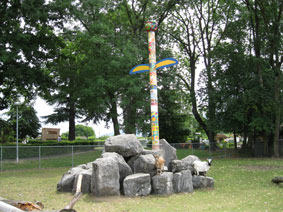
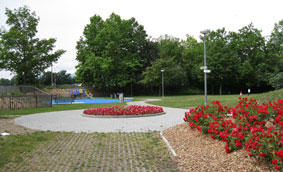
I walk to the shopping centre (15 minutes), I go through Balexert Park, a small park which has some old trees, a community centre (below right), a youth centre, a recreation centre for children (Jardin Robinson) with animals (goats, rabbits) and demonstration vegetable garden, and a playground with an intermittent fountain area for children to play in.
When
I walk to the shopping centre (15 minutes), I go through Balexert Park, a small park which has some old trees, a community centre (below right), a youth centre, a recreation centre for children (Jardin Robinson) with animals (goats, rabbits) and demonstration vegetable garden, and a playground with an intermittent fountain area for children to play in.
 .
. 
 .
.  .
. 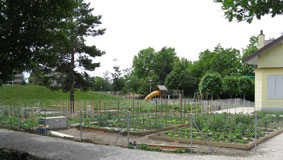
Goats, playground and vegetable garden
PARC DES FRANCHISES
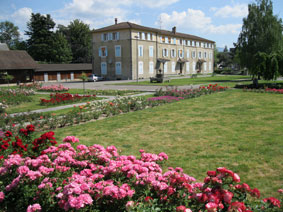
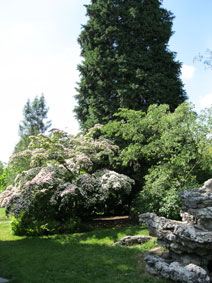
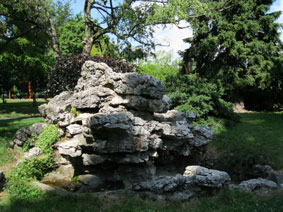
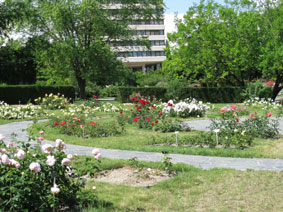
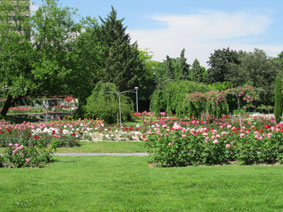
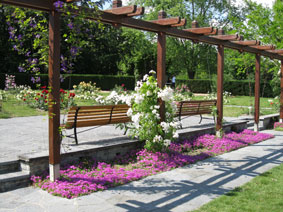
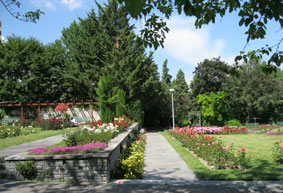
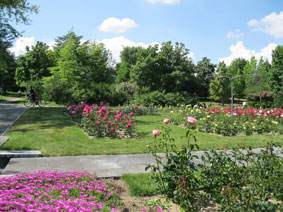
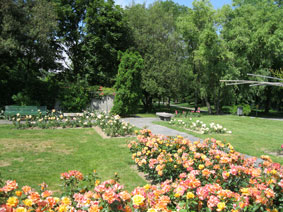
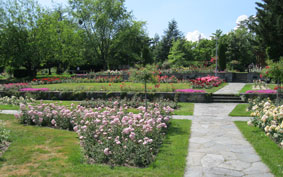
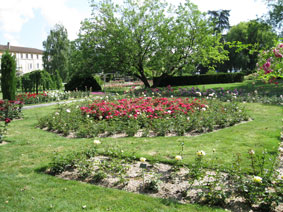
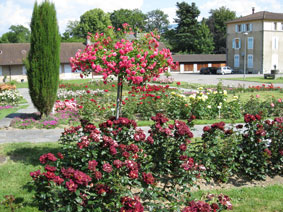
A five-minute walk towards Geneva takes me to a wonderful large park mostly hidden behind houses and buildings. It used to be the horticultural school founded in 1887 (right), so it has retained extensive rose gardens with many varieties, an arboretum of unusual conifers, a half-abandoned grotto with waterfalls and pools, large grassy areas, children's play areas, a large wading pool with fountain, facilities for skateboarders, a separate garden for walking dogs, and a hidden natural wetland fenced from public access. It is a lovely place to sit and read, or take a sun bath.
The park was renovated a few years ago since these pictures were taken, with the rose gardens replaced by beach volley courts, and an area for children to grow vegetables. The wetland was completely rebuilt, so nature is only gradually coming back (see separate
page).
 .
.  .
. 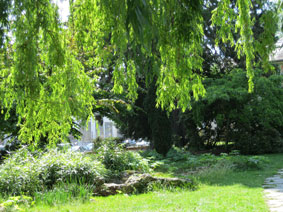
The natural garden with grotto and pond
 .
.  .
. 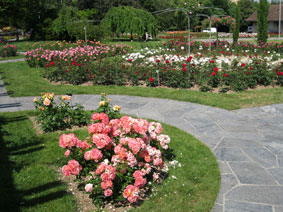
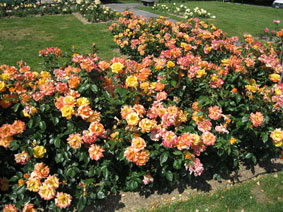
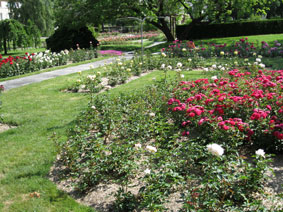
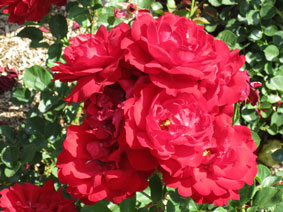
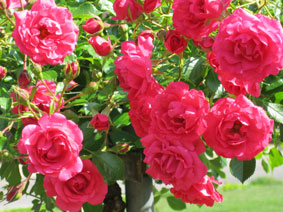
Extensive rose gardens with many varieties of hybrid roses
 .
.  .
. 
 .
.  .
. 
 -
-  .
. 
 .
.  .
. 
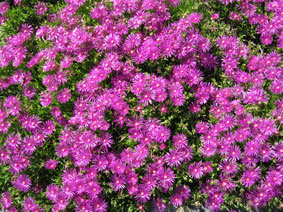
Splashes of colour
 .
.  .
. 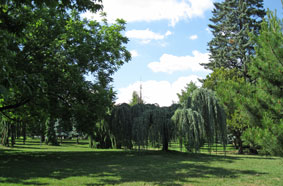
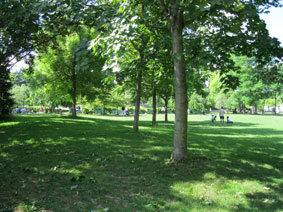
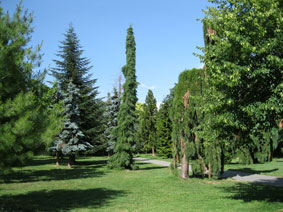
Extensive lawns, and the arboretum of unusual conifers
 .
. 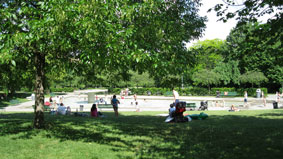
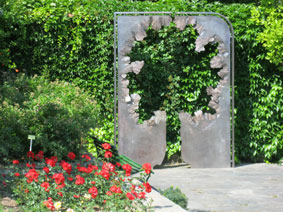
Sculpture commemorating the former horticulture school, and the wading pool
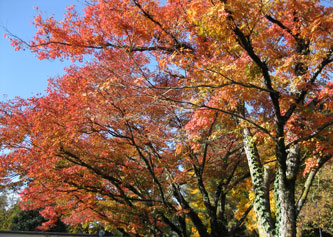
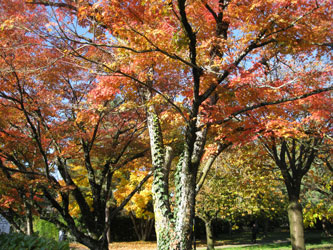
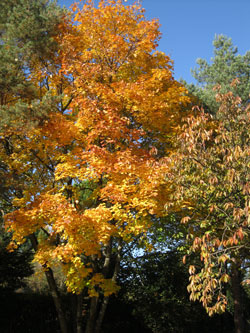
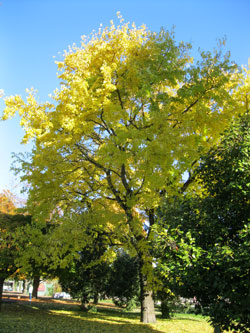
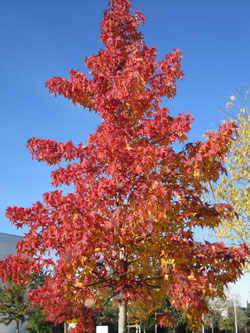
In the autumn, many of the trees take on beautiful autumn colours.
 .
. 
 .
.  .
. 
The park has been going through re-development to increase its public interest. An enclosure for many varieties of chickens is across the former natural garden stream. Trees have gradually been dying and not been replaced. However the ponds at the bottom of the park are full of bull rushes and water lilies, with goldfish and frogs in abundance, and occasional ducks and grey herons.
URBAN MICRO-FOREST PROJECT
The city of Geneva, Switzerland, and its surrounding suburbs have a project to bring nature back into the city, planting more trees along streets, renewing parks, creating raised beds around apartment buildings so residents can grow their own vegetables, and even providing gardening spaces where a local resident and a newly arrived immigrant or refugee can grow vegetables together while facilitating integration into the community.
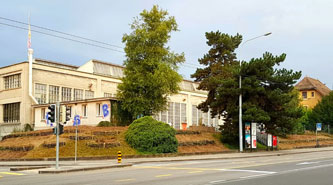
In November 2021, I participated in the initiation of an urban micro-forest across the street from the Parc des Franchises near where I live. One of two experiments in the city, it is alongside the old industrial zone of Charmilles, while the other is on the Butte Ferdinand-Hodler. They follow the Miyawaki method that imitates a primary forest by densely planting a wide variety of indigenous species, with 800 young trees and shrubs planted along the slope between the factory buildings and the street. These micro-forests are expected to counteract the heat-island effect, clean the air, absorb rainwater, and improve the neighbourhood quality of life, while enriching local biodiversity. This is part of the city government's plan for an ecological transition.
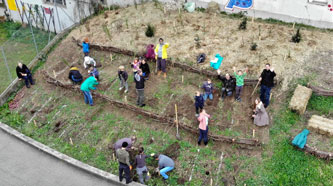
The Miyiwaki method also offers to the local population the opportunity to contribute directly to the planting and maintenance of the forest during its first two years of establishment, until it becomes self-sufficient. I thus joined 115 people from 3 to 80 years old in planting 800 trees in three and a half days in the area and then taking care of the forest. The children will be able to grow up with their trees.
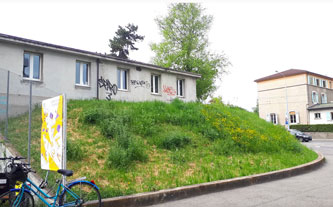
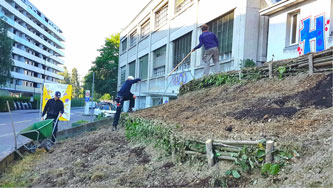
Before the project, the slope along a busy road below the factory buildings was just covered in weeds. These were cleared and some terraces constructed with natural materials to control erosion while the forest gets established.
 .
.  .
. 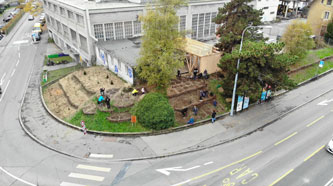
The slope before clearing; building terraces; the micro-forest below factory buildings
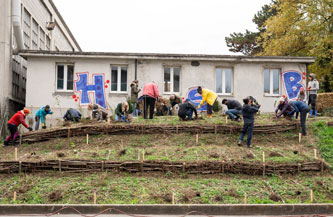
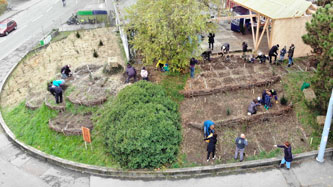
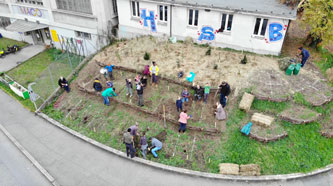
Different groups of volunteers planted each of the terraces, and the ground was covered in straw after planting to maintain soil humidity and prevent erosion while the roots grow and the trees get established.
 .
.  .
. 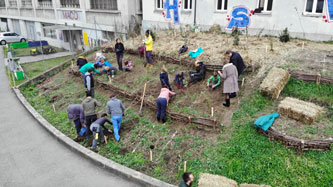
Groups of volunteers planting each of the terraces
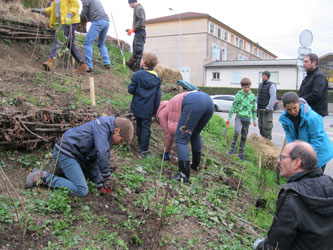
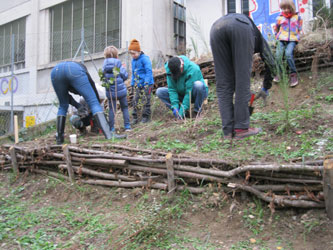
The children really enjoyed the work, which was more like play.
 .
.  .
. 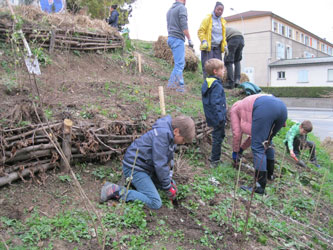
All ages planting trees in the micro-forest
My group planted the bottom terraces. Here I am pushing soil around the roots of a newly planted young tree.
 .
.  .
. 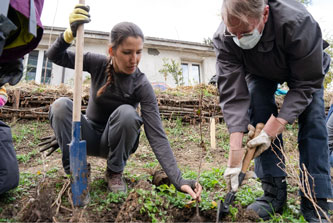
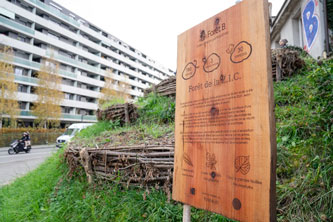
My group planted the two lowest terraces; me helping to plant a tree A sign was put up for the micro-forest project when the planting was completed. The tree planting was written up in a local magazine and covered on the radio and television.
 .
.  .
. 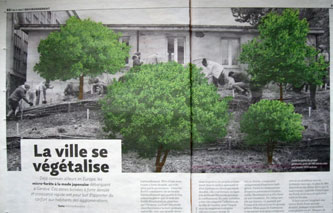
Sign for the micro-forest; the slopes after planting; a press article (some photos courtesy of Forêt B)
PARC DE L'ETANG
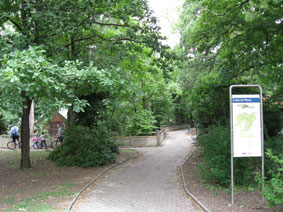
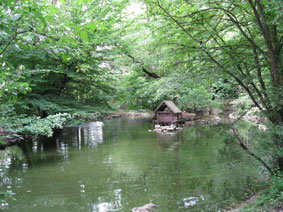
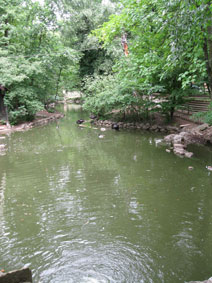
The Parc de l'Etang, a little way beyond Balexert, includes a long narrow pond with various species of fowl, including some endangered varieties. It is another island of green with industrial areas on one side and family gardens on the other, as well as a children's playground and a separate park for dogs. But it also is in transition. The industrial area has been completely redeveloped as a new ecological neighbourhood for 2,000 families, with many new buildings and the green way through the middle. The Parc de l'Etang, for which the district is now named, will be renovated after the construction is finished.
 .
.  .
. 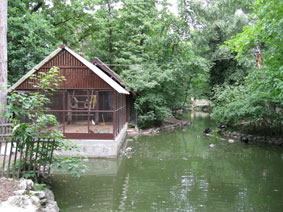
Park entrance and the pond with shelters for various varieties of fowl
 .
.  .
. 
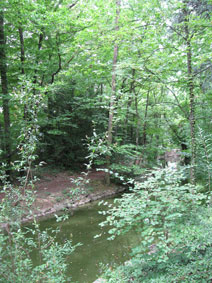
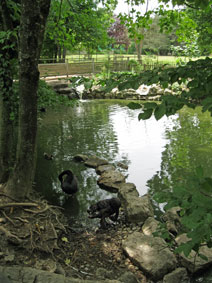
Vegetation along the pond
 .
.  .
. 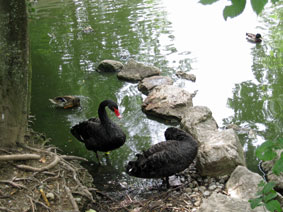
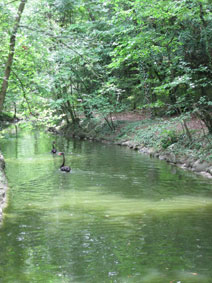
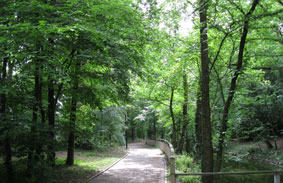
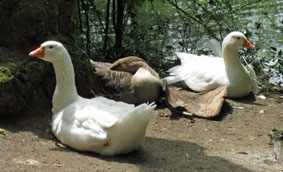
Path along the pond, and rare varieties of geese and Australian black swans, who came to visit when I sat on a bench to read
 .
.  .
. 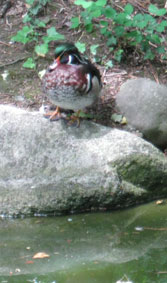
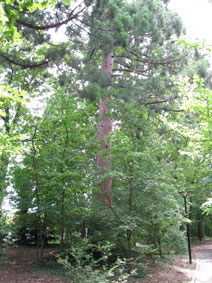
There are large trees along the park and pond; a painted duck
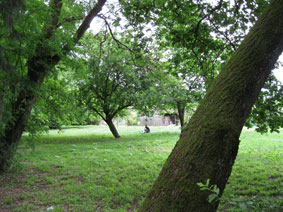
The large separate park for dogs to run and play in
BOIS DES FRERES
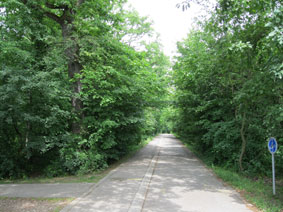
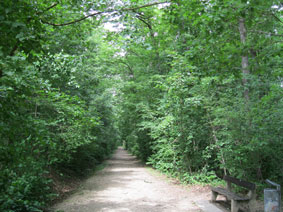
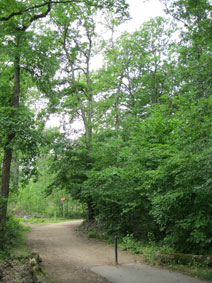
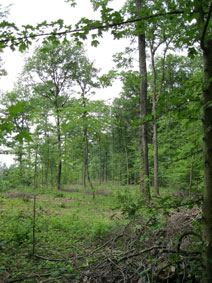
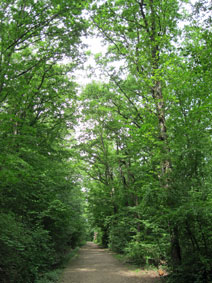
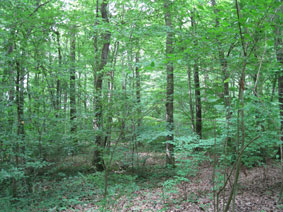
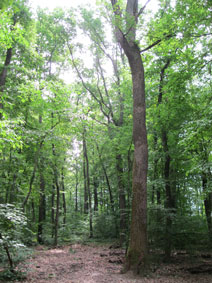
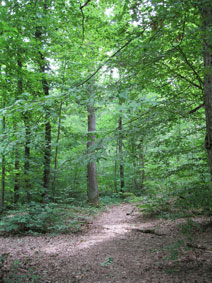
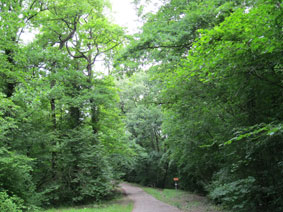
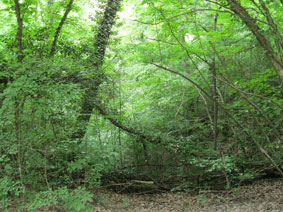
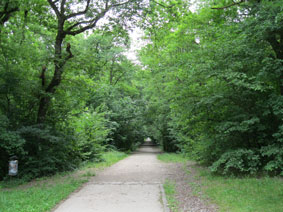
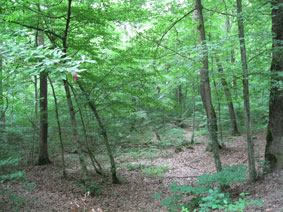
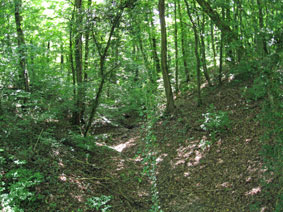
Twenty-five minutes walk from my apartment is a large wooded area, the Bois des Freres, crossed by several paths. It is mostly an oak forest, but in one section the old oaks have been cut to encourage regeneration of younger trees.
 .
. 
 .
.  .
. 
 .
. 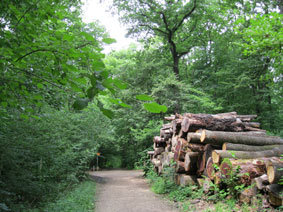
The logs show the size of the trees that were cut to encourage forest regeneration
 .
.  .
. 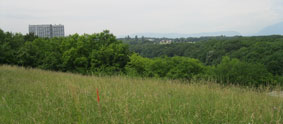
Beyond the forest is a grassy slope and then the forest that grows on the banks of the Rhone River
 .
. 
 .
.  .
. 
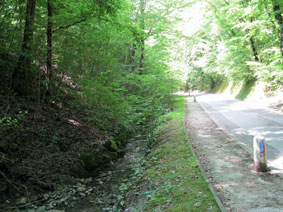
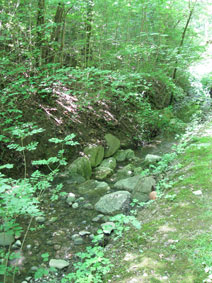
A road separates the Bois des Freres from the Bois de la Grille, with a stream running down one side.
 .
.  .
. 
BOIS DE LA GRILLE
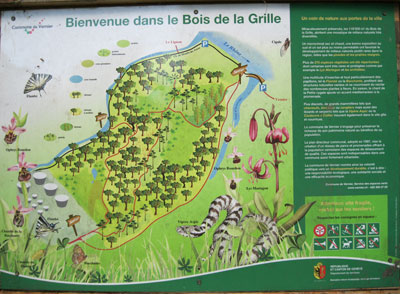
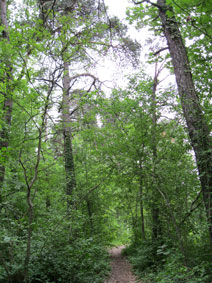
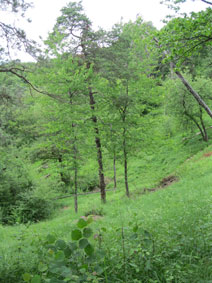
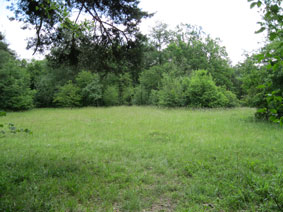
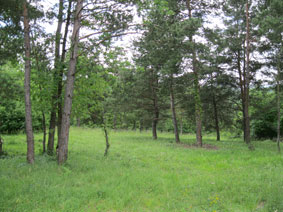
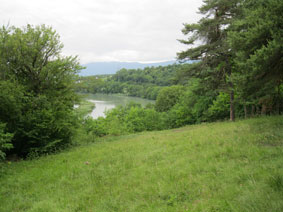
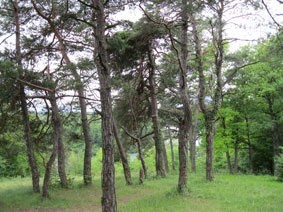
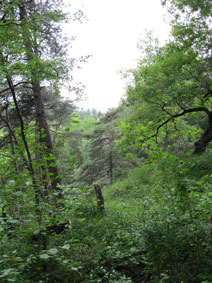
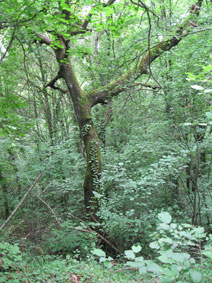
Just beyond the Bois des Freres, between busy highways, a tank farm and the Rhone River, is a most unusual park, the Bois de la Grille. It includes a high ridge with grasslands and pines adapted to dry conditions, as well as broadleaved woodlands on the slopes. Botanically, it is a very rich fragment of original native vegetation that somehow survived in the middle of the urban area. Several steep footpaths cross the woods and meadows, and provide a beautiful view of the Rhone River. If it were not for the traffic noise, the airplanes taking off, and the smell of petroleum from the tank farms next door, you could really feel lost in nature.
 .
. 
The park is bounded by the Rhone River at the top, the Bois des Freres beyond the stream to the left, the autoroute and village of Vernier on the right, and a tank farm and highway on the bottom (North)
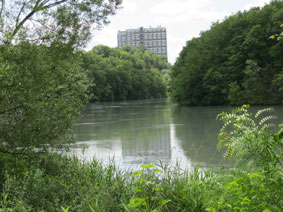
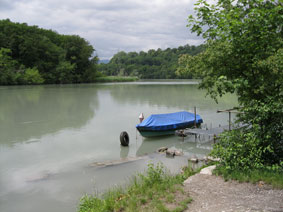
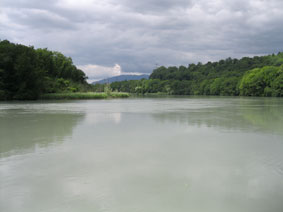
The Rhone River borders the park on the south. An apartment tower (Le Lignon) can be seen in the background
 .
. 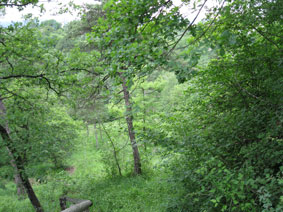
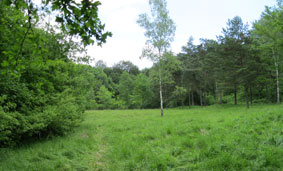
Meadows and woodlands alternate
 .
.  .
. 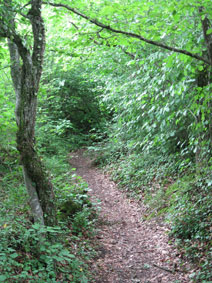
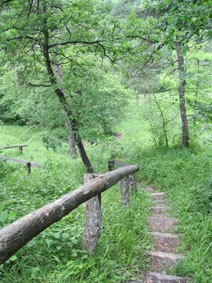
There are stairs for the steep slopes, and narrow paths through the forest
 .
. 
The high grasslands have 14 varieties or orchids, and other rare plants
 .
. 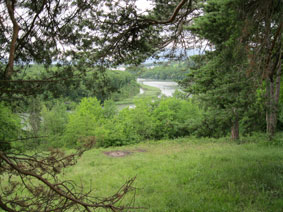
From the ridge top, there is a good view of the Rhone River
 .
. 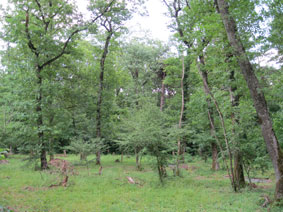
The native pine forest is a distinctive feature of the park
 .
.  .
. 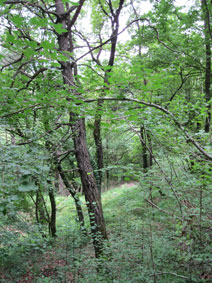
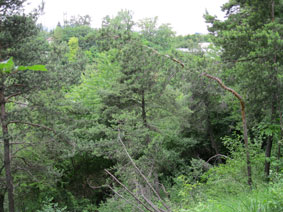
The autoroute is just behind these trees, and beyond it the village centre of Vernier
JARDINS FAMILIAUX - FAMILY GARDENS
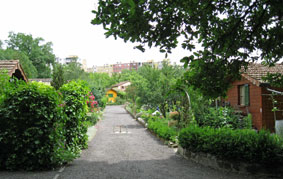
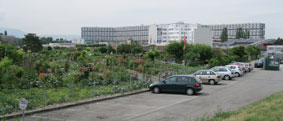
Quite large areas of Vernier are devoted to Family Gardens, where many people have small plots for a vegetable garden, and perhaps a small toolshed/cabin. These were an important result of social movements in the 20th century, and are still very popular.
 .
. 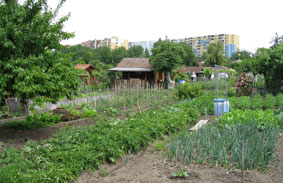
Jardins familiaux by Parc de l'Etang
 .
. 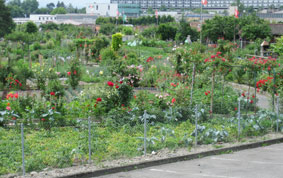
Jardins familiaux across from the Bois des Freres
MY IMMEDIATE ENVIRONMENT IN CHATELAINE
My neighborhood is called Châtelaine. It is a working class area without banks or hotels, but a mix of apartment buildings (many subsidized for low-income families) and single family homes, a large area of family gardens, schools and a few shops and restaurants. Some industrial areas and fuel tank farms are not far away, as is the largest shopping centre in the region, Balexert. The Geneva Airport is 10 minutes away by bus, but since we are not in the flight path, the noise is not too bad.
 .
.
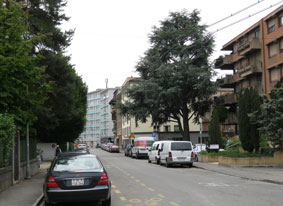
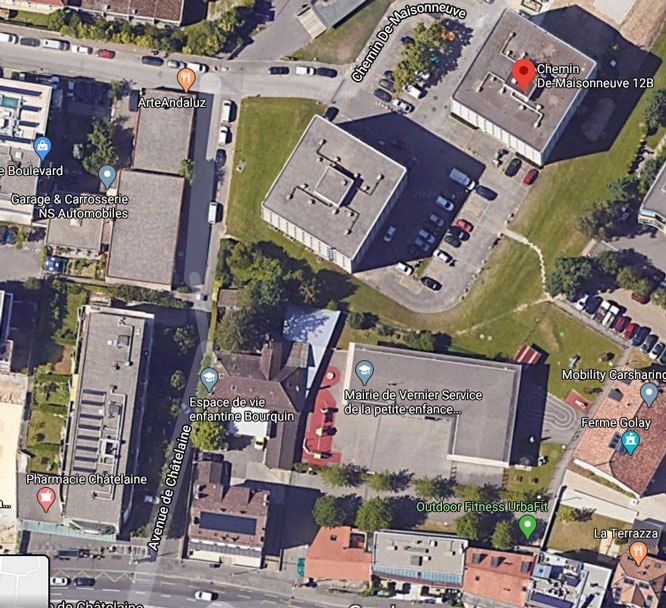
Aerial view of my Chatelaine neighbourhood with my building upper right; Chemin de Maisonneuve, one of the main streets of Chatelaine
International Environment House, my former office, is only a 3-minute walk from my apartment. It houses both the environmental activities of United Nations Organizations (UNEP, UNITAR, UNDP, Convention Secretariats) and environmental non-governmental organizations. There are conference rooms and an environmental library.
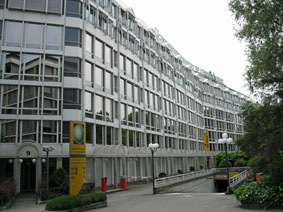 .
. 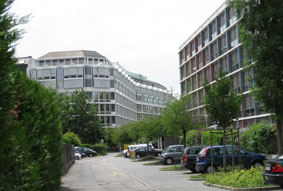 A second IEH has been added to the right
The other three sides of the block are low-income subsidized housing around an inner courtyard
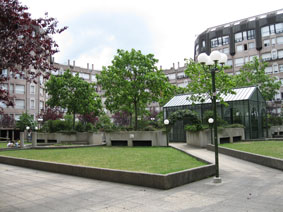 .
.  .
. 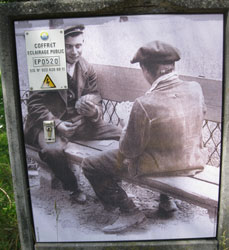
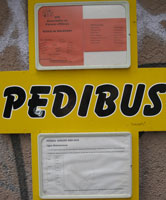
Inner courtyard behind IEH; children take the pedibus to school (they walk); streetside electric boxes are decorated to discourage tagging (it works)
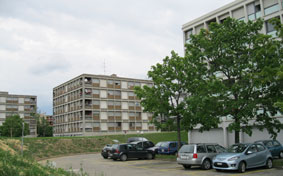
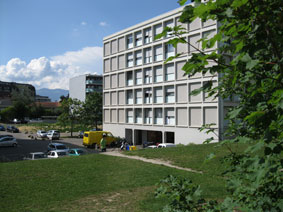
My tiny (29 square meter) studio apartment is in a small square building built in the 1960s, that was 5 stories, but was recently increased to seven, one of four similar buildings set well back from any roads with traffic, and with grass all around. It is a very quiet neighbourhood by urban standards.
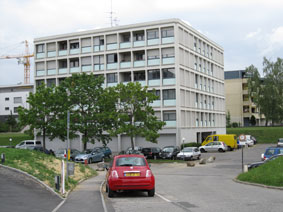 .
.  .
. 
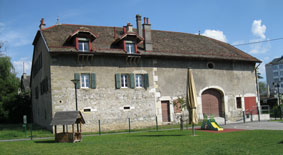 The Ferme Golay, an old traditional farm house right next door, before it was remodeled for social services and a school canteen in 2014.
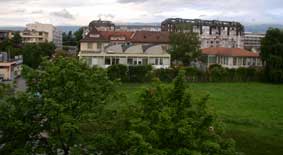
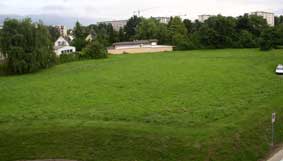
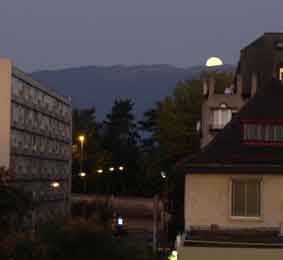
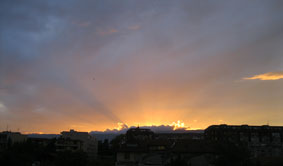
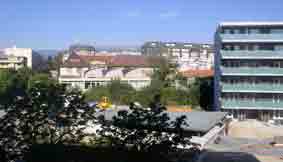
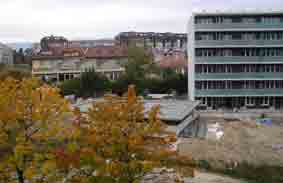
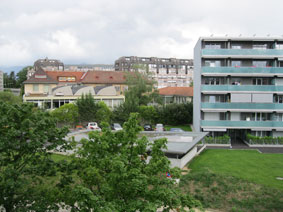
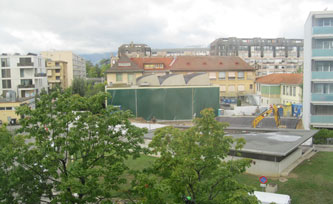
My apartment faces west, towards a small factory making parts for Rolex watches, with some of the Jura mountains visible between the buildings. However most of the view has now vanished (see below) as a 7-storey building was built across the parking lot in 2008-2010. An extension of this building is being built in 2019-2020, blocking most of the rest of my view. The pictures of the construction below were taken from my apartment window.
View from my apartment (as it used to be up to 2008), watch parts factory (left) and green field
 .
. 
View from my window
 .
.  .
. 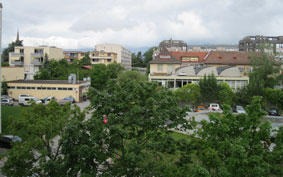
Moonset over the Jura mountains at dawn; sunset over the Jura with clouds; daytime view before construction
CONSTRUCTION OF NEW BUILDINGS OUTSIDE MY WINDOW 2008-2011 and 2019-2021
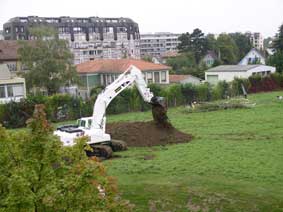
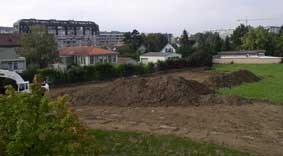
It is usually a very quiet neighborhood, but in September 2008, construction began on a big low-income housing complex of over 100 apartments in a 7-storey bar in the beautiful green field just outside my window.
Start of construction, September 2008
 .
. 
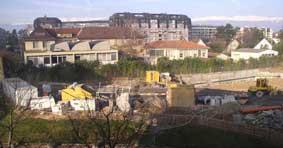
The green field became a big hole by November 2008
 .
. 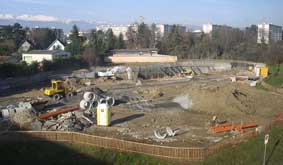
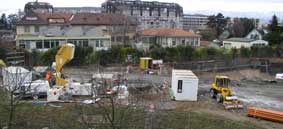
By January 2009, the excavation was nearly completed
 .
. 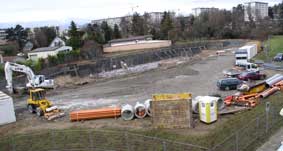
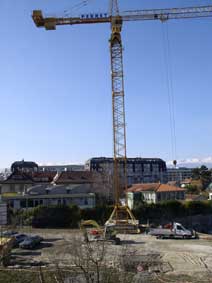
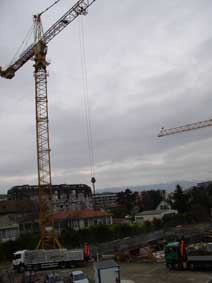
In February, the diggers departed and giant cranes were erected. They began pouring cement for the foundations
 .
. 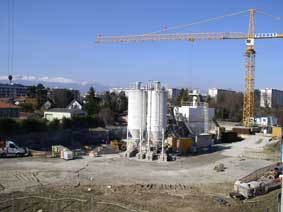
In March, the cranes were busy almost continuously as basement levels rose
 .
. 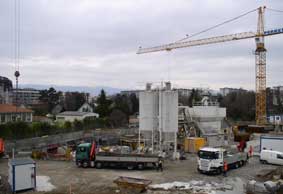
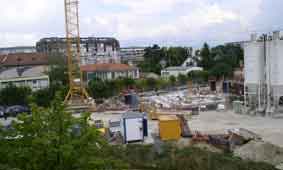
By the end of June, the basement levels had been completed
 .
. 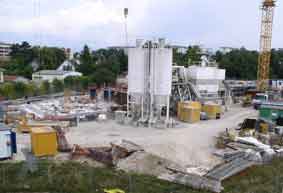
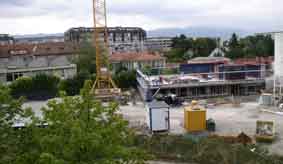
At the end of July, the ground floor was completed and the next floor started
 .
. 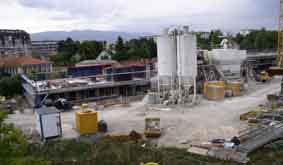
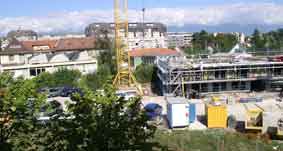
In mid-August, another floor was done. My view started to disappear
 .
. 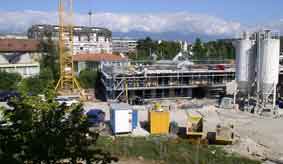
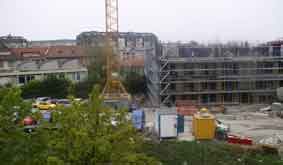
By mid-September, I could hardly see the crest of the Jura mountains
 .
. 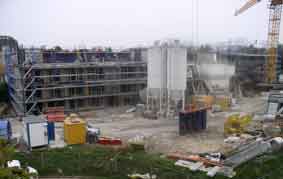
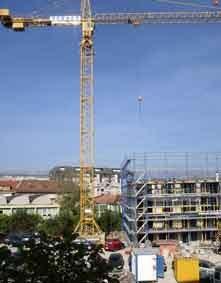
At the end of September, my mountain view was almost gone behind the scaffolding
 .
. 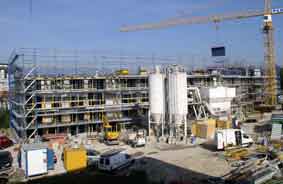
Last view of the mountains, early October 2009
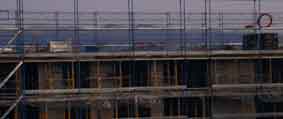
By the end of November, the last storey was being added
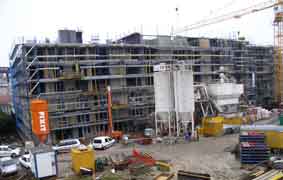
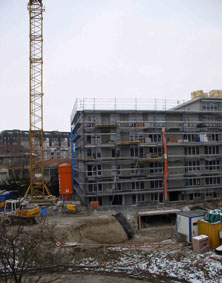
By February 2010, one crane was removed
 .
.
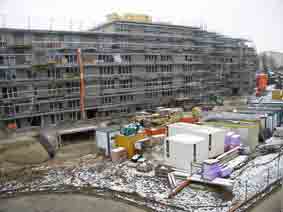
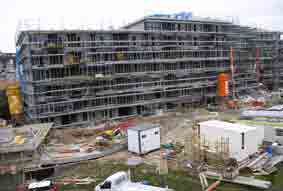
In April, the entrance to the underground garage was nearly complete
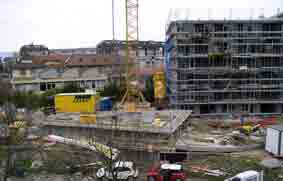 .
. 
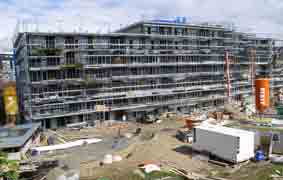
By May, the last crane was gone and most work was going on inside
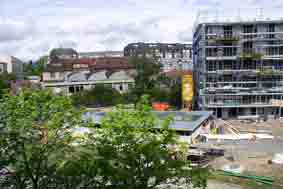 .
. 
In September, the exterior was finished
 .
. 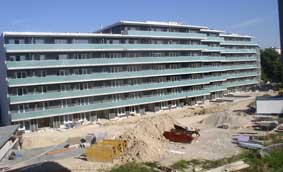
Interior work continued in October, and the garden was being laid out
 .
. 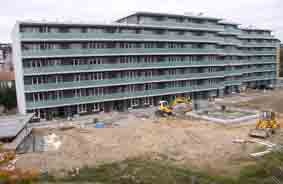
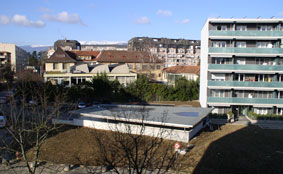
In November 2010, people were starting to move in, and by January 2011 the garden and entrance road were being finished.
 .
. 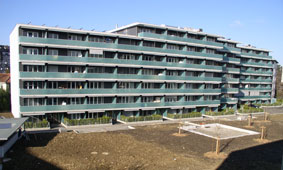
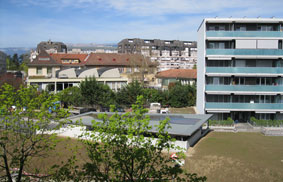
By April 2011, the grass was starting to grow in the garden
 .
. 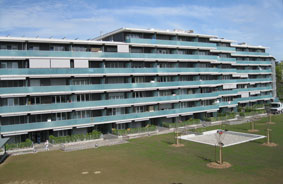
June 2011, a playground was added, and the grass was being mowed
 .
. 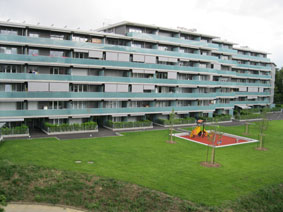
The new building is now a settled part of the neighbourhood.
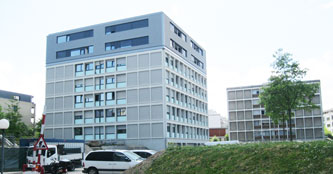
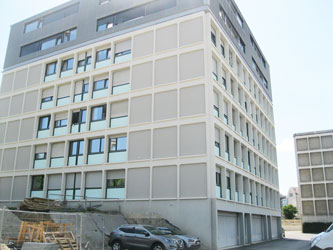
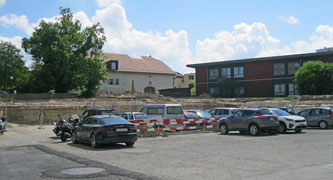
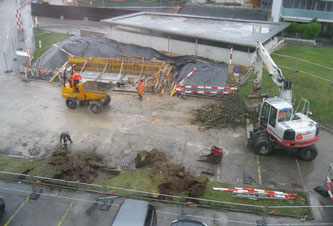
Construction did not stop there. Two additional storeys were added on top of my apartment building and two of the adjacent blocks in 2018-2019, with replacement windows and other energy efficiency improvements. The parking areas were renovated and extended. Now the new building across the street is also being extended, further blocking my view.
 .
.  .
. 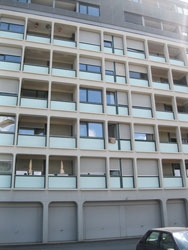
My apartment building after renovation and adding two storeys; (right) my apartment is 1 1/2 windows third floor centre.
 .
. 
Extension of the parking area; all the trees in front of my window were torn out
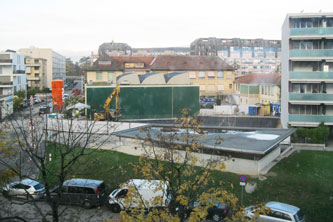
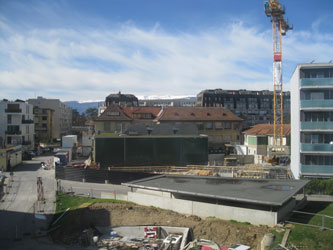
Construction of another new building across from me, extending the previous one
 .
.  .
. 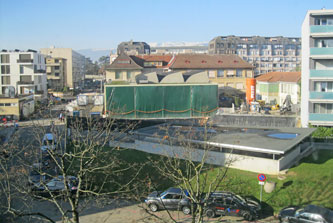
10 October 2019; 19 November 2019; 19 December 2019
 .
. 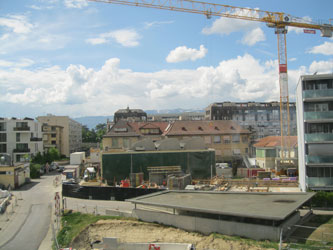
8 March 2020, before construction was halted by the pandemic; 27 April 2020
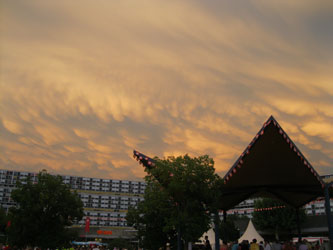
Sunset over Vernier
 .
. 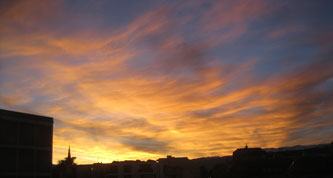
Sunset over Le Lignon; sunset from my apartment