My first travel in 2012 was unplanned, to attend the funeral of my
father-in-law in Plomodiern, Brittany, France, in early January. I then had
trips every week from late February to the end of March. First was a
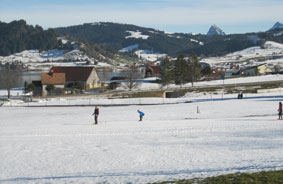
week-long Bahá'í winter camp in the Alpine village of La Chapelle
d'Abondance, France. Then I flew for two weeks to India to accompany a class
on management of development projects (see MaDePro)
organized by the Federal Technical University of Lausanne (EPFL) and the
Indian Institute of Science in Bangalore. After 5 days back in Geneva, I was
off to Berlin for 5 days for the PERL International Conference where I gave
two papers. There was a 3-day break before 5 days in London for the Planet
Under Pressure 2012 conference where I had 4 papers in different sessions,
followed immediately by a day in Leysan in the Swiss
Valais to give two workshops at an AIESEC national conference. I had a
week to catch up before going for two weeks to Bulgaria to visit my brother
and his family (but I forgot to take my camera). My two weeks in June at the
United Nations Conference on Sustainable Development in Rio de Janeiro are
described on a separate page. In July I went
to a Forum on Human Security at the Initiatives of Change conference centre
in Caux, and a Triglav Circle meeting near a lake in the Jura Mountains, and
visited friends in Cape d'Antibes on the French Riviera, before going in
July-August to North America for a month, divided between California and
Quebec. After giving a course at the Bahá'í Summer School in Quebec, I
returned to Europe for the Bahá'í Summer School in Evian-les-Bains on the
shore of Lake Geneva. After a quiet September, in October I went to Portugal
for the ebbf event at Ericeira, went hiking in the Bauges mountains in
Savoie after giving a talk in Chambery, France, and then went to Pristina,
Kosovo, and Belgrade, Serbia for another conference. In mid-November I was
invited to Baku, Azerbaijan, to contribute to their Green Week with three
talks in three days. My last trip of the year was also unplanned, when I
suddenly had to go to Samoa for my brother Keith's funeral on my way to the
Swiss Bahá'í Winter School in Einsiedeln an hour from Zurich the last week
of December.
PLOMODIERN, FRANCE
Claude
Caillard 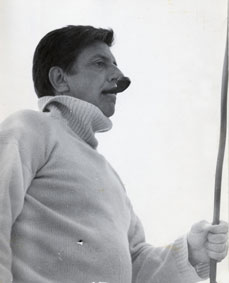 25 April 1916 - 2 January 2012
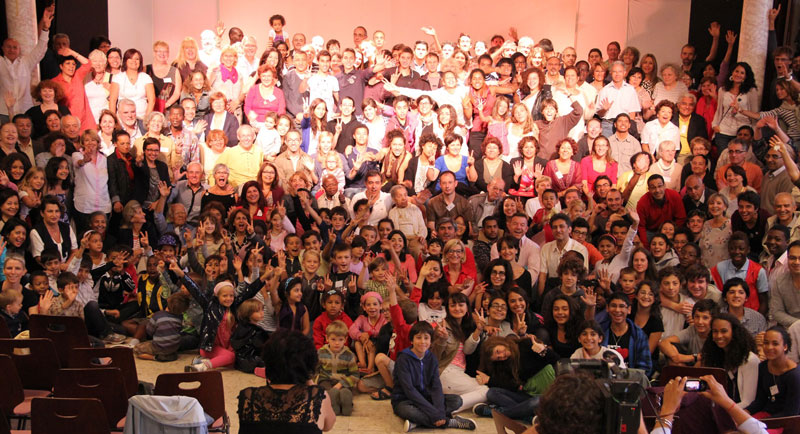
My father-in-law, Claude Caillard, passed away on 2 January at the age of
95. Most of his 8 children, 19 grandchildren and 18 great-grandchildren and
assorted spouses and friends gathered in his village of Plomodiern, in the
west of Brittany, for his funeral and the commemoration of his life that
followed. The son of two actors from the silent film era in France, most of
his career was with Radio- and Tele-Luxembourg, but his love was the sea and
he built himself a 15-meter steel ketch which he sailed after retirement
down to Dakar, across to Rio, up through the Caribbean, and back to
Brittany. His passing brought the Caillard clan together, and allowed me to
catch up with many in-laws, nieces and nephews.
 .
.  .
. 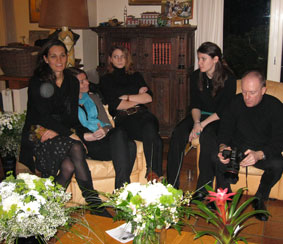
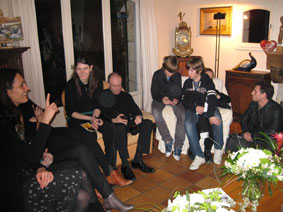
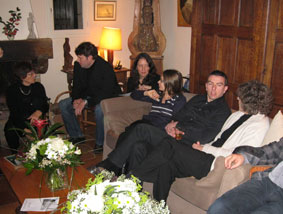
Family gathering at Gorré Rible after the funeral
 .
. 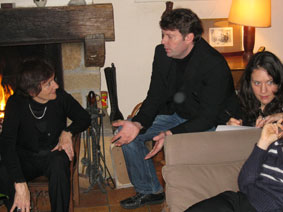
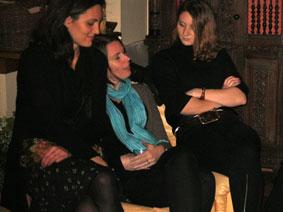
My daughter Agnés with cousins Berangère and Camille; Madeleine,
Emmanuel and Lawrence
LA CHAPELLE
D'ABONDANCE, FRANCE
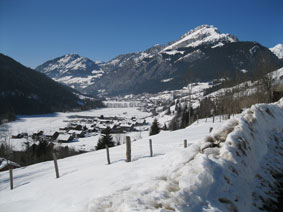
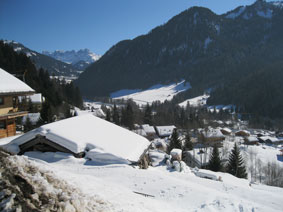
On 19-24 February there was a Bahá'í Winter Camp in the alpine ski resort of
La Chapelle d'Abondance, France, a couple of hours from Geneva, with 60
participants. The theme was the example of 'Abdu'l-Bahá, the son of the
founder of the Bahá'í Faith, on the centenary of his visit to the West after
40 years in prison in Palestine. I taught courses on his social and economic
teachings, and his description of the qualities required in political
leaders and the learned. There were also music and crafts workshops, and
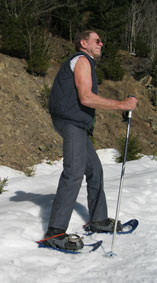
time in the early afternoon for winter sports. Since I had not skied for 18
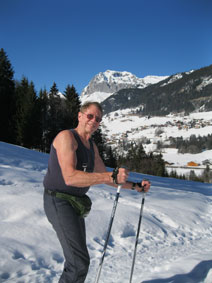
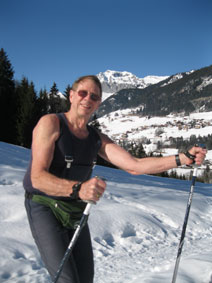
years, I decided to try snowshoes, and hiked in the snow on various trails
up the steep valley sides around the village.
 .
.  .
. 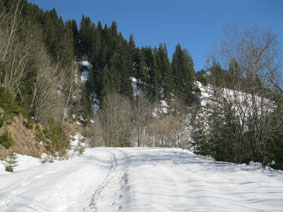
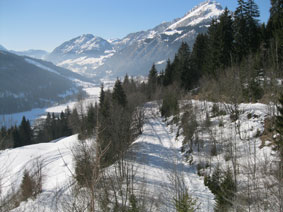
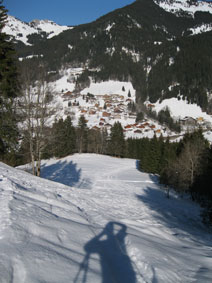
Looking down and up the valley of Abundance and the trail above the
hamlet Ville de Nant
 .
.  .
. 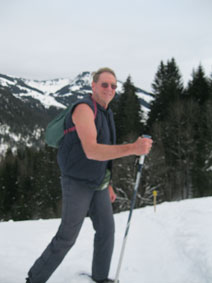
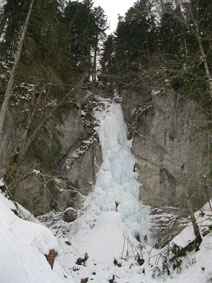
Me on snowshoes, and La Cascade, a waterfall frozen in winter because
of the extreme cold this year
 .
.  .
. 
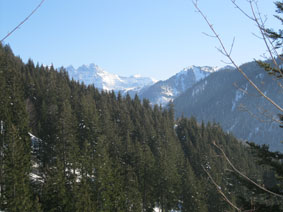
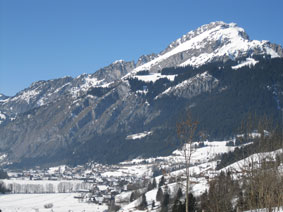
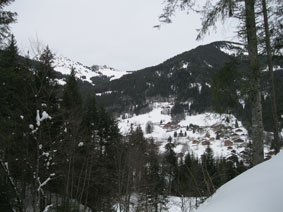
Views of the mountains around the valley, and looking down the trail
 .
.  .
. 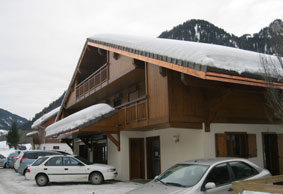
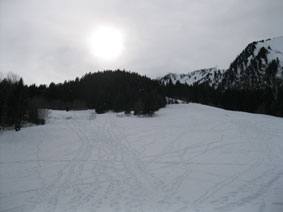
Views through the trees, the winter sun, and the Chalet Olinga where
the Bahá'í camp was held
 .
.  .
. 
It was a perfect way to get some exercise, fresh air, and some sun in
preparation for my trip to India immediately after
 .
. 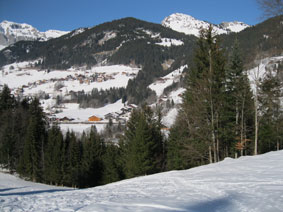
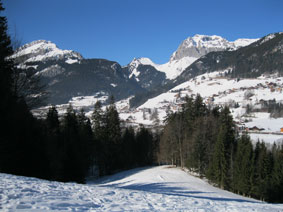
Views across the valley
C.K. PURA, INDIA
This was my second visit to Chennakeshavapura (CKPura), a village 170 km
northwest of Bangalore in Karnataka State, south India (see
2010). We accompanied the EPFL/Indian Institute of Science course on
Management of Development Projects. The 26 course participants, experienced
professionals wanting to improve their project management skills, spent a
week in this rural village to plan useful projects like reforestation around
the irrigation reservoir, adapting rain-fed agriculture to climate change,
developing veterinary telemedecine for local herders, and improving the
electricity supply for local water pumps. For photographs of the course and
its participants, see the separate page on MaDePro.
This page reports on the countryside, towns and cultural monuments typical
of this part of India.
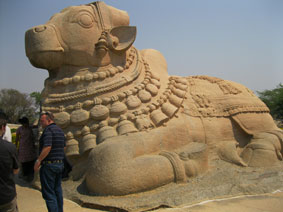
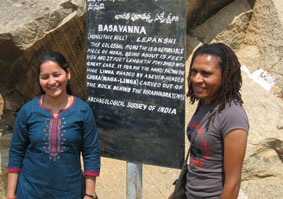
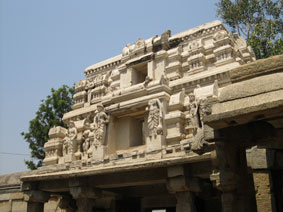
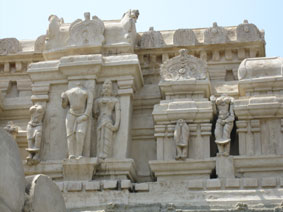
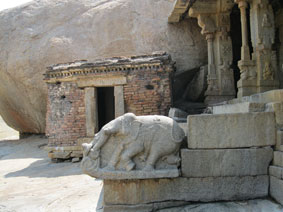
During the 4 hour bus trip to the village, we stopped in Lepakshi to visit
one of the most important Hindu temples in that part of India, including the
largest sculpture in India of a bull carved from a single boulder, located
where the outer wall of the temple used to be.
LEPAKSH HINDU TEMPLE
 .
.  .
. 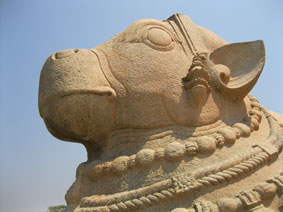
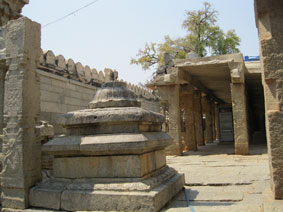
Giant carved bull facing the temple on the other side of the village
 .
.  .
. 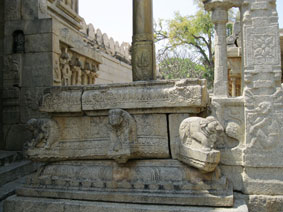
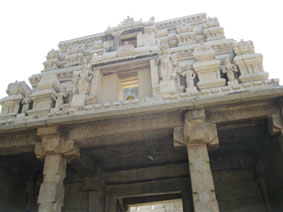
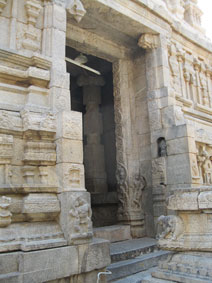
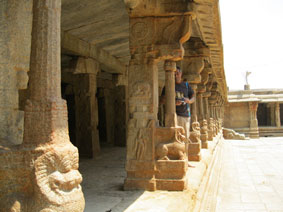
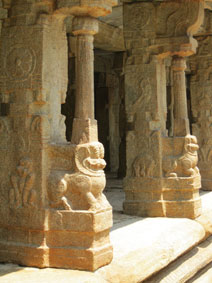
The temple entrance is ornately carved in hard granite, as is the
temple interior
 .
.  .
. 
 .
.  .
. 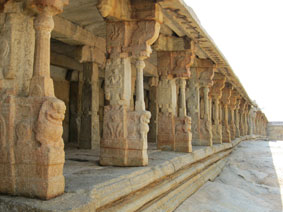
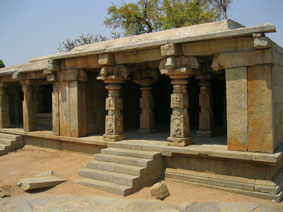
The outer temple wall is lined with cloisters where pilgrims stayed
while visiting the temple
 .
.  .
. 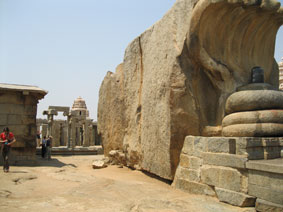
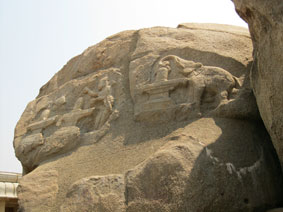
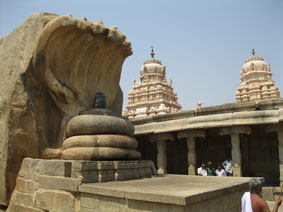
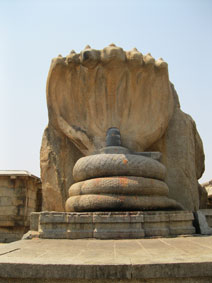
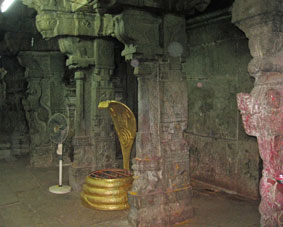
In the centre is a 7-headed cobra guarding a sacred stone
 . .
. . 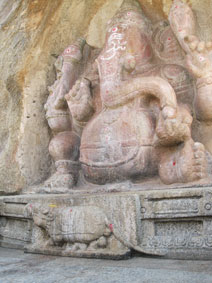
The cobra, and an elephant god whose transport is a rat
 .
.  .
. 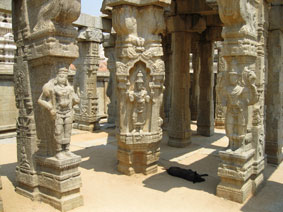
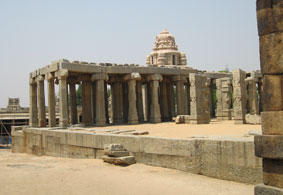
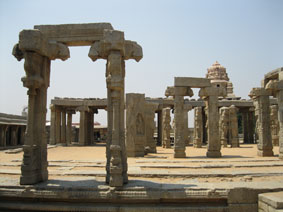
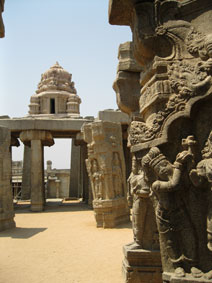
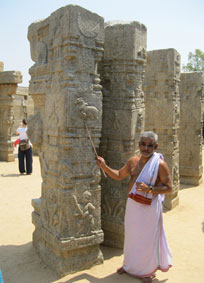
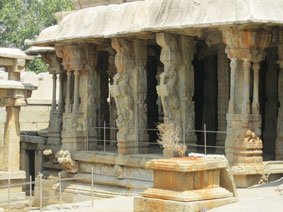
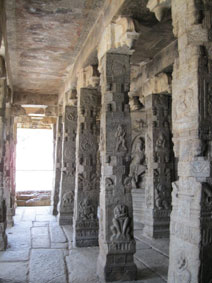
The unfinished back part of the temple has many carved columns.
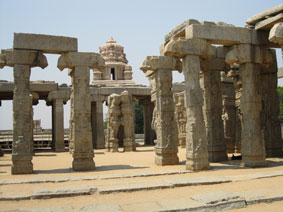 .
. 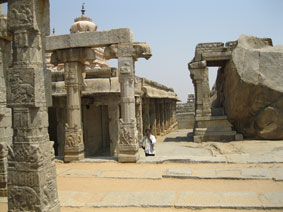 .
. 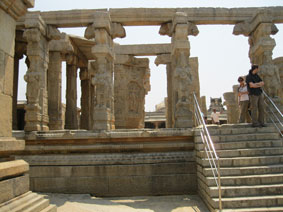
Work on the temple stopped when the king had the eyes of the temple
benefactor, the minister of finance, plucked out.
 .
.  .
. 
 .
.  .
. 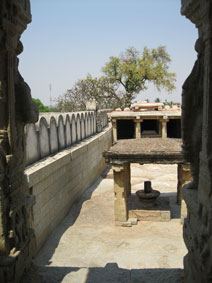
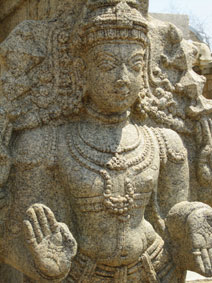
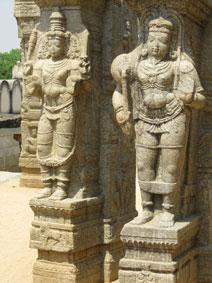
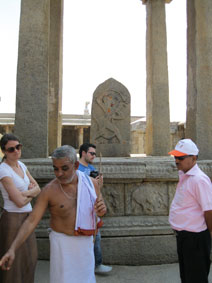
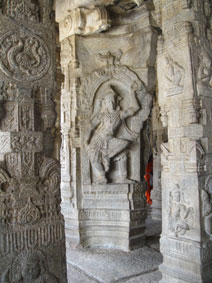
Each sculpture depicted a different god
 .
.  .
. 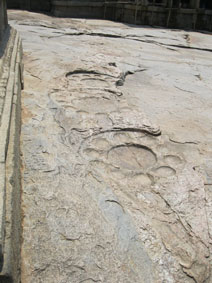
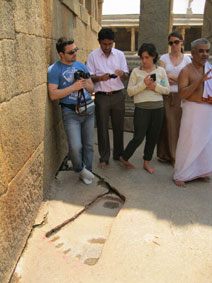
Our guide, the head priest, showed us a stone footprint that always
has water in it, and carved depressions where the sculptors ate
 .
.  .
. 
 .
.  .
. 
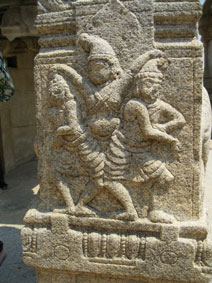
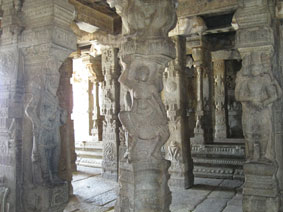
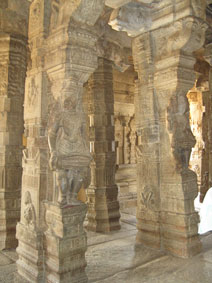
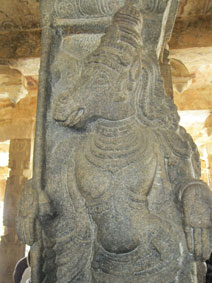
Before the entrance to the innermost temple where the monks
officiate, there is a columned space for dancing, with sculptures of
dancing
 .
.  .
. 
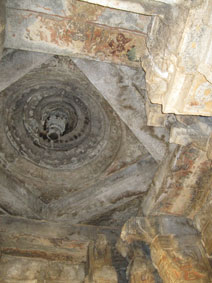
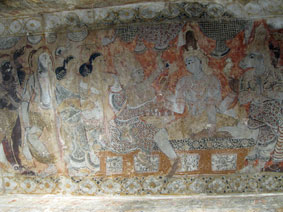
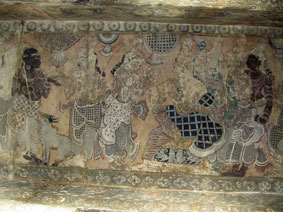
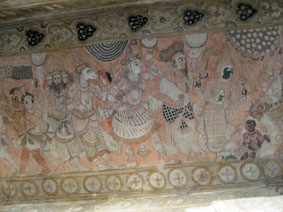
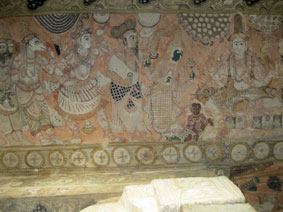
The ceiling of the inner temple was decorated with beautiful
paintings of court love hundreds of years ago
 .
.  .
. 
 .
.  .
. 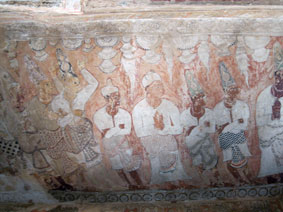
Ceiling paintings
C.K.PURA
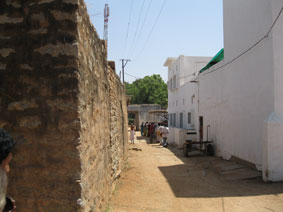
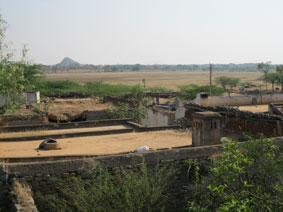
The village of C.K.Pura is a small agricultural village with several casts
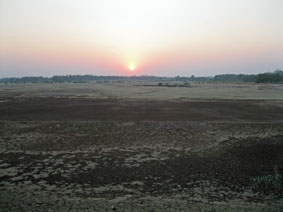
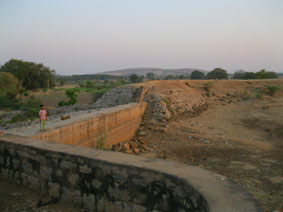
and a muslim minority, adjacent to a large reservoir (tank), part of an
extensive system for water retension and groundwater recharge during the
rainy season. Our host is the village chief and descendant of the founder,
and from the roof of his house there is a good view over the village and the
tank.
 .
.  .
. 
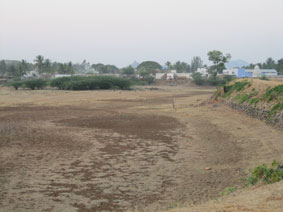
Roadway from the gate in the former village fortification to the home
of our host; view from his roof towards the tank; dry tank bed and setting
sun
 -
-  .
. 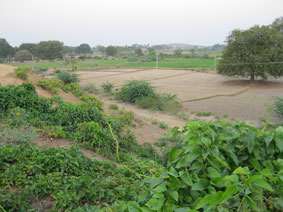
Spillway and bund of the tank; dry tank bed looking towards the
village; view of irrigated fields below the bund
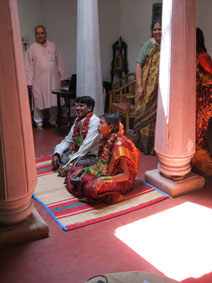
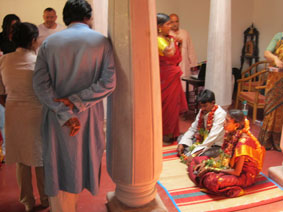
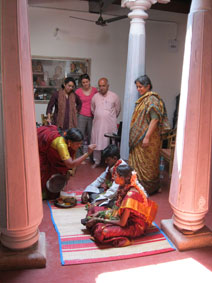
There were two weddings in the village while we were there, with music going
on all night long.
 .
.  .
.  .
. 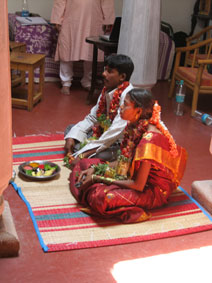
One couple of newlyweds came to our hosts house to pay their respect
to the village chief
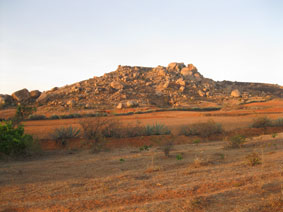
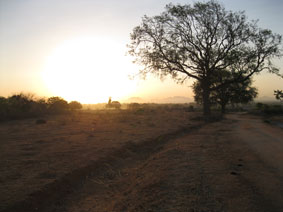
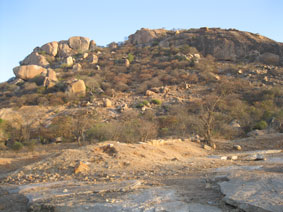
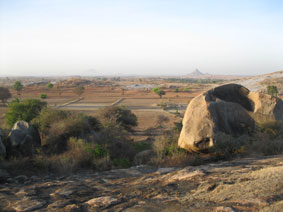
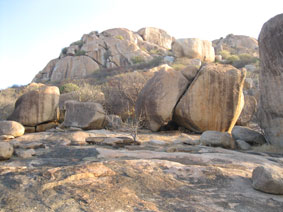
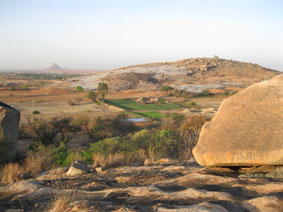
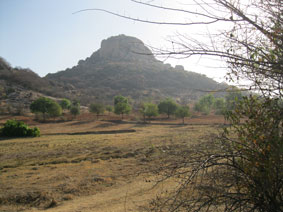
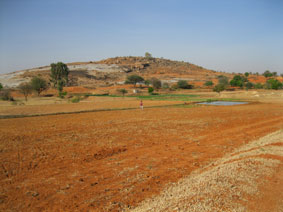
Early one morning we went for a hike up one of the rocky hills that dot the
landscape in this part of India. We did not go all the way up, as a mother
bear and her cubs were sheltering in a cave near the top.
 .
.  -
- 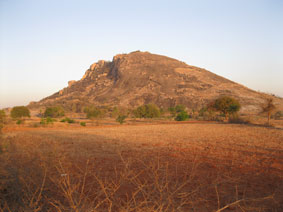
Rocky hills of granite punctuate the landscape between the fields;
sunrise; the hill we were going to climb
 .
.  .
. 
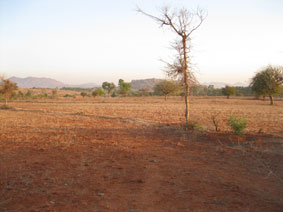
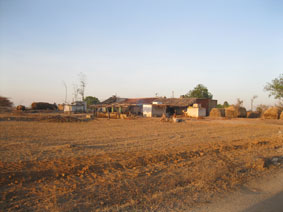
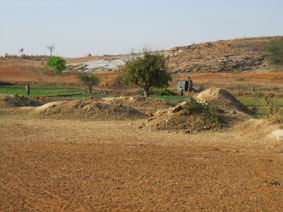
Farms struggle to make a living from the parched earth
.  .
. 
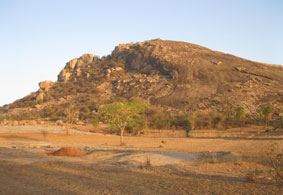
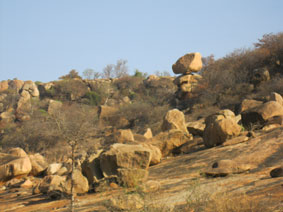
Approaching the hill lined with giant boulders
 .
.  .
. 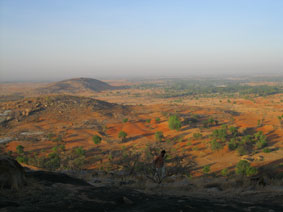
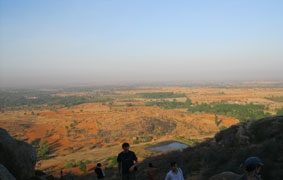
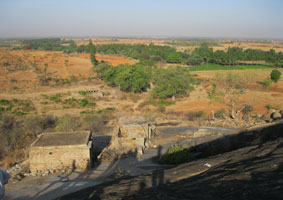
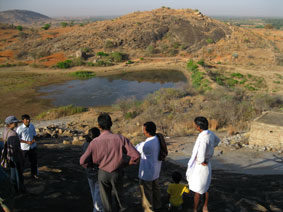
As we climbed higher, the view of the surrounding country became more
spectacular
 .
.  .
. 
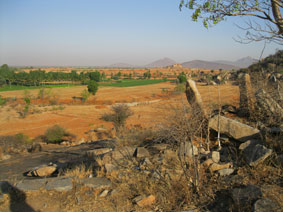
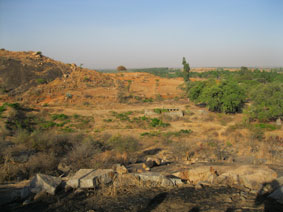
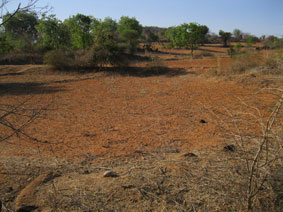
On the way down, we passed a simple farmhouse, and crossed the bund
of a small tank at the bottom
 .
.  .
. 
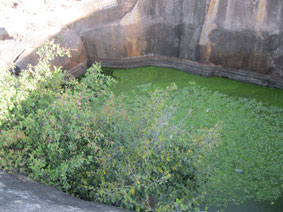
The farmhouse was adjacent to a deep natural pond in the rock
 .
.  .
. 
 .
.  .
. 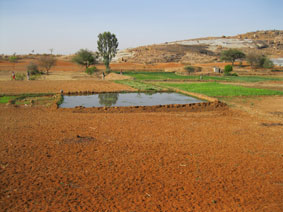
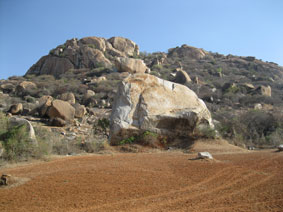
Irrigated fields provided green patches among the brown; one large
boulder was balanced atop another
 .
.  .
. 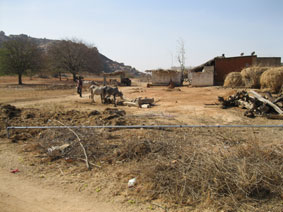
The boulder in the foreground in the center picture rolled down from
the hill about 20 years ago; a farm and lifestock
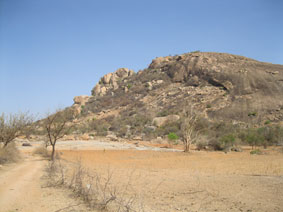
View back to the hill we climbed
 (see more pictures on the MaDePro page)
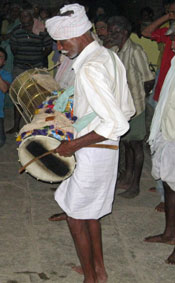
One evening two village drummers came to perform
 .
.  .
. 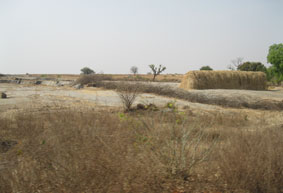
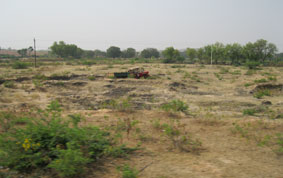
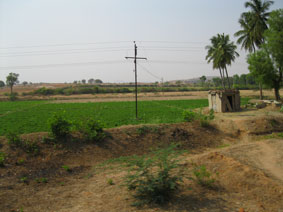
The contrast between unirrigated and irrigated fields is striking
Pavagada is the main town in the region, with stores and government services
 .
.  .
. 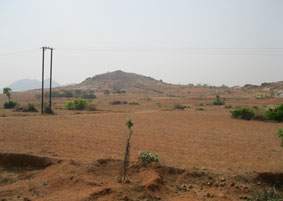
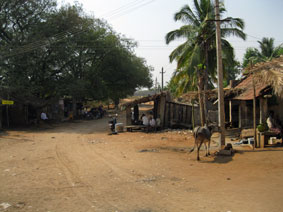
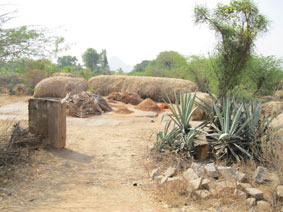
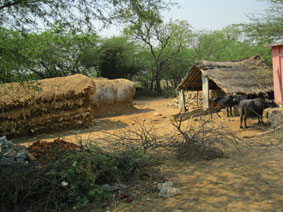
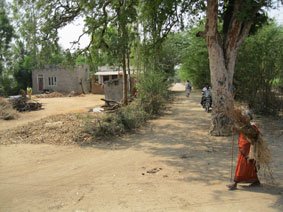
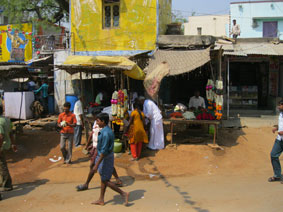
A village street; haystacks; dry fields waiting for the rains
 .
.  .
. 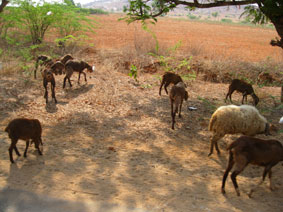
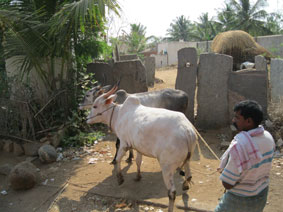
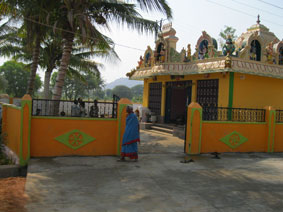
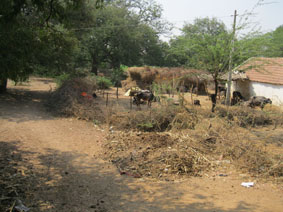
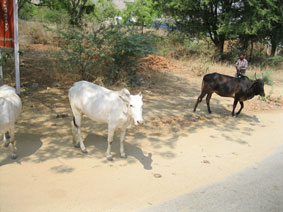
There are often cows and sheep along the road; a small hindu shrine
 .
.  .
. 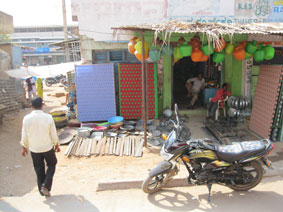
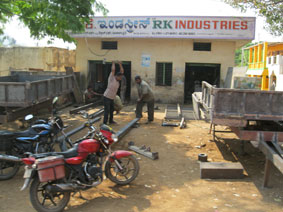
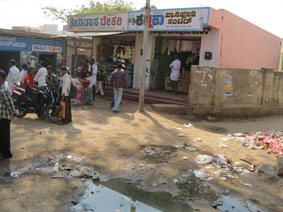
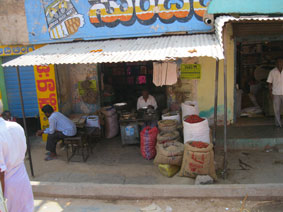
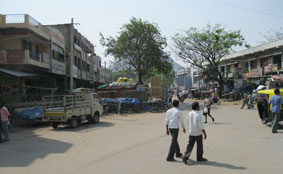
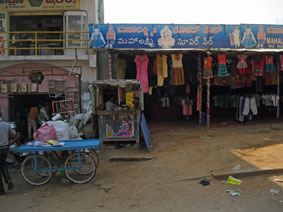
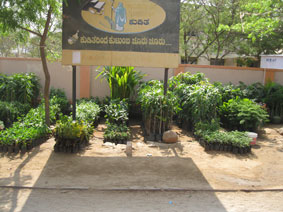
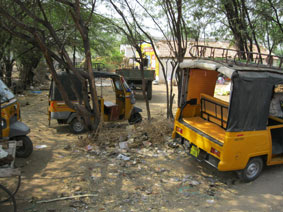
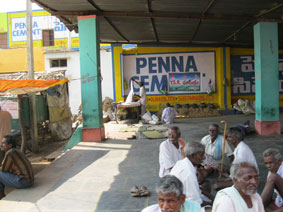
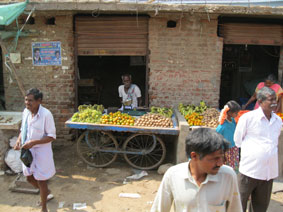
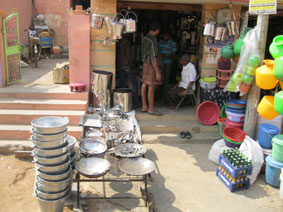
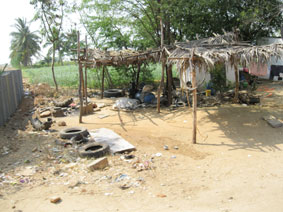
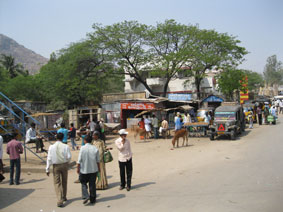
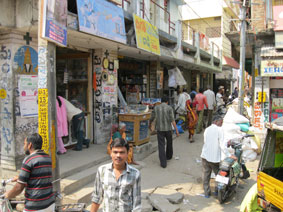
The streets in Pavagada are lined by many small shops
 .
.  .
. 
 .
.  .
. 
 .
.  .
. 
 .
.  .
. 
 .
.  .
. 
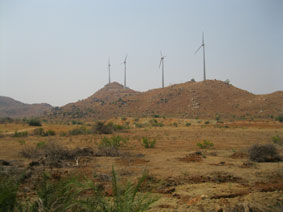
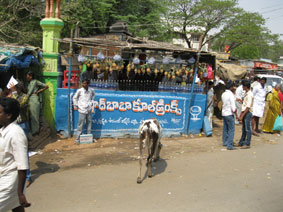
Beyond Pavagada there was quite an extensive wind farm, but no wind,
which only really blows 4 months of the year
 .
.  .
. 
Another town on the road back to Bangalore
 .
.  .
. 
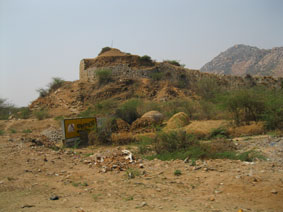
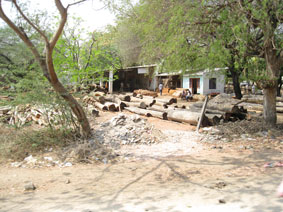
One outcrop was surrounded by former fortifications
PLANET UNDER PRESSURE
2012 - LONDON
The last week of March 2012 I was in London for the Planet
Under Pressure 2012 - New Knowledge Towards Solutions international
science conference. The conference aimed to provide scientific leadership
towards the 2012 UN Conference on Sustainable Development - Rio+20. With
nearly 3,000 participants, many significant plenary speakers, over 120
parallel sessions for paper presentations, 113 poster sessions, and many
other events, the four days were rich in scientific exchanges, sharing of
new knowledge and perspectives, and cross-disciplinary dialogues around the
state of the planet and the role of science in moving towards
sustainability. I had one talk and three poster presentations in different
sessions (see report and texts on IEF web site at https://iefworld.org/node/562.
 .
.  .
.  .
. 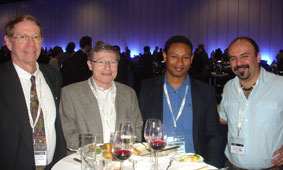
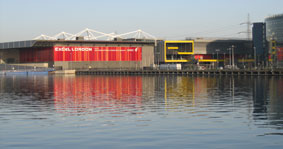
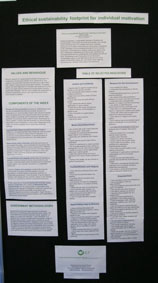
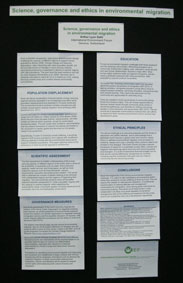
The Excell International Conference Centre on the Thames; two of my
poster presentations; me with scientists from USA, Cameroon and Mexico
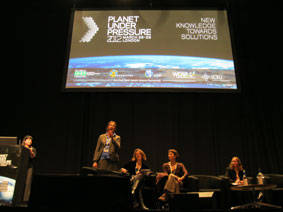
One of the sessions in the main auditorium was on values, co-organized by
IEF board member Sylvia Karlsson-Vinhuyzen, and with a keynote talk by Gemma
Burford of University of Brighton (both Baha'is) and two other papers
(including mine) on the values-based indicators project.
 .
.  .
. 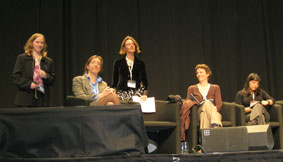
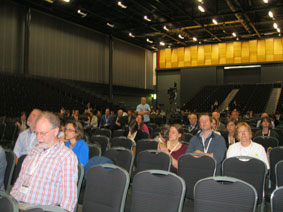
The values session in the main auditorium; a small part of the
audience; right, from left Gemma Burford, Sylvia Karlsson-Vinkhuyzen and
other speakers
EBBF EVENT, SELSDON PARK,
LONDON, UK
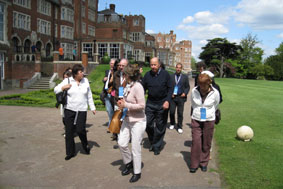
The European Baha'i Business Forum (ebbf) held an event at Selsdon Park, a
palatial hotel south of London, on 11-13 May 2012. The theme was "Redefining
Excellence" and involved over 90 participants in stimulating presentations
and discussions, as well as walks in the beautiful park with the speakers.
On the last morning, each of the EBBF board members gave a short talk on
excellence in some domain of interest. Mine on "Excellence and holistic
thinking" can be read at http://ebbf.org/blog/arthur-dahl-excellence-from-holistic-and-systemic-thinking/
or https://iefworld.org/ddahl12g.
 .
. 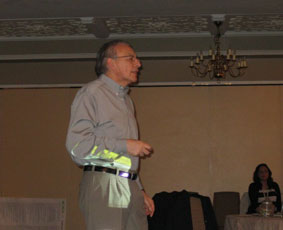
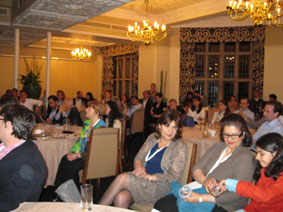
Part of the audience; Augusto Lopez-Claros speaking
 .
.  .
. 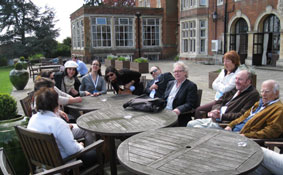
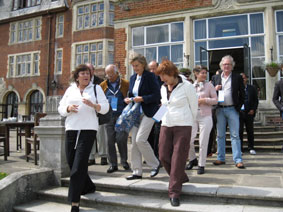
Jyoti Munsiff led a group on a walk in the park, before settling
around tables to talk
 .
.  .
. 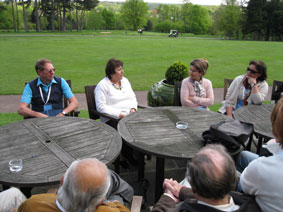
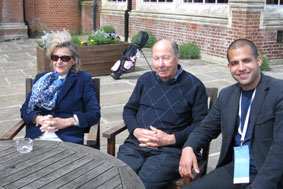
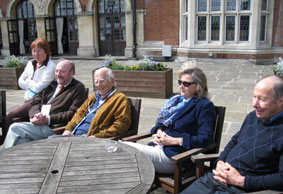
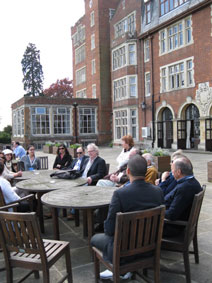
Annette Zahrai, George Starcher and Assir Cerrato; Ezzat and Annette
Zahrai, George Starcher; me, Jyoti Munsiff and group
 .
. 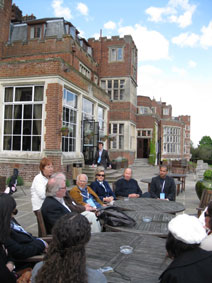
Discussion group on the terrace, with hotel behind
RIO DE JANEIRO - UNITED
NATIONS CONFERENCE ON SUSTAINABLE DEVELOPMENT
On 10-24 June I went to Rio de Janeiro, Brazil, as part of the International
Environment Forum delegation to the United Nations Conference on Sustainable
Development (Rio+20). See the separate report,
as well as the more substantive report
on the International Environment Forum web site.
CAUX, SWITZERLAND
In July 2012, I was invited to the Caux Forum on Human Security, with over
300 participants from around the world discussing themes such as "Restoring
the land, restoring life", inclusive economics, just governance, healing
memory and intercultural dialogue. The conference centre in the village of
Caux in the mountains high above Montreux at the eastern end of Lake Geneva
was built over a hundred years ago as one of the world's most luxurious
hotels, the Caux Palace, but since the end of World War II it has been run
by Initiatives of Change (formerly Moral Rearmament) as a meeting centre for
peace and reconciliation, first between French and Germans, then for former
enemies from most of the world's conflicts. This year there was a large
delegation from South Sudan and participants from many other trouble spots
in Africa and around the world.
 .
. 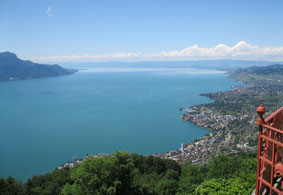 .
. 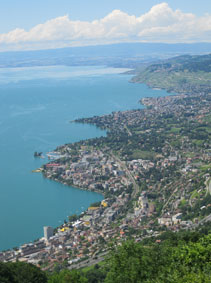
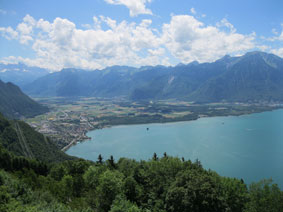
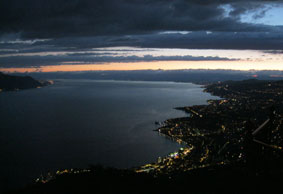
The views from my room of the valley of the upper Rhone River, Lake
Geneva and the towns of Montreux and Vevey
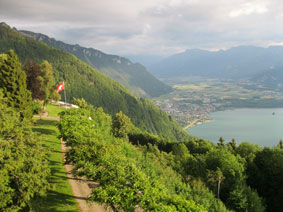 .
. 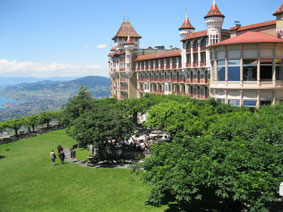 .
. 
The mountainside at Caux, Mountain House, the conference centre, and
the view at night
 .
.  .
. 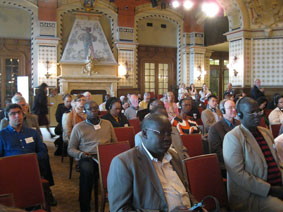
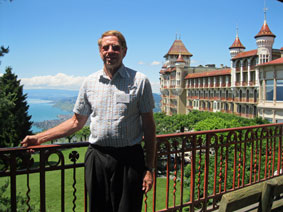
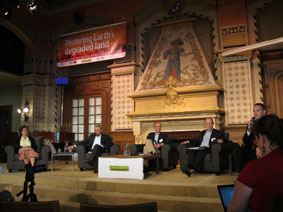
Me at the conference, a panel session on sustainability, and part of
the audience
On particularly touching evening event told the story of the Australian
Government's formal apology for its treatment of the Aboriginal peoples of
Australia, particularly the "lost generations" of children who were taken
from their parents to destroy aboriginal culture by blocking its
transmission. The participants were former Prime Minister Kevin Rudd, who
issued the apology, and two Aboriginal leaders of the movement for
Aboriginal rights and documentation of the abuses
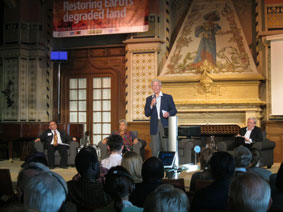 .
.
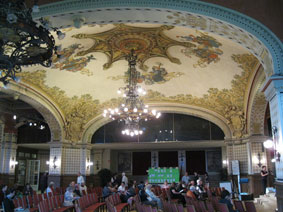
The evening panel on reconciliation in Australia; the
spectacular main hall
JOUX VALLEY - VALLÉE DU JOUX,
SWITZERLAND
In mid-July, I was invited to join the Triglav Circle, founded by the
Secretary-General of the 1995 UN Social Summit in Copenhagen and other
leaders to debate ethics, spirituality and social development. Its members
include retired UN officials, theologians, academics and other
intellectuals. It held its summer meeting in the Jura mountains that form
the western border between Switzerland and France, on the topic of harmony
with nature. The mountains are not as high or dramatic as the Alps, but are
covered with forest with longitudinal valleys. We stayed in the village of
Les Charbonnières in the Joux Valley in the Canton of Vaud, Switzerland,
beside a small lake next to the much larger Joux Lake. Steel was made there
in the past using charcoal from the forests, which gave rise to the name of
the village.
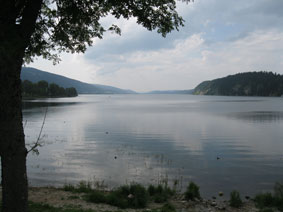
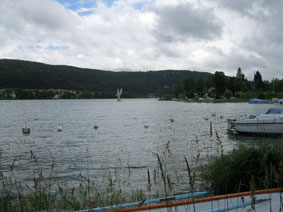
I returned to the Joux Lake in September for a picnic and walk along the
lake organized in support of the French-language Bahá'í magazine "La Pensée
Bahá'íe".
.
.
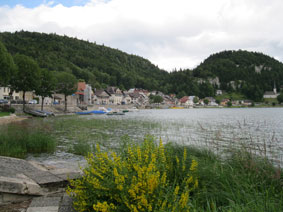
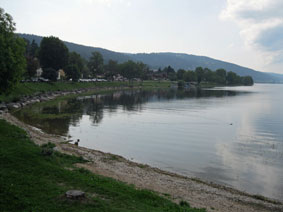 The town of Le Pont at the southern end of the long narrow Joux
Lake, where the train stopped
The town of Le Pont at the southern end of the long narrow Joux
Lake, where the train stopped
.
.
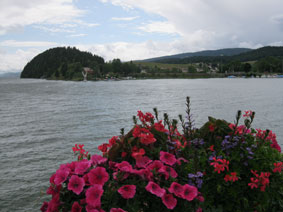
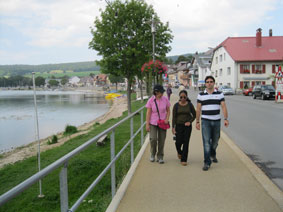 Joux Lake, with a statue of Pegasus; some Bahá'ís and their
friends in the village of Le Pont
Joux Lake, with a statue of Pegasus; some Bahá'ís and their
friends in the village of Le Pont
CAP D'ANTIBES, FRANCE
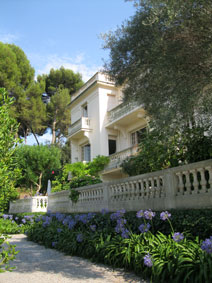
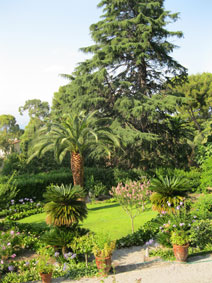
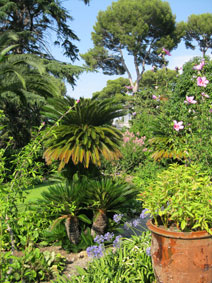
A couple of friends and long-time colleagues invited me to their family home
at Cap d'Antibes on the Côte d'Azur, a hundred-year-old residence in a
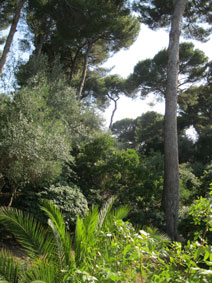
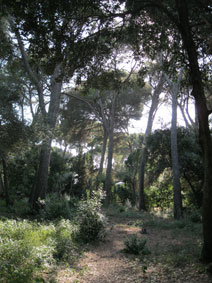
forest with beautiful gardens overlooking the Mediterranean Sea. We had an
artistic evening with a concert by a Japanese harpist, who by chance had
been received in France by an old family friend, Ako Ito Dorigny, who lived
with my family in California as a music student in the 1960s, and whose
family I had visited in Sapporo, Japan, 45 years ago. Also at the party was
a talanted Chinese artist, Ho Lui, who rapidly cut ingeneous three
dimensional silhouette portraits of each of the guests.
 .
.  .
.  .
. 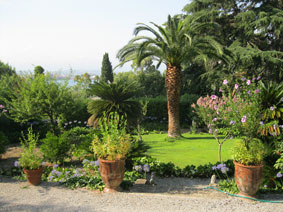
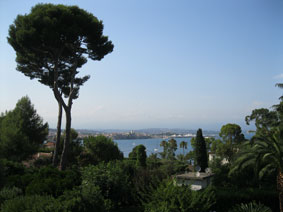
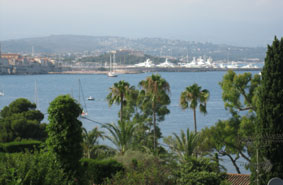
The house and garden on Cap d'Antibes
 .
.  .
. 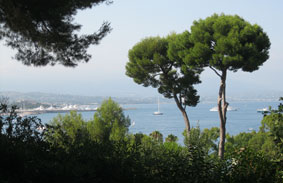
The view from the house of the Mediterranean and Antibes, with luxury
yachts in the distance
 .
.  .
.  .
. 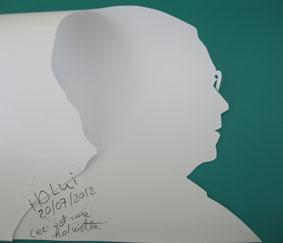
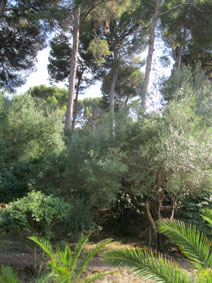
Mediterranean pine forest behind the house; my silhouette portrait by
Ho Lui
CALIFORNIA
I was in California from 25 July to 8 August visiting with my brother
Greg and his family from Bulgaria, who rent a house each summer in Pebble
Beach on the Monterey Peninsula where we grew up. This year, Greg, his
wife Emi, the twins Gregory and Joyce (now 13), and their younger (but
bigger) sister Mina (12), were accompanied by Gregory's best friend Petar
(Pepi) Mihov and his mother Gergana Mihova. Pepi was just recovering from
a difficult but hopefully successful treatment for cancer. We went for
walks in the forest and down to the beach, took a drive down to Big Sur
for a hike into the coastal redwoods, and went up to the High Sierras in
Yosemite National Park. Just before I left, Greg's daughter Carrie
Smith-Dahl came down from Oakland and we had a family dinner on
Fishermen's Wharf in Monterey.
PEBBLE BEACH and
MONTEREY
For other pictures of the Del Monte Forest at Pebble Beach, and Big Sur, see
last year's travel album. We
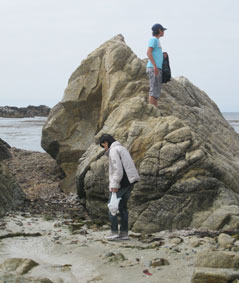
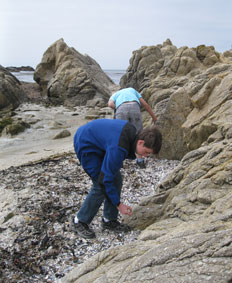
walked through the forest down to the seashore so that Gergana could collect
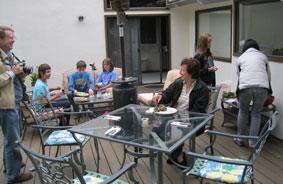
shells and other flotsam for her artistic creations. The boys also organized
a festive dinner outside on the terrace for Joyce on her return from five
weeks of an intensive ballet academy in Chicago.
 .
.  .
. 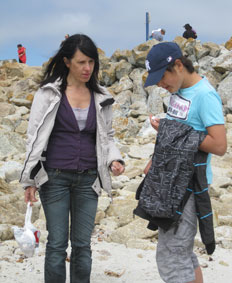
Collecting flotsam; Greggie and Pepi; Gergana and Pepi
Dinner on the terrace for Joyce, with the whole family reunited after 5
weeks
 .
. 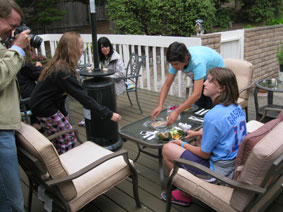
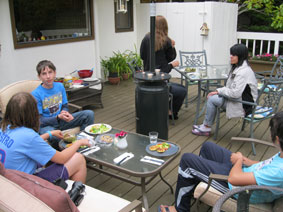
Left: Greg, Pepi, Greggie,
Mina, Emi; Joyce, Gergana; Right:
Greg, Joyce, Gergana, Pepi, Mina
 .
. 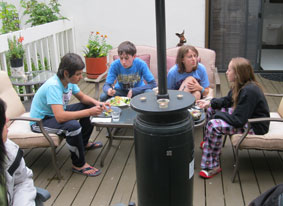
Left: Mina, Greggie,
Gergana, Pepi; Right: Pepi,
Greggie, Mina, Joyce
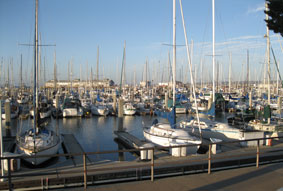
Monterey was the first capital of California and a major fishing port, the
site of Cannery Row, but now pleasure craft outnumber fishing boats. It is
also a major research center in marine sciences, including the Hopkins
Marine Station of Stanford University, where I studied.
 .
. 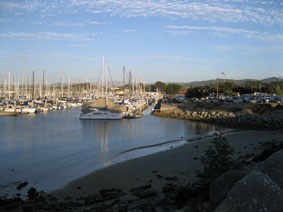
Boats and shoreline in Monterey harbour
 .
.  .
. 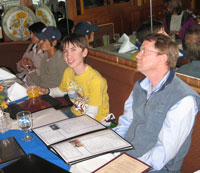
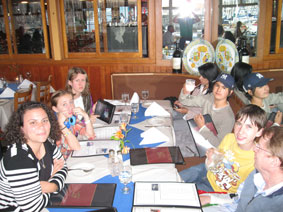
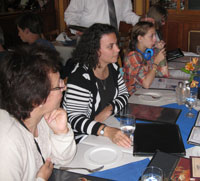
Dahl family dinner, with (feft to right) Carrie Smith-Dahl, Joyce,
Mina, Gergana, Pepi, Greggie, Greg; Emi also in the middle photo
BIG SUR
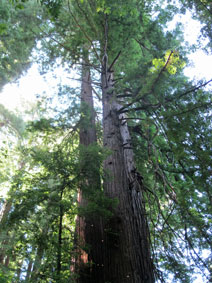
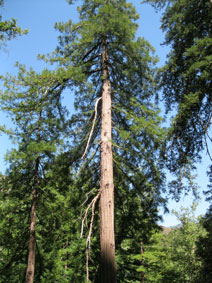
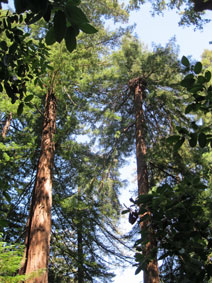
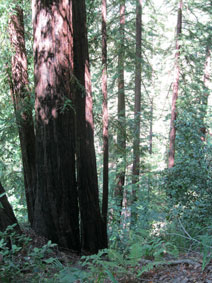
On 1 August we drove down California Highway 1 to Big Sur, to hike through a
grove of Coast Redwoods (Sequoia
sempervirens), the tallest species of tree in the world. The fog
stayed off the coast, so we profited from the warm sunny day to walk up the
redwood-lined valley.
 .
.  .
. 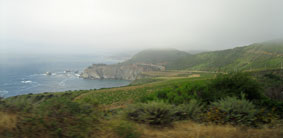
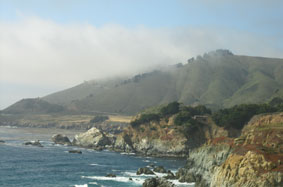
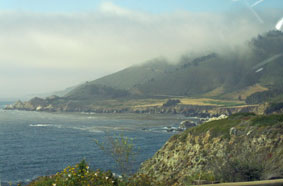
Big Sur coast between Carmel and Big Sur. In summer, the fog is never
very far away.
 .
.  .
. 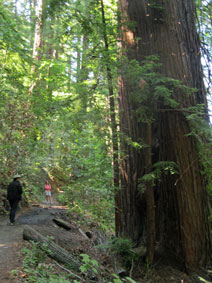
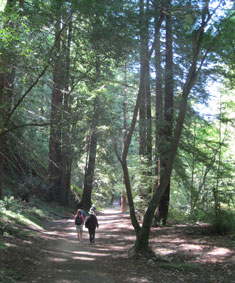
Walking through the redwoods at Big Sur
 .
.  .
. 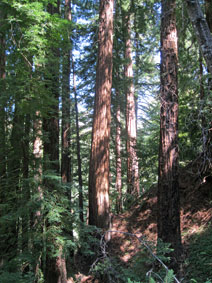
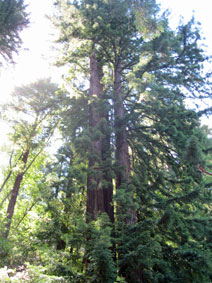
The trees, with their thick reddish bark, are always impressive
 .
. 
HIGH SIERRAS IN
YOSEMITE NATIONAL PARK
On 2-6 August, we drove across the central San Joaquin Valley of California
in 38°C/100°F heat to Yosemite National Park in the Sierra Nevada mountains,
and climbed into the High Sierra back country above Yosemite Valley. When we
were young, our family went every summer to Yosemite, and we began hiking in
the High Sierras in the early 1950s, so the trip brought back many memories,
and the mountains, at least, have not changed much in 60 years. The
glacier-carved granite mountains produce dramatic landscapes. The first two
nights were at Tuolumne Meadows (2,658 meters/8,720 ft.), a relatively large
tented camp accessible by car, to acclimate ourselves to the altitude and
make local excursions. Then we hiked up to May Lake (2,853 meters/9,360
ft.), a small High Sierra Camp for about 30 people with 4-person tents with
beds and wood stoves, showers and full meal service (comfort in the
wilderness). Our big hike was to the top of Mount Hoffmann (3,307
meters/10,850 ft.), which I had not climbed for 48 years, and reached again
just short of my 70th birthday. On the way out of the park, we stopped at
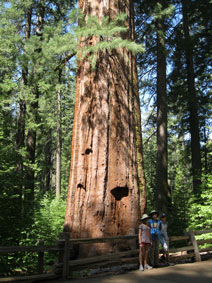
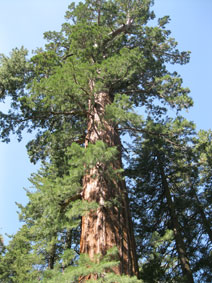
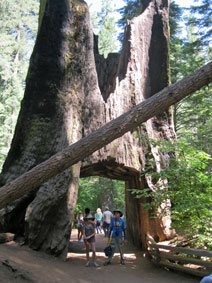
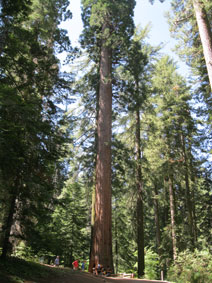
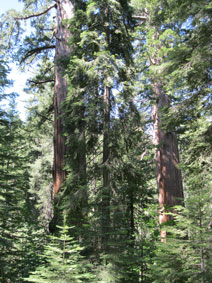
the Tuolumne Grove of giant Sequoias (Sequoiadendron
gigantea), the world's largest trees, which can be over 2,000 years
old.
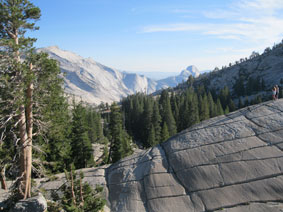
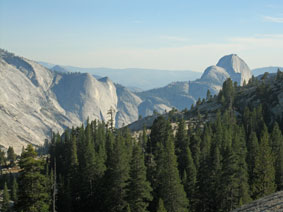
On the road to the high camps
 .
.  .
. 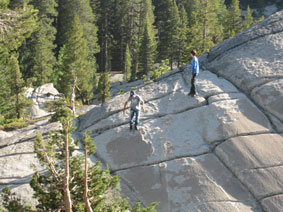
Views of Yosemite Valley and Half Dome from the Tioga Pass Road; Pepi
and Greggie exploring
 .
. 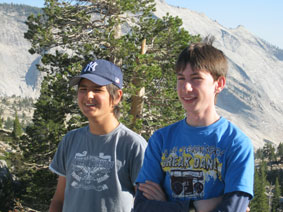
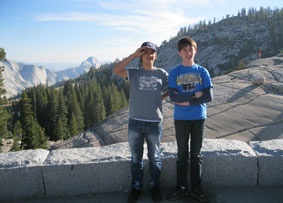
Pepi Mihov and my nephew Gregory Dahl
 .
. 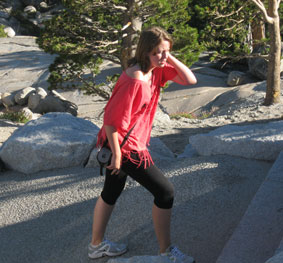
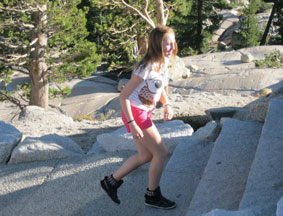
My nieces Joyce Dahl; Mina Dahl
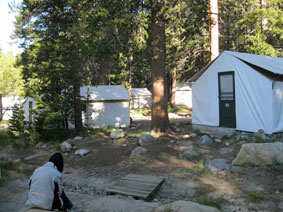
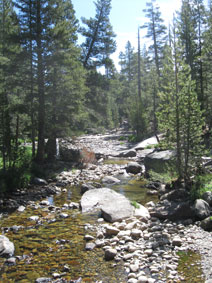
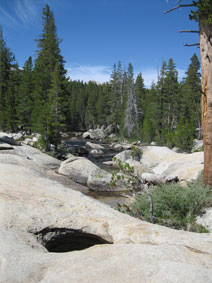
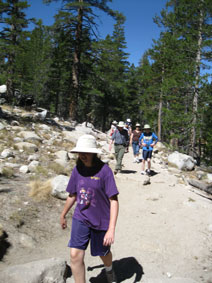
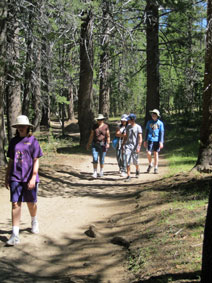
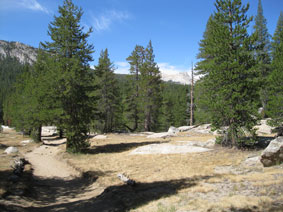
We spent two nights at Tuolumne Meadows (8720ft/2616m) and hiked through the
meadows to the Lyell Fork of the Tuolumne RIver
 .
. 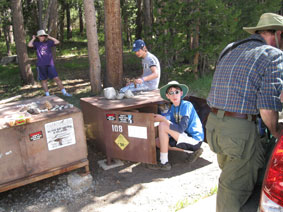
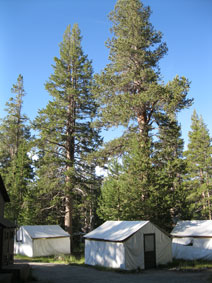
Tuolumne Meadows Lodge tents; packing our food in the bear-proof
boxes
 .
.  .
. 
Tuolumne Meadows
 .
.  .
. 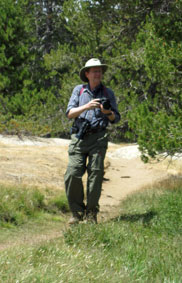
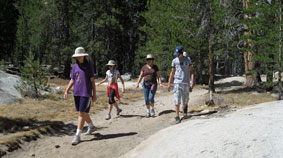
Our party hiking down to the Lyell Fork of the Tuolumne River; my
brother Greg
 .
. 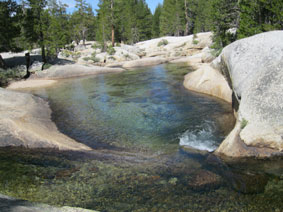
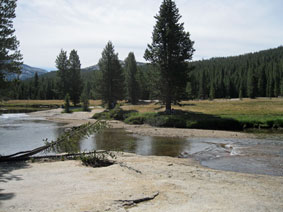
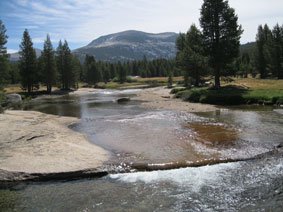
Tuolumne Meadows; Tuolumne River
 .
. 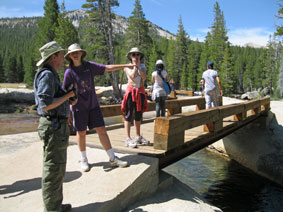
Tuolumne Meadows; Greg, Mina, Joyce and the others
 .
. 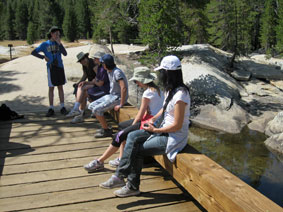
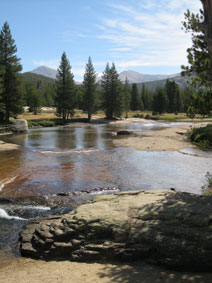
Tuolumne River; resting on the bridge
 .
. 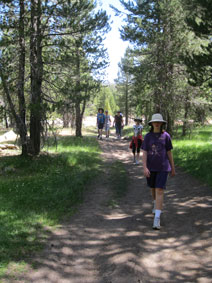
Lyell Fork of the Tuolumne River; hiking through Tuolumne Meadows
 .
. 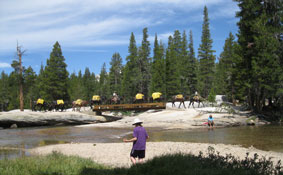
Mina, Joyce, Emi, Pepi; a mule pack train on the way to supply a High
Sierra Camp
 .
.  .
. 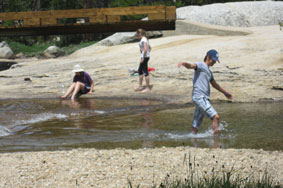
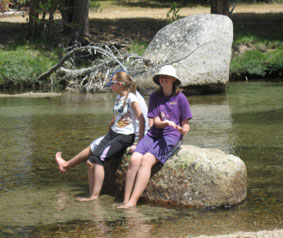
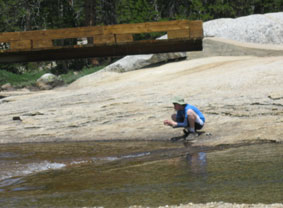
Joyce and Mina cool their feet; Greggie investigating something; Pepi
and the girls in the river
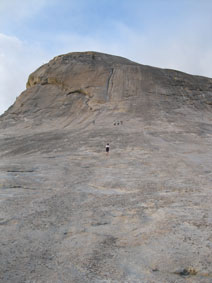
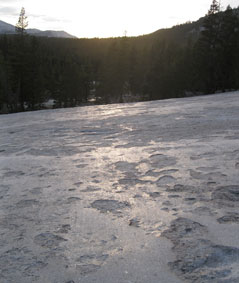
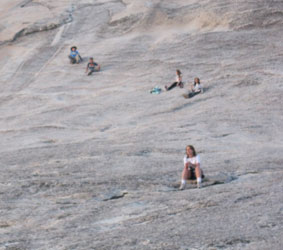
For lunch and dinner, we picnicked at the base of Lembert Dome, a bare
glacier-carved granite outcropping
 .
.  .
. 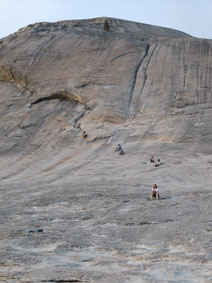
Lembert Dome carved by the glaciers; glacier polish on the rock; our
kids climbed as high as possible
 .
. 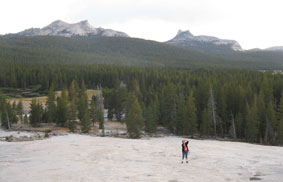
Greggie and Pepi, Joyce and Gergana, Mina; the view from Lembert Dome
with Emi
 .
. 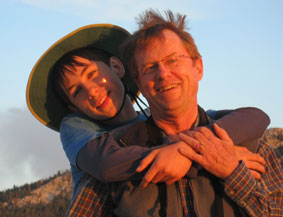
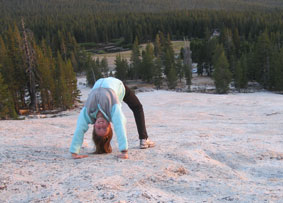
Joyce practicing ballet; Greggie and Greg
 .
. 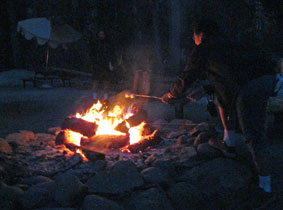
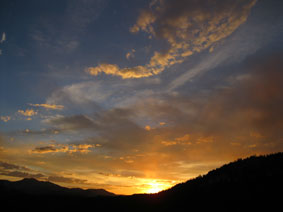
We waited to watch the sunset from the dome, and then roasted
marshmallows at the campfire
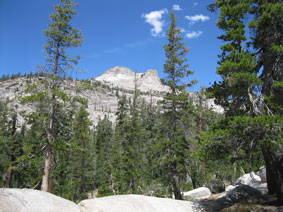
May Lake High Sierra Camp (9360ft/2808m), at the base of Mount Hoffmann
 .
.  .
. 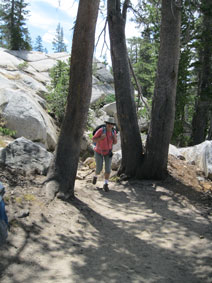
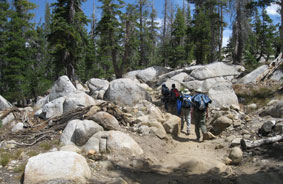
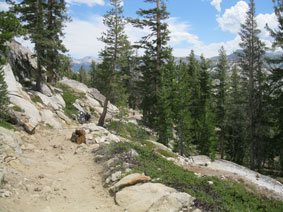
As we hiked up the switchbacks to May Lake, we got our first glimpse
of Mount Hoffmann; Emi on the trail
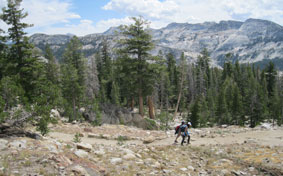 .
. 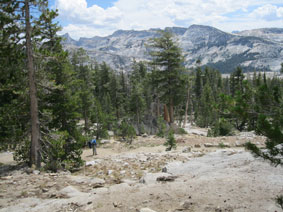
Pepi and Gorgana; Greggie on the trail
 .
. 
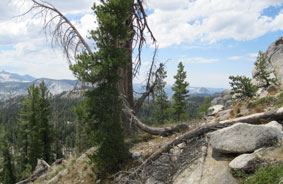
At one point on the trail, we could see Half Dome in the distance
 .
. 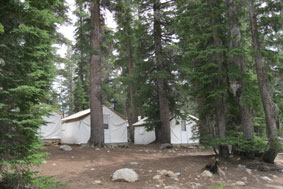
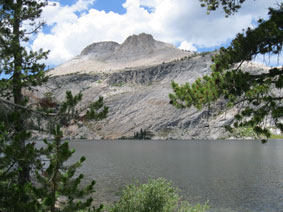
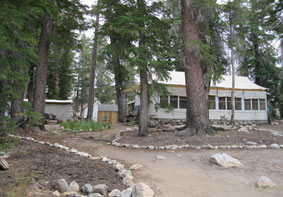
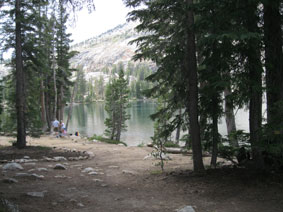
Our first view of May Lake; the High Sierra Camp with our tents
 .
. 
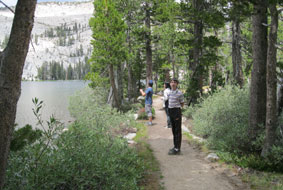
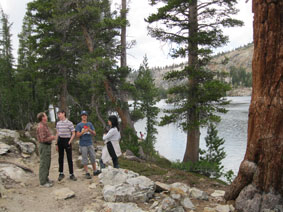
The showers, kitchen and dining tent; view of May Lake from our tent
 .
. 
Walking along May Lake
 .
. 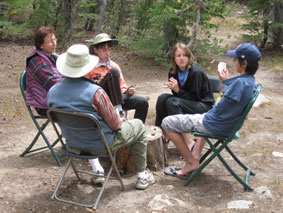
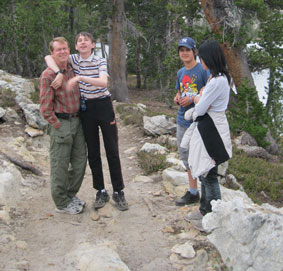
Greg, Greggie, Pepi and Gorgana; a game of cards with Emi, Greg,
Greggie, Mina and Pepi
Climbing Mount Hoffmann (10,850 ft / 3,255 meters)
 .
. 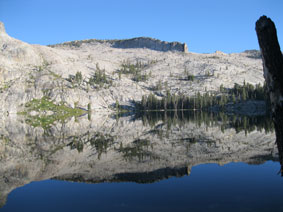
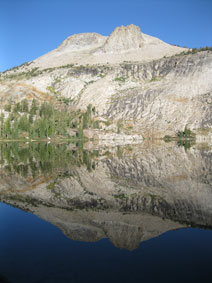
Mount Hoffmann reflected in May Lake in the early morning
 .
. 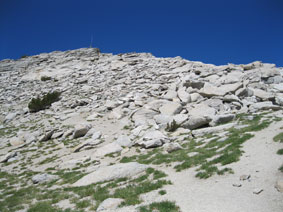
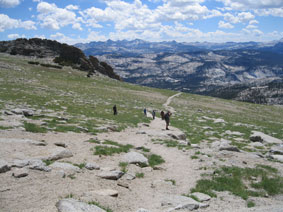
After a steep climb through meadows, switchbacks and boulders dotted
with marmots, we reached the last scree field and the steep ascent to the
top
 .
. 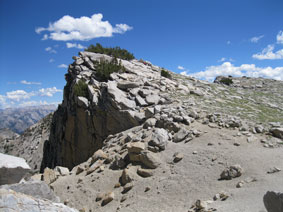
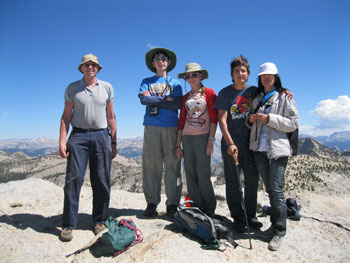
On top of Mount Hoffmann: Arthur, Greggie, Joyce, Pepi and Gorgana;
the next peak down with a sharp cliff on the north side
 .
. 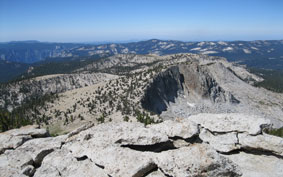
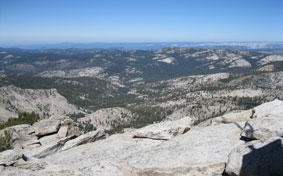
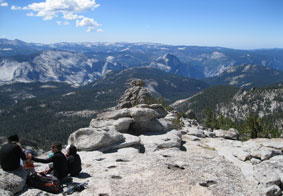
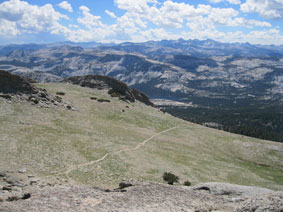
Panorama of the view from the top of Mount Hoffmann
 .
. 
The summit ridge with Half Dome in the distance
 .
. 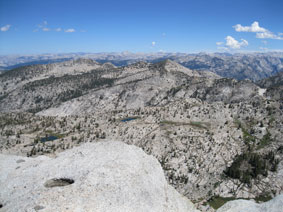
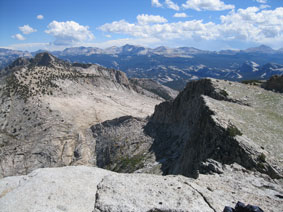
Views to the north from the summit
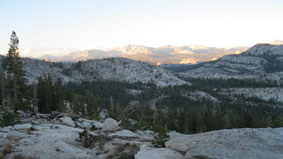
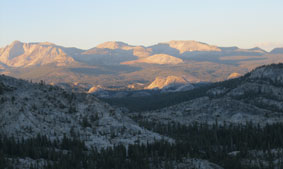
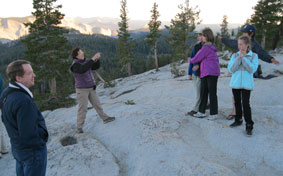
In the evening, we climbed to the ridge behind the May Lake camp to admire
the sunset on the Sierra peaks
 .
. 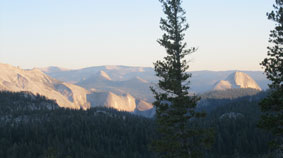
View to the south and toward Yosemite Valley
 .
. 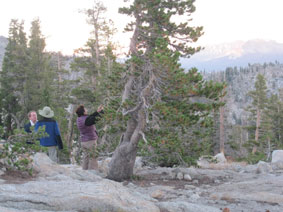
View to the east; Greg, Greggie and Emi
 .
. 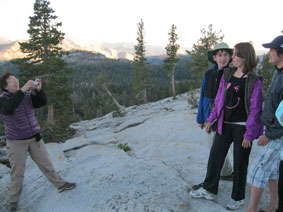
Greg, Emi, Greggie, Mina, Joyce, Pepi
Tuolumne Grove of giant Sequoias
 .
.  .
. 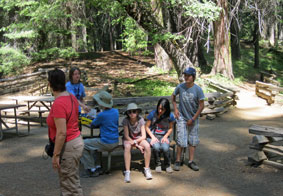
Bottom and top of a very big Sequoia; Emi, Mina, Greggie,
Joyce, Gergana and Pepi in the grove
 .
.  .
. 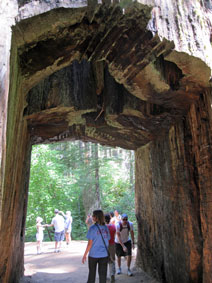
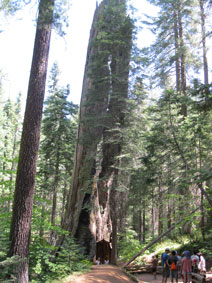
Early last century, a tunnel was cut through an old trunk that cars
could drive through
 .
.  .
. 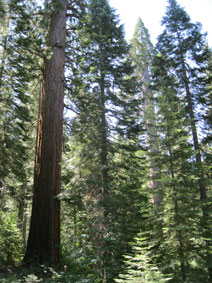
Some of the giant Sequoias in the grove
Leaving Yosemite
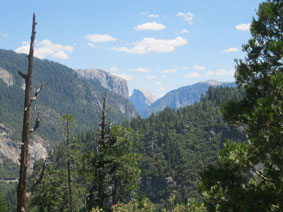
A last glimpse towards Yosemite Valley and Half Dome before we drove
out of the park
QUEBEC
From California I went to Quebec for two weeks with my son Alex, his wife
Mahalia Gagnon, and their children Jérémie, Benjamin and Alie. The first few
days we attended the Association for Bahá'í Studies Conference in Montréal,
and spent an afternoon at the science museum, before going to their home in
St. Romuald, Lévis, across the river from Quebec city. It was good to have
some quiet time with my grandchildren Benji (6) and Alie (4 1/2). Since they
have a garderie (creche, nursery school) at home during the week with other
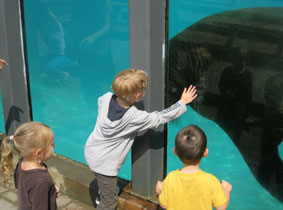
children, the place is quite lively. One day we all went to the aquarium and
water playground. Just before I left, Mahalia and I went to the Quebec
Bahá'í Summer School to give courses.
 .
. 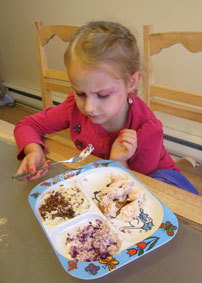
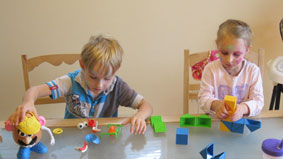
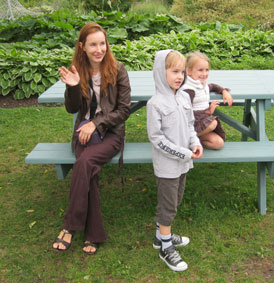
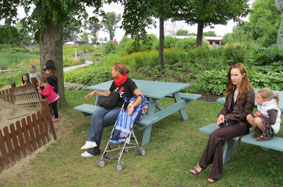
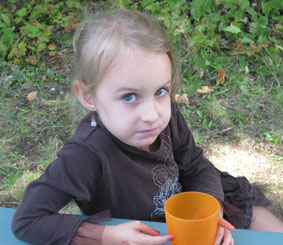
Benji and Alie; Alie looks at lunch with some hesitation
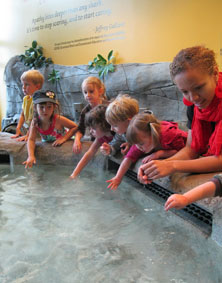
The creche outing to the Quebec aquarium
 .
.  .
. 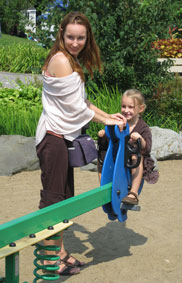
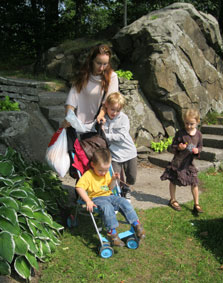
Mahalia, Benji and Alie; with Rachel Louie and the other children;
Mahalia and Alie on the see-saw
 .
. 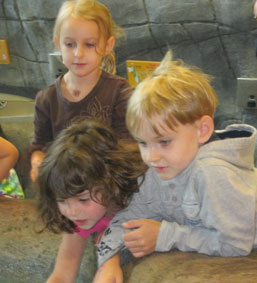
The children at the skate petting pool
 .
. 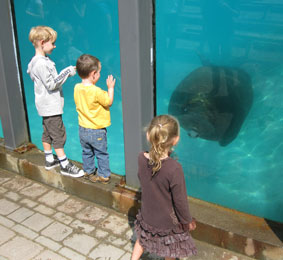
Alie, Benji and Nicholas meet the walruses
 .
.  .
. 
Benji; Alie; Mahalia, Benji and Ali with Nicholas
 .
.  .
.  .
. 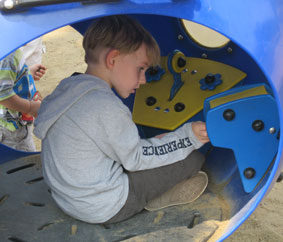
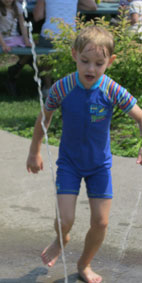
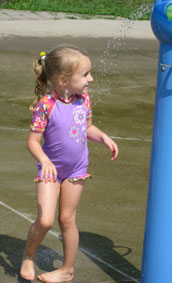
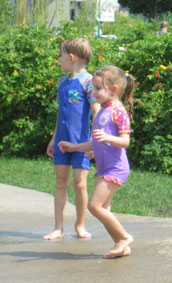
Benji and Alie at the water playground, and Benji in the submarine
The extended Gagnon family, including the matriarch, Mahalia's grandmother,
held a family dinner to celebrate all the August birthdays. I just turned
70.
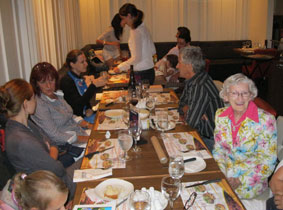
Mahalia, several generations of Gagnons, and Mahalia's grandmother
QUEBEC BAHA'I SUMMER
SCHOOL
L'ECOLE D'ETE BAHAIE DE QUEBEC
On 20-21 August, Mahalia (my daughter-in-law) and I went to the Quebec
Bahá'í Summer School at a rural camp two hours north of Montréal and Quebec,
to give courses. Mine was on "'Abdu'l-Bahá: the perfect example", and
Mahalia's on "Divine Civilization", followed by an artistic workshop on
past, present and future visions of civilization. There were about 150
participants of all ages, and a beautiful spirit of unity.
Le 20-21 août, Mahalia (ma belle-fille)
et moi ont participé à l'école d'été bahaie de Québec au centre de
vacances Val Notre Dame à deux heures de Montréal et Québec. J'ai presenté
un cours sur «l'Abdu'l-Baha: l'exemple parfait» et Mahalia un cours sur
«la Civilisation divine», suivi d'un atelier artistique sur le passé, le
présent et la futur civilisation. Il y avait à peu près 150 participants
de tous les âges, et un bon esprit d'unité.
 .
.  .
. 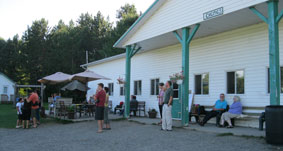
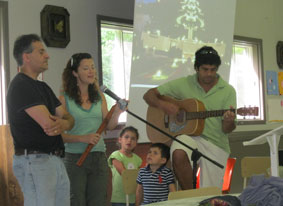
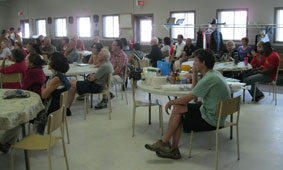
Most sessions started with music; part of the diverse audience; in
front of the main hall
 .
.  .
. 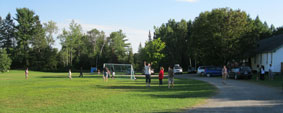
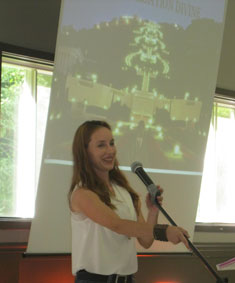
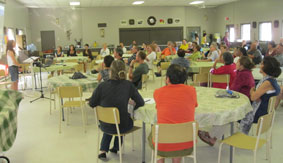
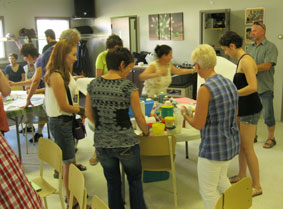
Mahalia Gagnon beginning her class; the audience; the green in
the middle of the camp
 .
.  .
. 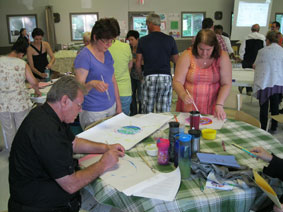
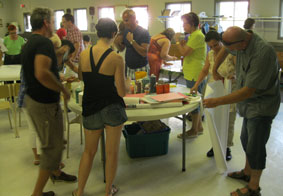
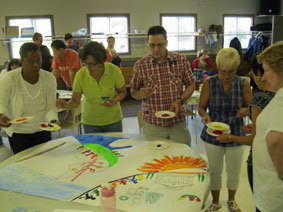
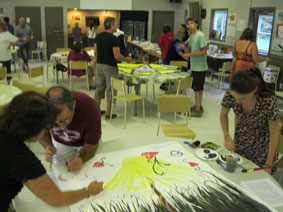
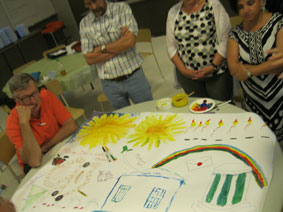
In the artistic workshop that Mahalia organized, groups prepared
murals and other works on the past, present and future of civilization
 .
.  .
. 
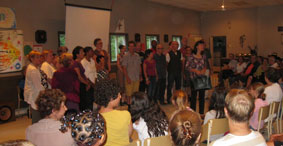
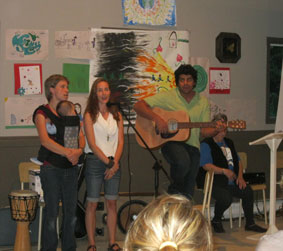
Sunday evening musical performances - Une
soirée musicale dimanche soir
 .
.  .
. 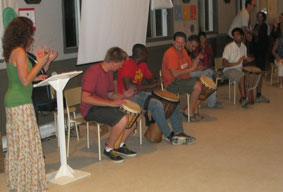
The school choir; Mahalia helping to lead a song; the young men and
their jembe drums
 .
.  .
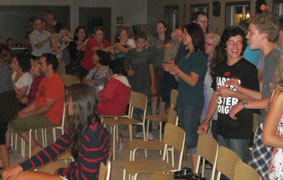
. 
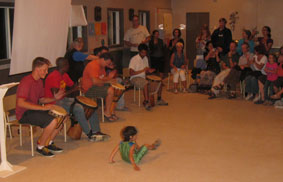
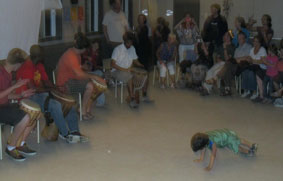
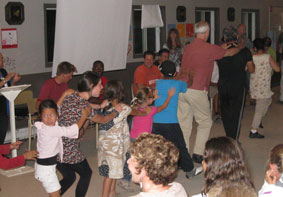
The lively drumming inspired a talented young break dance performance
 .
.  .
. 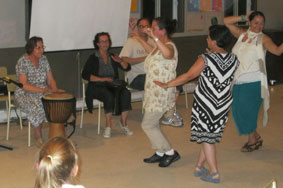
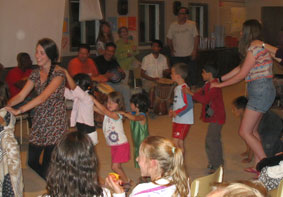
Soon almost the entire group, of all ages, was dancing; when the
young men tired, the older women took over with equally lively rhythms and
dance
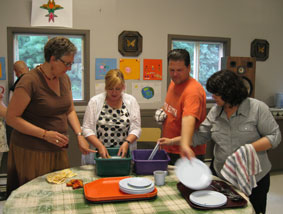 Everyone helped with washing dishes after every meal
 .
.  .
. 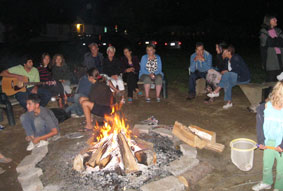
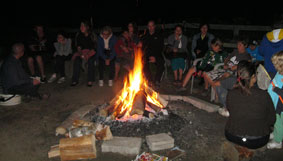
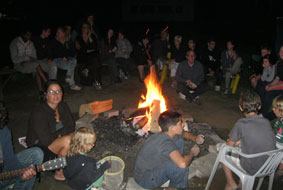
After the evening programme, we gathered around the campfire for
songs and fellowship
 .
.  .
. 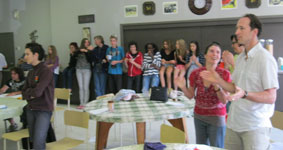
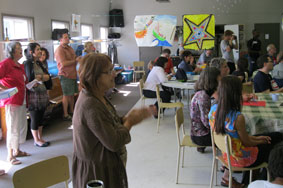
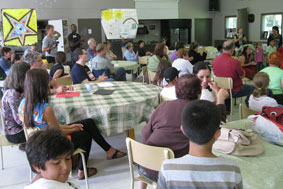
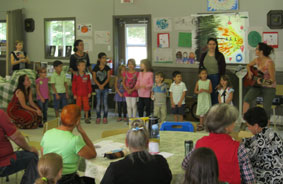
The audience was always intentive and involved
 .
.  .
. 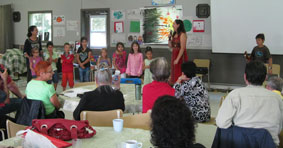
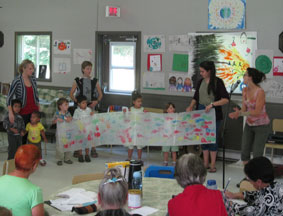
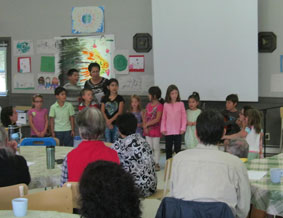
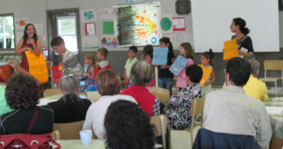
The final session was presentations by all the the children's classes
and youth groups
 .
.  .
. 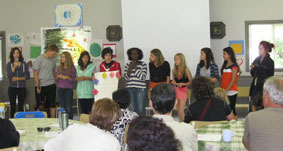
Each age group showed off and explained their work
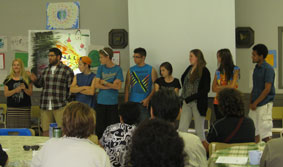 The youth had also helped with the children's classes
The Quebec Bahá'í Summer School is an opportunity for the
francophone community of Canada to come together in unity in diversity.
L'école d'été bahaie de Québec donne
aux francophones de Canada la possibilité de s'unir dans la diversité.
EVIAN-LES-BAINS, FRANCE -
BAHA'I SUMMER SCHOOL - ECOLE D'ETE BAHA'IE
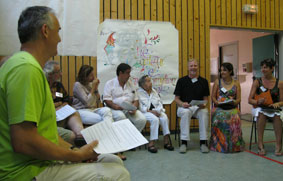
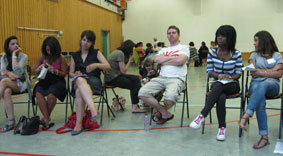
Over 400 gathered in a lakeside vacation village in Evian-les-Bains for the
week-long French Bahá'í Summer School on the theme "Be an actor of social
change". The approach was very participative, with workshops each morning to
study and develop activities around selected texts, artistic and
recreational activities after lunch, and late afternoon lectures on
significant figures in the Faith. On the final morning, each workshop group
shared a musical/theatrical/artistic creation with the whole school, and the
creative talent of all was quite amazing. The evenings were mostly musical
and film presentations, including some superb jazz by American singer
Tierney Sutton and others.
 .
.  .
. 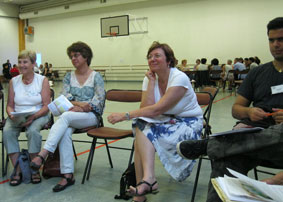
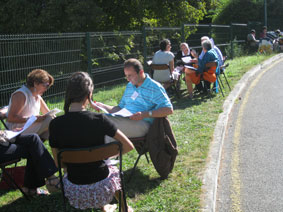
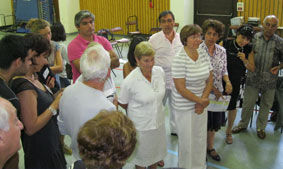
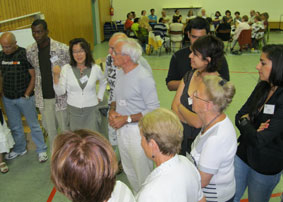
My workshop group, with participants of all ages, was let by Bernard
Benghozi and Bernard Rochas
 .
.  .
. 
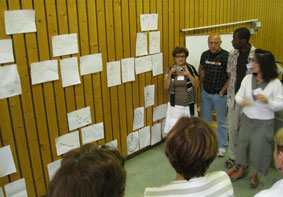
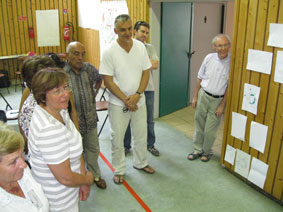
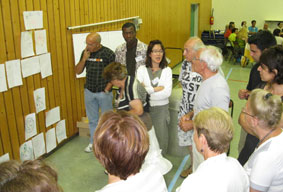
There were small break-out sessions and group activities like writing
poems and illuminating a calligraphic mural
 .
.  .
. 
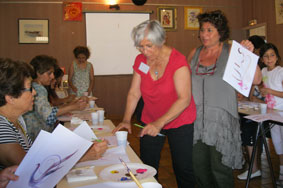
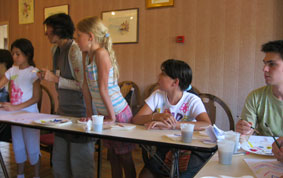
In one activity, each of us drew our vision of action for social
change, then we combined images in pairs and fours
 .
.  .
. 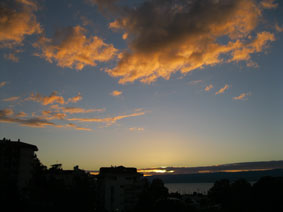
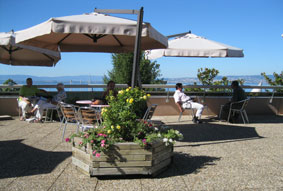
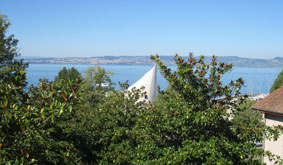
In our spare time, we could enjoy the terrace and swimming
pool, view of the lake, and beautiful sunsets
 .
.  .
. 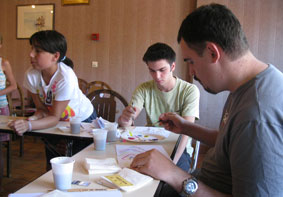
One artistic workshop was on painting techniques, with participants
of all ages
 .
.  .
.
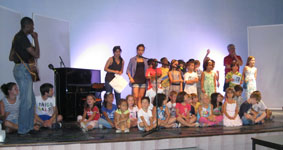
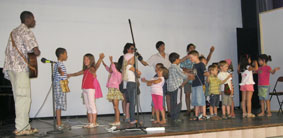
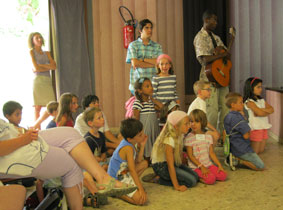
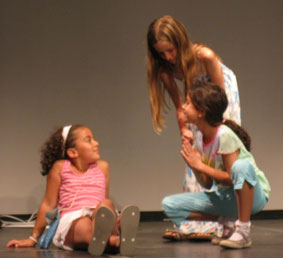
There were children's classes and other activities
 .
. 
 .
.  .
. 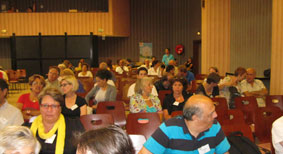
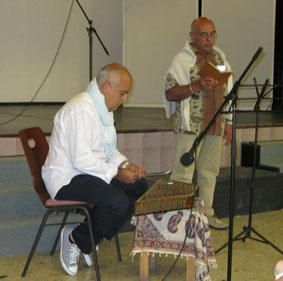
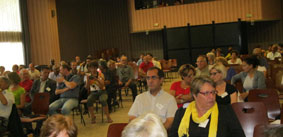
The morning devotions always included music from various cultures;
part of the audience in the main auditorium
 .
.  .
. 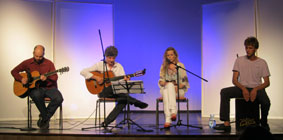
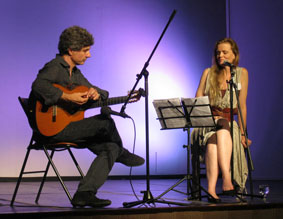
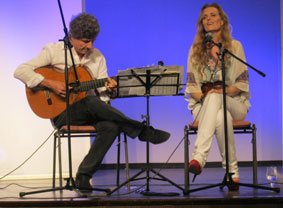
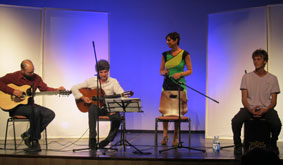
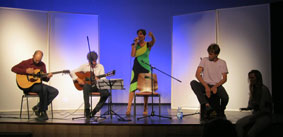
There were two performances by American Jazz artist Tierney Sutton,
accompanied by Serge Merlaud, Nicholas Leroy and Baptiste Le Dun
 .
. 
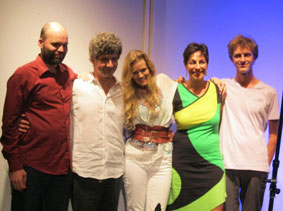
Jasmine Farhoumand also sang
 .
. 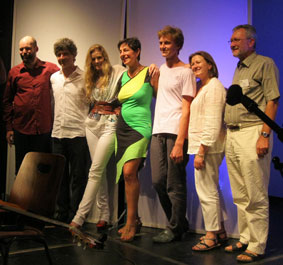
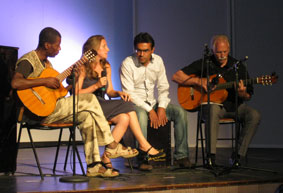
The superb jazz artists and their hosts
 .
. 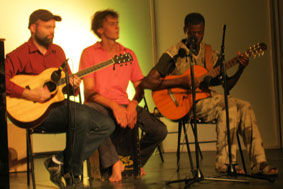
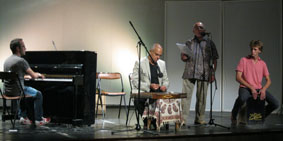
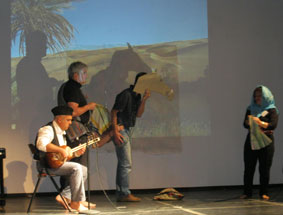
There were many other musical performances throughout the school
 .
. 
 .
. 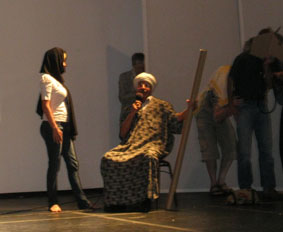
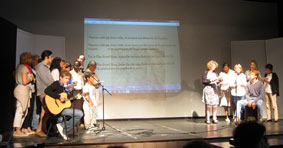
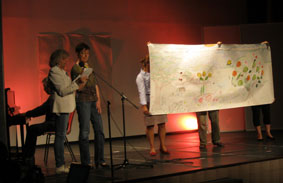
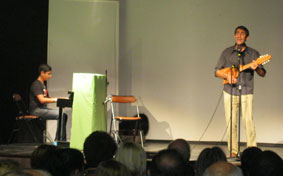
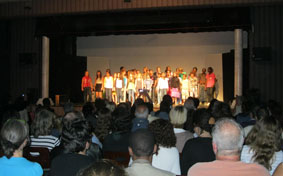
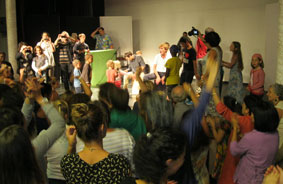
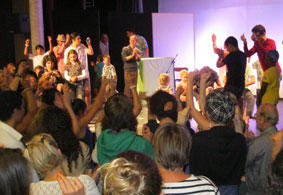
Each workshop group improvised a performance expressing what they had
learned in theatre, song and painting
 .
. 
 .
.  .
. 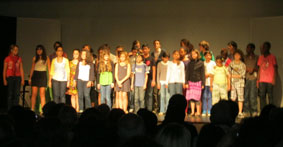
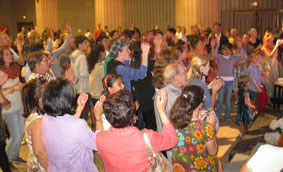
The final night was rich with music, humour, theatre and a lively
closing celebration of unity in diversity
 .
.  .
. 
ERICEIRA, PORTUGAL
On 2-7 October I was in Portugal for the main annual ebbf - European Baha'i
Business Forum event in Ericeira (see separate
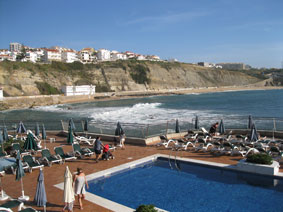
page). The old fishing village has reconverted to tourism and is a
famous location for surfing, but while we enjoyed the view and the seafood,
we were too busy to go to the beach.
 .
.  .
. 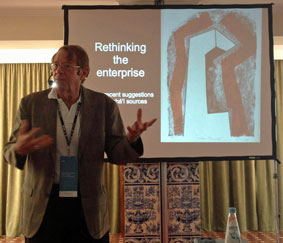
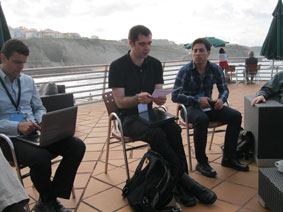
The hotel pool and beach; a workshop on the terrace; my closing
keynote
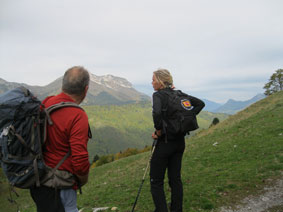
LES BAUGES, FRANCE
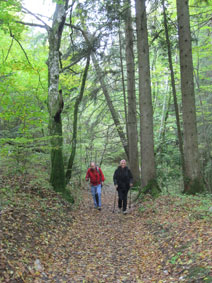
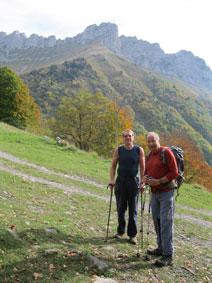
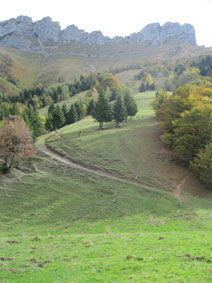
The morning after giving a talk for the Baha'i community of Chambery,
France, my old friend George Starcher took my and another friend up into the
Massif des Bauges behind the village of St. Pierre d'Albigny where we lived
for several years in the 1980s. We hiked from the top of the Col du Frêne
(950m) up toward the Arclusaz mountain, about 9 km distance and 500 m
vertical elevation. George is nearly 10 years older than I am, but still a
great hiker and skier. With the beginning of autumn foliage, it was a
beautiful excursion.
 .
.  .
.  .
. 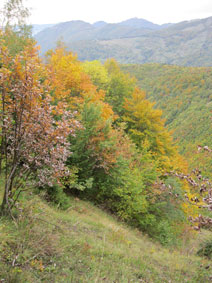
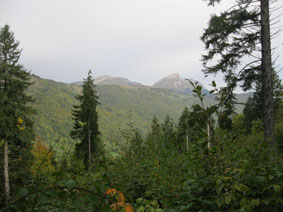
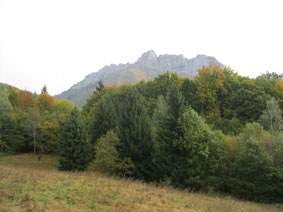
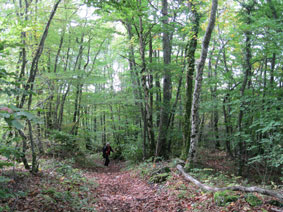
George and Veronique on the trail; me and George with l'Arclusaz
behind; trail through alpine pastures; autumn colours
 .
.  .
. 
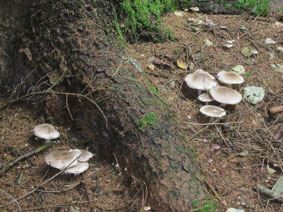
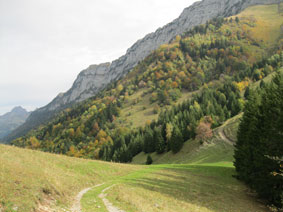
The trail climbed through forest and alpine meadows
 .
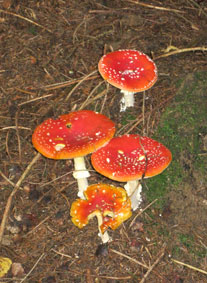
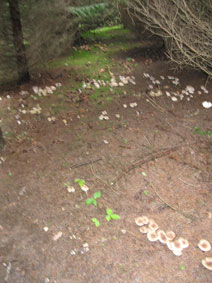
. 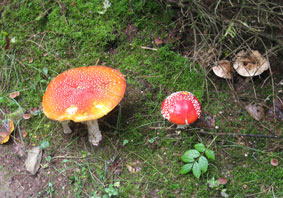
It was the perfect season for mushrooms, and some woods were carpeted
with them
 .
.  .
. 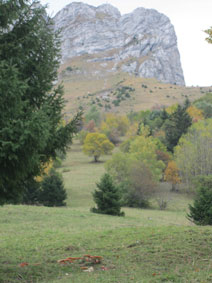
Even the meadows had clusters of mushrooms
 .
.  .
. 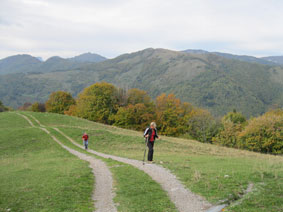
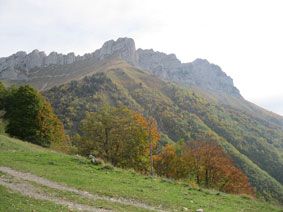
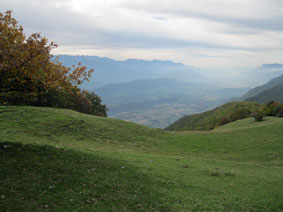
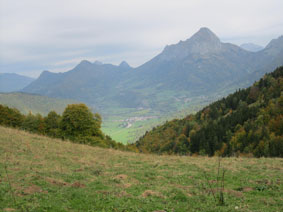
As we climbed higher, there were wonderful views of l'Arclusaz
mountain, the Tarantaise Valley and St. Pierre d'Albigny
 .
.  .
. 
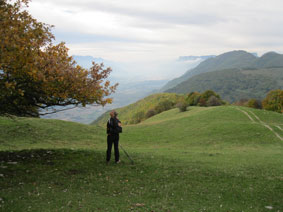
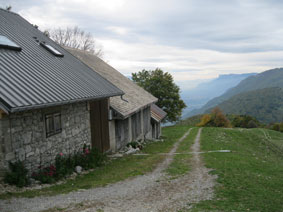
Views from the chalet; we crossed the Col du Potat (1351m) before the
climb towards l'Arclusaz, but did not go to the top
 .
.  .
.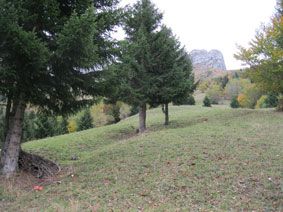
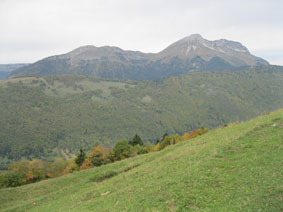
On the way down, we had lunch by the alpine Chalet de l'Epion (1385
m) with views across the Bauges mountains
 .
. 
Les Bauges
BELGRADE, SERBIA AND
PRISTINA, KOSOVO
The European Center for Peace and Development, affiliated with the
University for Peace established by the UN, held its 8th conference on
"Reconciliation, Religious Tolerance and Human Security in the Balkans" in
Belgrade, Serbia, on 20 October, where I gave a paper on the "Right
of each human being to enjoy peace, security and welfare". The
conference was originally planned to be held in Kosovo, and I had already
booked my ticket before the change in location, so I flew to Pristina in the
evening, was driven to the border with Macedonia, took a taxi down to Skopje
and up to the Serbian border, walked across and waited an hour and a half
(11:45 pm to 1:15 am), to be met by another taxi for the 4 1/2 hour drive to
Belgrade in time for the conference. The day after the conference I returned
by minibus (6 hours) to Pristina to spend the night before catching my
flight back to Geneva. Fortunately the ECPD staff accompanied me most of the
way and took good care of me. When I walked down to the ECPD office, I took
a few pictures of downtown Belgrade.
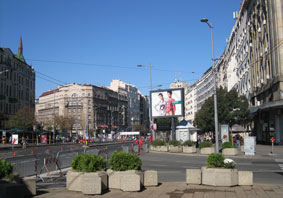 .
. 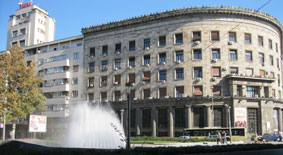 .
. 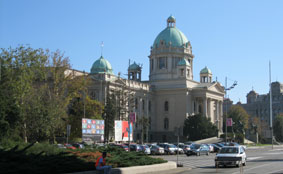
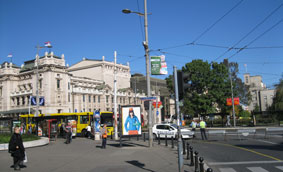
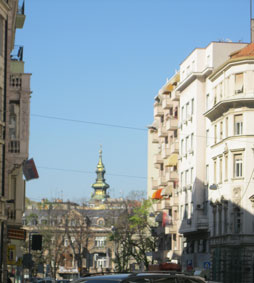
Views of downtown Belgrade; the National Parliament of Serbia
 .
. 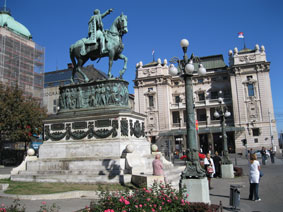
The National Theatre
 .
.  .
. 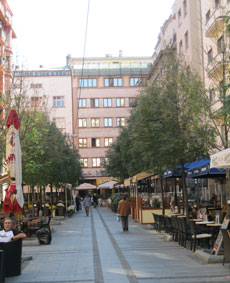
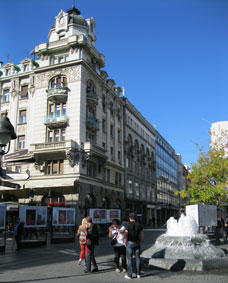
Buildings in Belgrade; terrace restaurants in front of our hotel
Pristina, Kosovo
 .
.  .
. 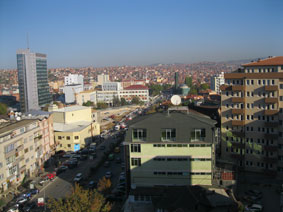
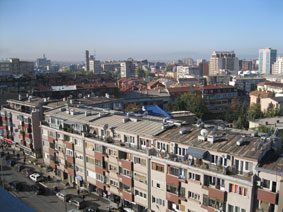
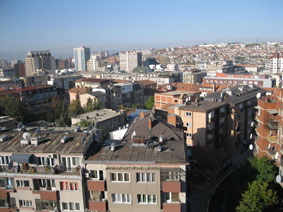
Views of Pristina from my hotel
BAKU, AZERBAIJAN
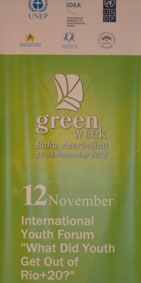
The United Nations Environment Programme co-sponsored Green Week in Baku,
Azerbaijan, in mid-November, organized by the International Dialogue on
Environmental Action (IDEA) with the support of the Azerbaijani government.
The first day was an International Youth Forum where I spoke on "Stockholm
to Rio+20: Are we on the right track?". The second day was the UNEP European
Regional Consultation meeting with civil society, where my topic was
"Involving civil society in the new UNEP". The third day we were invited to
the Azerbaijani Diplimatic Academy where Frits Schlingemann (former UNEP
Regional Director) and I discussed organizing a course in environmental
diplomacy similar to the one we had in Geneva, and we gave public lectures
on "The Challenge of Environmental Diplomacy". The local participants
appreciated that my book "Unless and Until" has been published in
Azerbaijani.
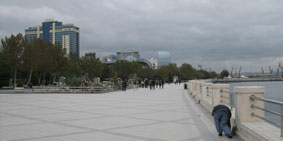
The city of Baku
 .
.  .
. 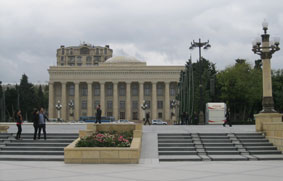
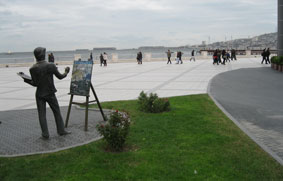
The Baku waterfront on the Caspian Sea; a sculpture as painter;
elegant public buildings
 .
.  .
. 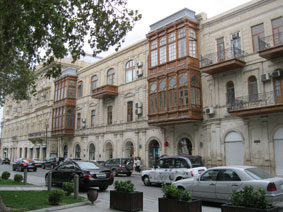
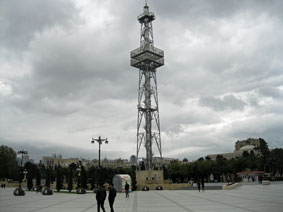
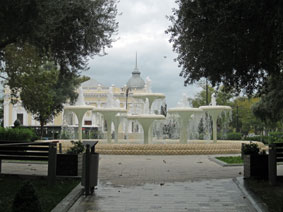
A monument to a century and a half of oil production; beautiful parks
and fountains; old buildings
 .
.  .
. 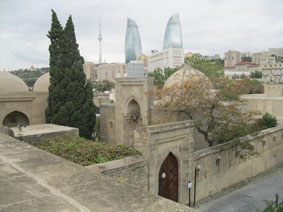
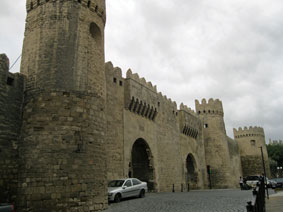
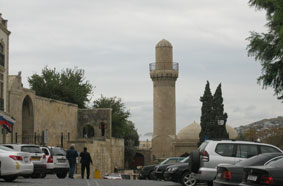
The old walled city; a minaret and the old palace entrance; palace
mosque and mausoleum
 .
.  .
. 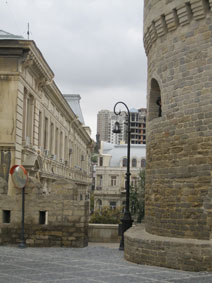
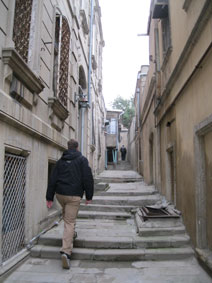
The old city has narrow winding streets, and is a world heritage site
 .
.  .
. 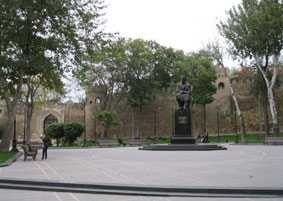
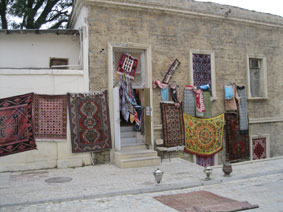
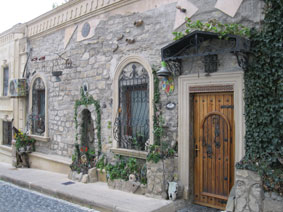
Carpet sales for tourists; an artist's house in the old town; parks
and monuments outside the walls
 .
.  .
. 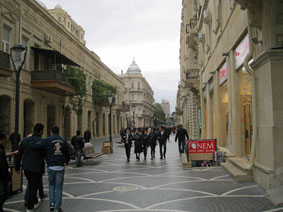
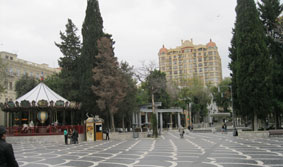
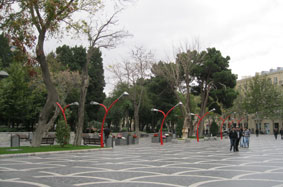
The centre of town has pedestrian malls and shopping streets with all
the luxury brand stores
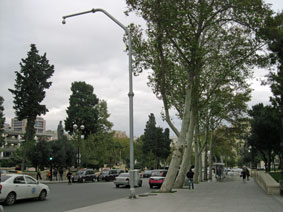 The streets are clogged with traffic, mostly Mercedes and other
luxury cars
The streets are clogged with traffic, mostly Mercedes and other
luxury cars
 .
.  .
. 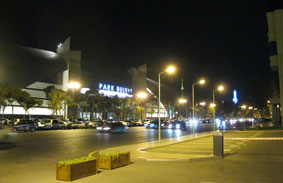
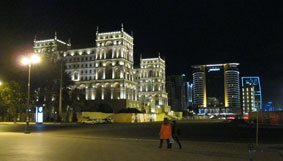
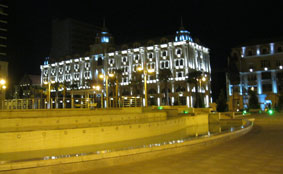
Many of the buildings are beautifully lit, so the city is spectacular
at night; a giant shopping centre on the waterfront across from our hotel
The Green Week
meetings
 .
.  .
. 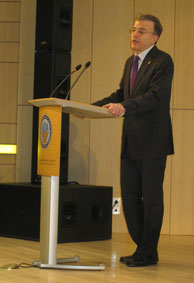
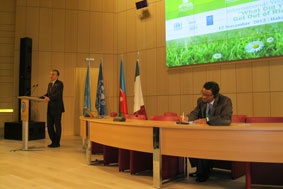
The International Youth Forum was opened by the Minister of
Environment
 .
. 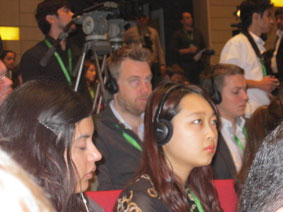
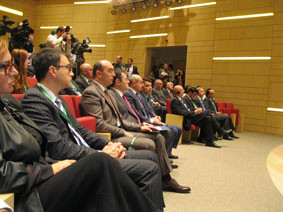
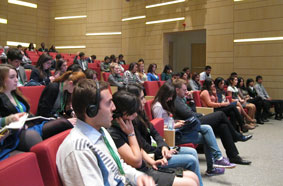
Various dignitaries at the opening session, with the press and a
diverse audience
 .
. 
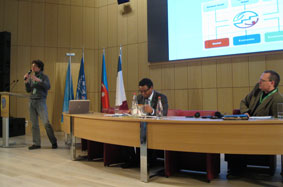
Sebastien Duyck (youth representative on our Advisory Group on IEG)
speaking to a large youth audience
 .
. 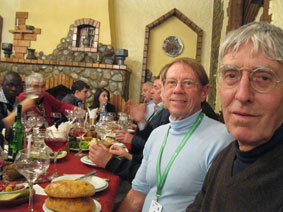
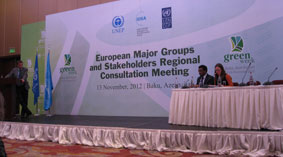
The UNEP Regional Meeting, and me with Frits Schlingemann at dinner
 .
.  .
. 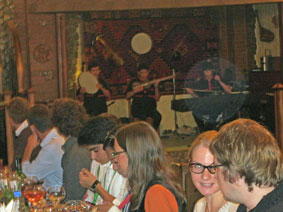
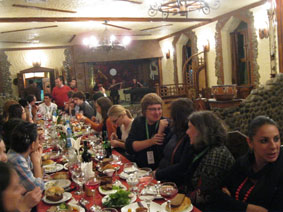
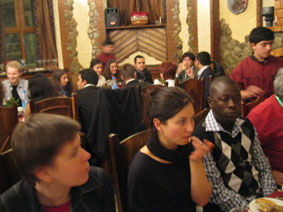
Each evening we were treated to special dinners, including with
traditional music
SAMOA AND AMERICAN SAMOA
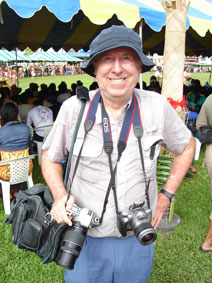 Keith Gordon Dahl
27 September 1940 - 9 December 2012
Keith Gordon Dahl
27 September 1940 - 9 December 2012
In mid-December, I suddenly had to travel half way around the world to
attend my older brother Keith's funeral
(see separate page) in American Samoa, flying from Geneva through Dubai to
Australia and on to Auckland, New Zealand, where I was kindly received by
Baha'i friends and gave two talks on sustainability and climate change, one
going and the other returning from Samoa. From Auckland I flew to Apia,
Samoa, that had just been ravaged by a cyclone, with the mountain forests
stripped of leaves, many trees down, telephone and electricity cut off, and
many homes and the National Bahá'í Centre washed away by flood waters. After
a night in Apia, I managed to get on a flight to Pago Pago, and stayed for a
week in my brother's house in Iliili, sorting through his affairs. My
brother Greg came from Bulgaria to help as well. It was finally possible to
organize Keith's funeral on 20 December during our stay. On my way back, I
had a day in Apia and went to say prayers at the Bahá'í House of Worship
near Apia, where I was invited to lunch by some refugee families who had
lost their homes. The love and support of our Samoan friends was wonderful
during this difficult time.
There was not really time for sightseeing, but I snapped some photos as we
drove into Pago Pago along the shore of Tutuila, and driving from the
airport to Apia through villages on Upolu. It seemed strange to be back in
such a familiar place that I had first visited 43 years ago and the last
time about 20 years ago, seeing much that had changed and much that was
still familiar.
AMERICAN SAMOA
 .
.  .
. 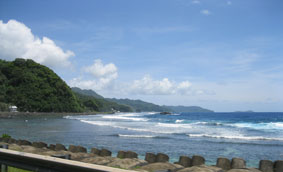
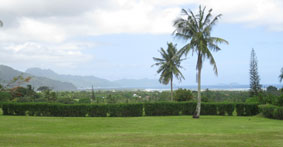
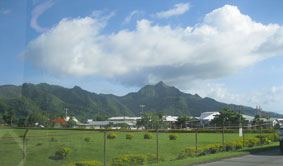
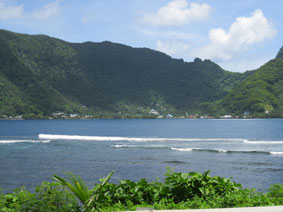
The view from Keith's house; the one flat area in American Samoa at
Tafuna; waves breaking on the coral reefs along the coastal road
 .
.  .
. 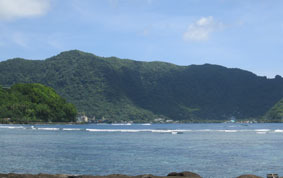
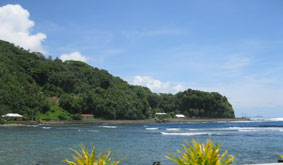
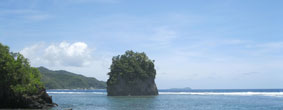
Views along the coastal road on Tutuila; the entrance to Pago Pago
harbor
 .
.  .
. 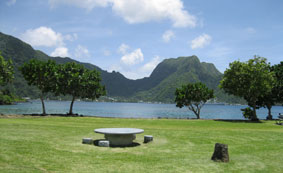
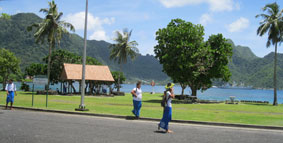
In Pago Pago harbor; school girls along the road
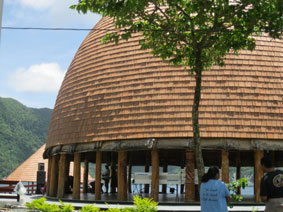
A Samoan fale, American Samoan style
SAMOA
The independent state of Samoa (formerly Western Samoa) is a hundred
kilometers west of American Samoa but across the dateline. I spent a night
there on my way to Pago Pago, and a day there on my return, when I took a
taxi up to the Bahá'í House of Worship on the mountainside above the capital
of Apia. Since the power and telephone lines were down, I had to walk most
of way down the mountain, accompanied by a young Bahá'í, before someone
stopped to give us a ride into town. Thank goodness I was traveling light,
with only an 11 kg knapsack (and everything I needed for a week in the snow
as well as a week in the tropics).
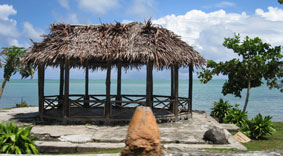 .
. 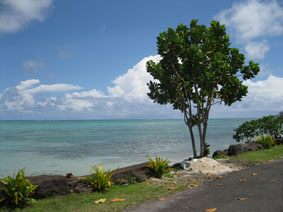 .
. 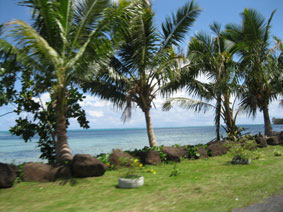
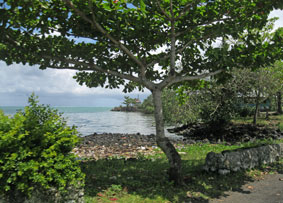
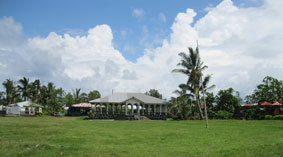
A traditional Samoan fale, and other views of the coastline of Upolu
on the way from the airport to Apia
 .
.  .
. 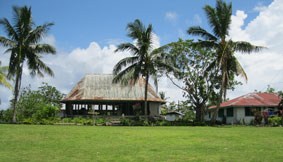
Coastline and villages along the airport road
 .
.  .
. 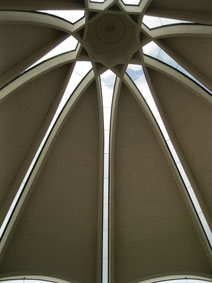
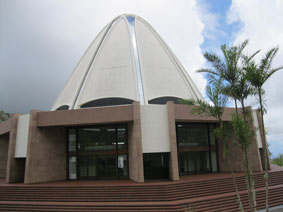
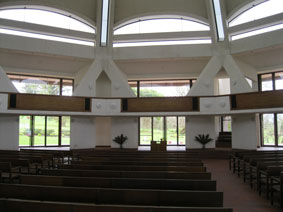
The Bahá'í House of Worship on the mountainside above Apia, with its
interior and dome
 .
.  .
. 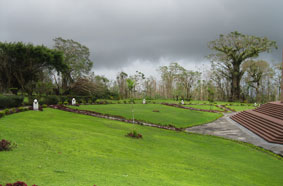
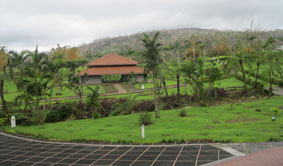
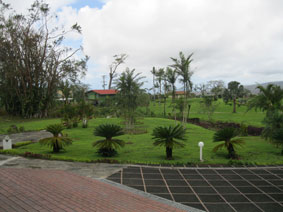
The visitor's centre and gardens of the House of Worship; the forest
in the distance was defoliated by the cyclone a week before
 .
.  .
. 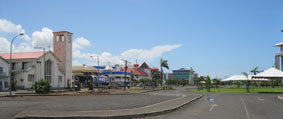
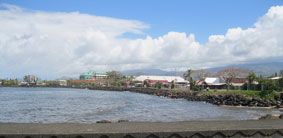
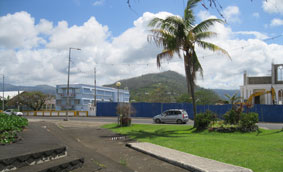
The port of Apia, and views of the town on a quiet Sunday afternoon
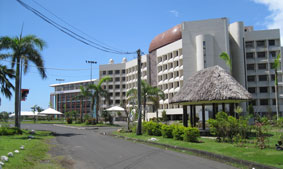
New government buildings along the waterfront in Apia
EINSIEDELN,
SWITZERLAND, BAHA'I WINTER SCHOOL
From Samoa I traveled directly to the Swiss Bahá'í Winter School in the
Catholic pilgrimage and winter sports village of Einsiedeln about 1 hour by
train from Zurich, going from more than 30°C tropical heat to 0°C with snow
on the ground. Over a hundred participants came mostly from Switzerland and
Germany. There were four days of morning courses and workshops, half in
German and half in French/English, as well as artistic activities and time
to walk to the village in the afternoon, and the Dawnbreakers Film Festival
(http://www.dbiff.com) showing films by
Bahá'í film-makers and inspired by Bahá'í ideals. I gave two courses on
"envolvement in social action" and on "participating in the discourses of
society", and an evening programme on "'Abdu'l-Baha as a perfect example". I
was also on the committee that organized the school.
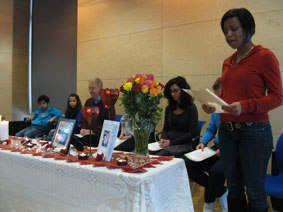 Devotions in memory of Keith Dahl at the Winter School
 .
.  .
.  .
. 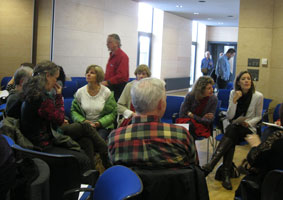
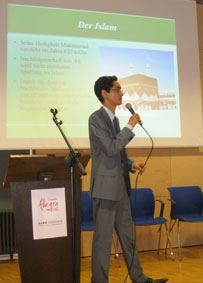
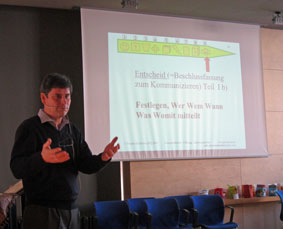
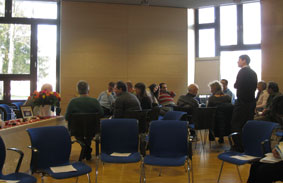
Shahnam Izadpanah lecturing on the Bab; Stefan Pernau speaking on
cooperative decision-maikng, and workshop discussions
 .
.  .
. 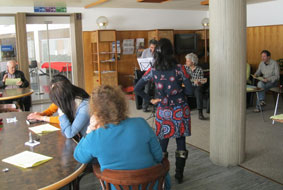
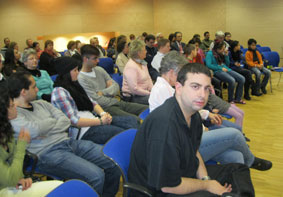
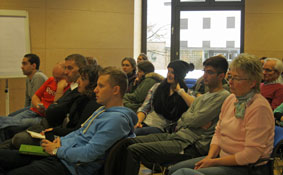
Part of the audience
 .
.  .
. 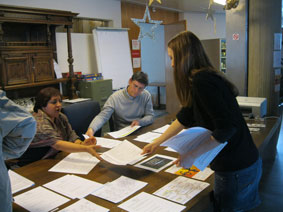
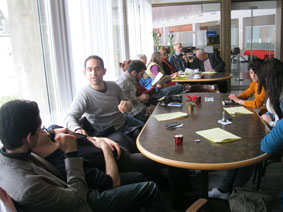
Opportunities for discussion and networking; preparing class
materials
 .
.  .
. 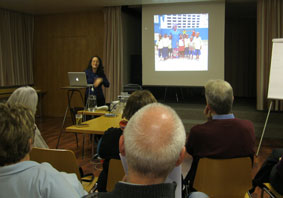
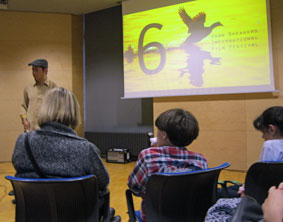
Dawn Breakers International Film Festival, presented by Mithaq
Kazimi; presentation on Congo by Violetta Zein
 .
.  .
. 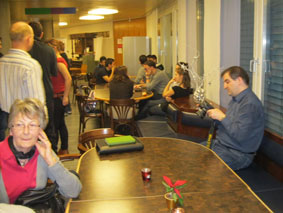
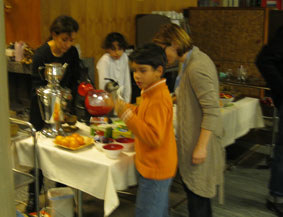
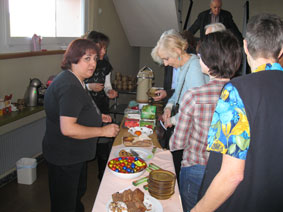
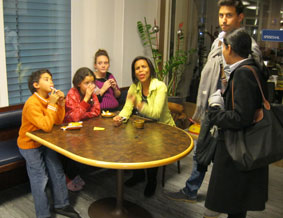
Coffee breaks are always important
 .
.  .
. 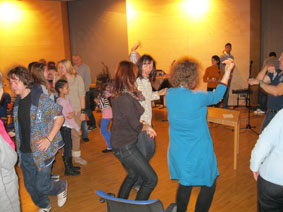
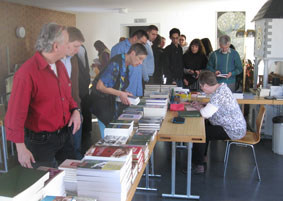
Family discussions; and book sales; dancing in the evening
Final gala evening
 .
.  .
. 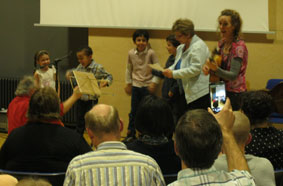
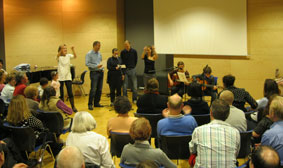
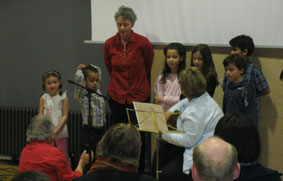
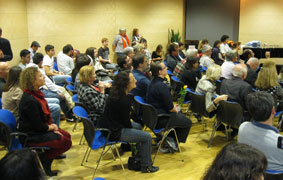
The final gala evening, with Eric and his band; children singing
 .
.  .
. 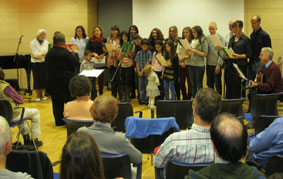
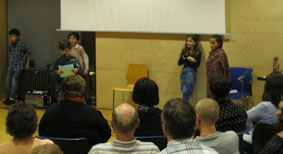
Children's theatre performance, and the choir singing
 .
.  .
. 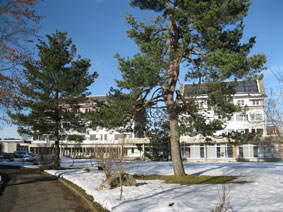
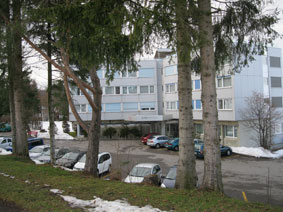
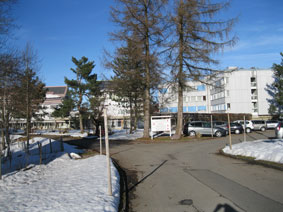
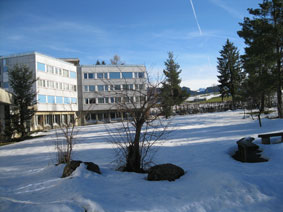
SJBZ Hotel Allegro, where the Winter School was held
 .
.  .
. 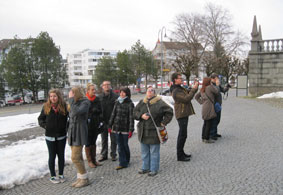
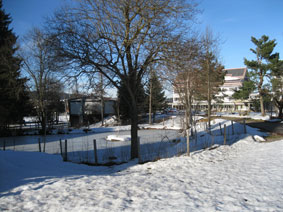
The hotel; a frozen pond; the photo workshop
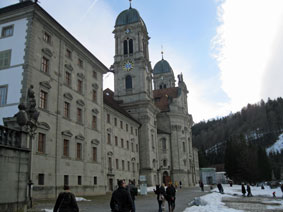
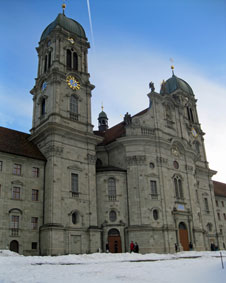
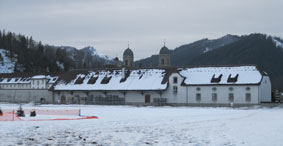
Einsiedeln town and monastery
 .
.  .
. 
The monastery and its rococo church, which houses the black madonna
 . .
. . 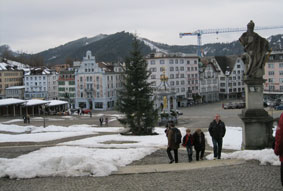
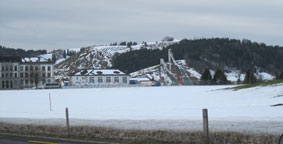
Town with ski jumps in the distance; the photo workshop; the town
centre
 . .
. .  .
. 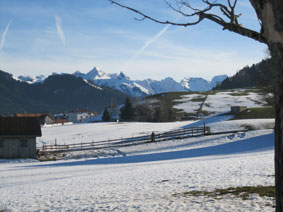
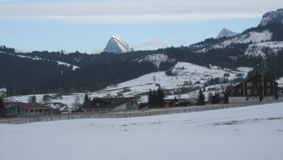
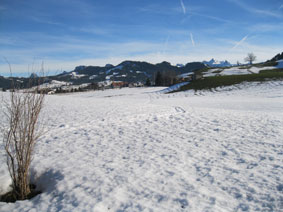
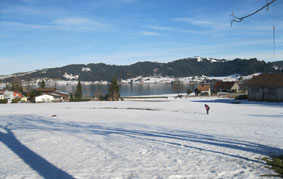
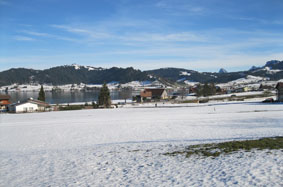
Views around the hotel, with cross-country skiing, and a lake
 .
.  .
.