TOURS III REUNION
15-20 May 2011
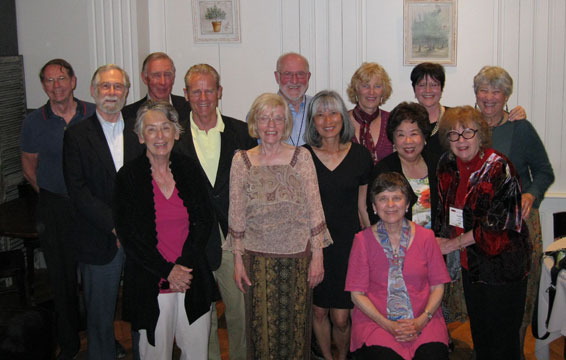
From late September 1961 to late March 1962, eighty students from Stanford
University joined the third session of its overseas studies program at
Stanford-in-France on the bank of the Loire River in Tours, France (see photos
from 1961-62). About 14 of us, plus some spouses, managed to assemble for a
50th reunion, first for dinner in Paris, then for four days in Tours, with
excursions to chateaux and gardens, artisans and vinters, the homes of
Balzac and George Sand, etc. There were dinners at bistros in Tours, and
time to walk around recalling memories of a half-century ago. I had not seen
any of the Tours III group since leaving Stanford, but in little time old
friendships were renewed and 50 years of experience shared.
TOURS
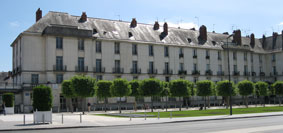
Stanford-in-France occupied a former hotel on the Place Anatole France,
where the main bridge crosses the Loire River. The building, now part of the
local university, is little changed since our stay except for a new parking
garage under the square. The neighbourhood was rebuilt in the late 1950's
after being destroyed by American bombing during the war.
 .
. 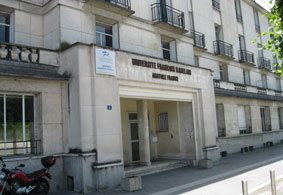 There are still traces of Stanford-in-France under the new lettering
 .
. 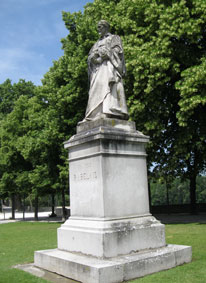
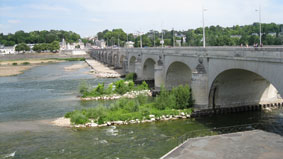
Bridge across the Loire River. The statue of Rabelais that was in front of
our building was moved down the street.
 .
.
 .
. 
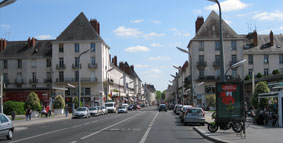
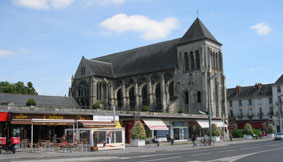
Start of the Rue National next to our building; the church across the street
 .
.  .
.
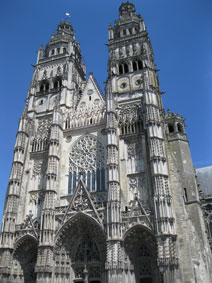
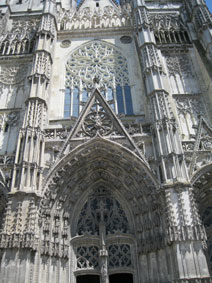
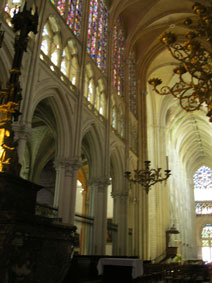
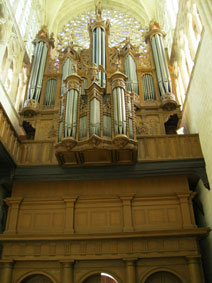
The St. Gatien Cathedral in Tours has a Gothic facade and Renaissance towers
 .
.  .
. 
 .
. 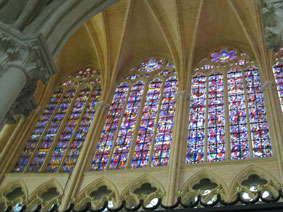
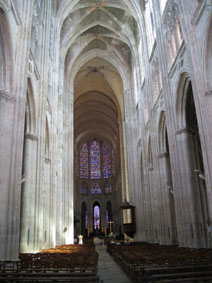
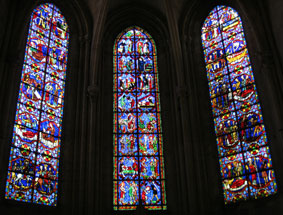
Stained glass windows in the cathedral
 .
. 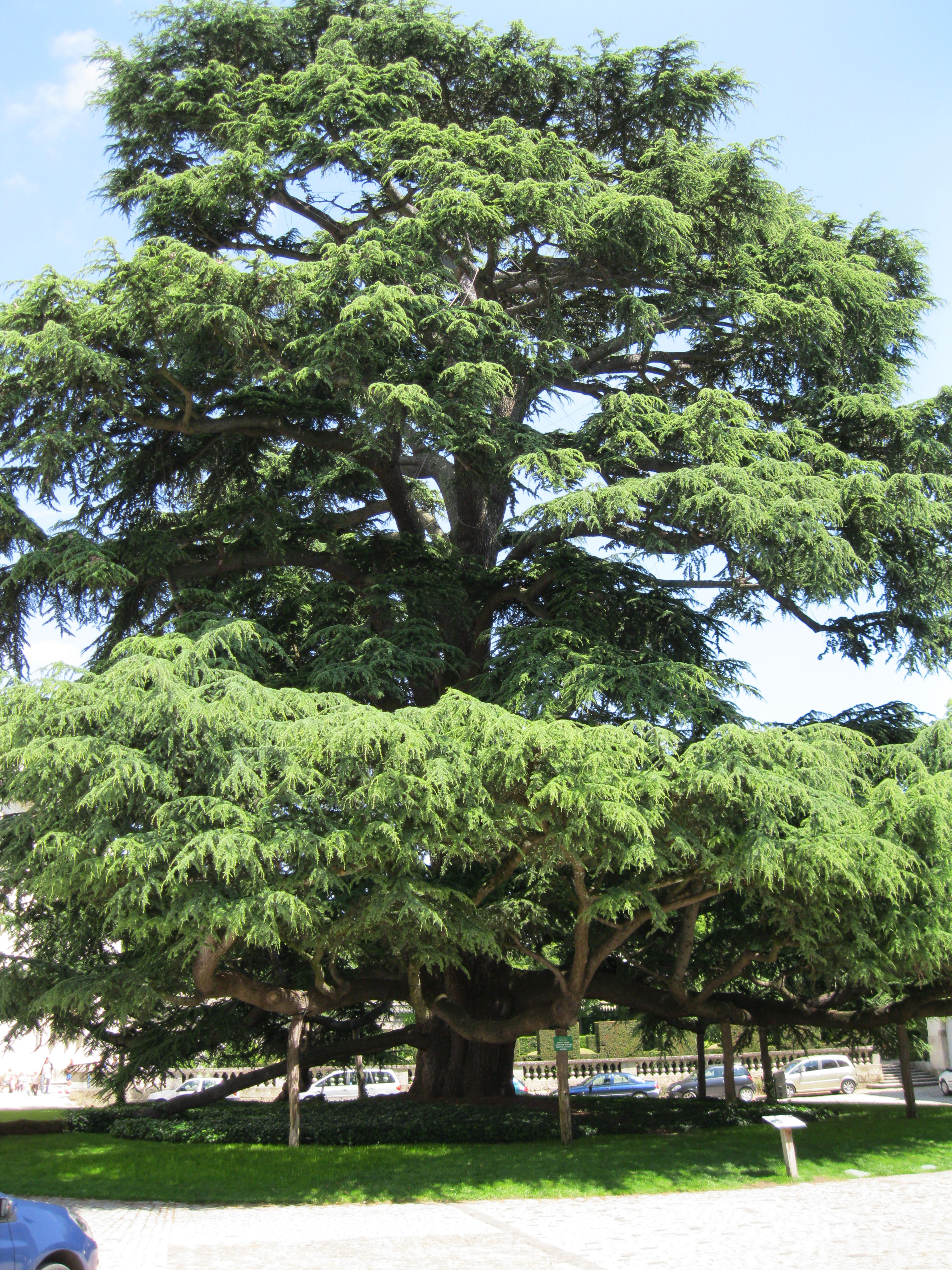
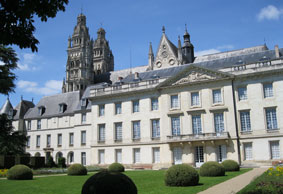
The Bishop's Palace has become an art museum with a beautiful cedar in front
 .
. 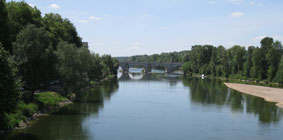
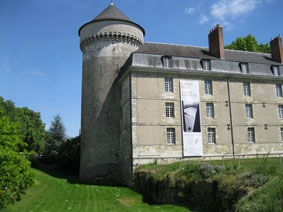
Tours Chateau (castle) and the Loire River across the street
 .
. 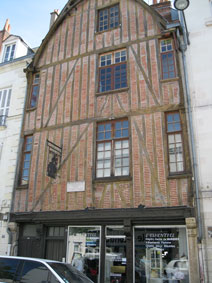
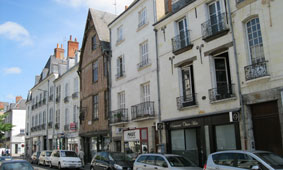
The restaurant where we had our reunion dinner was one building away from
the shop where Joan of Arc had her armour made.
 .
.  .
. 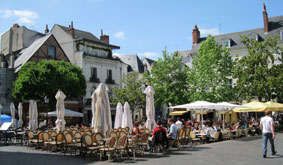
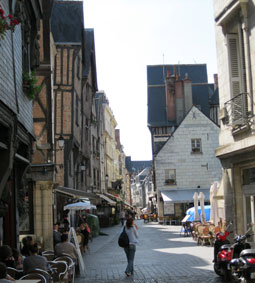
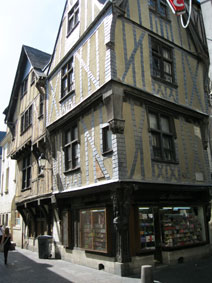
In the old neighborhood of medieval houses, we had one dinner on the square
 .
. 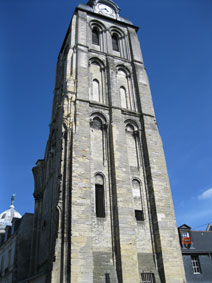
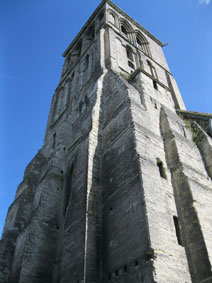
The Charlemagne Tower and the Clock Tower are all that remain of the
Basilica of St. Martin
 .
. 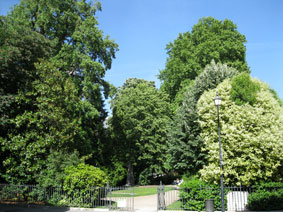
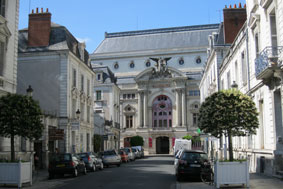
The theatre, and parks with beautiful old trees
CHAUMONT
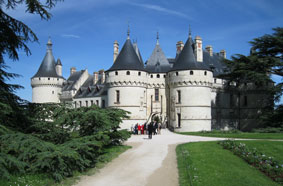
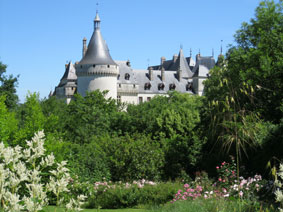
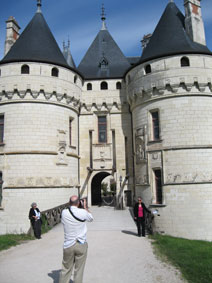
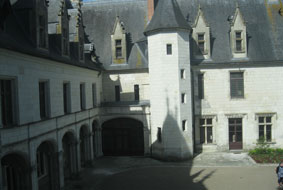
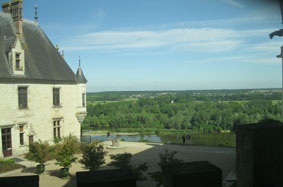
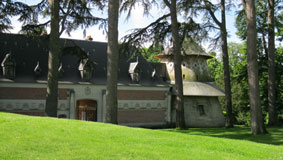
Our first visit was to the Chateau of Chaumont overlooking the Loire River.
It was the residence of Queen Catherine de Medici and of Diane de Poitiers,
and was restored in the 19th century by the Prince and Princess de Broglie.
 .
. 
 .
.  .
. 
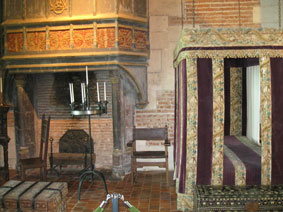
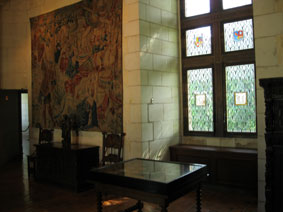
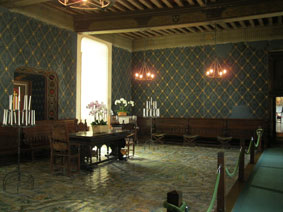
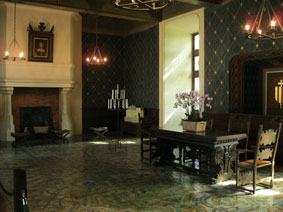
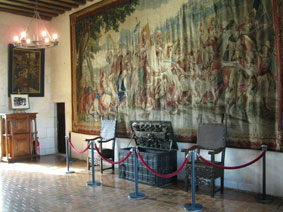
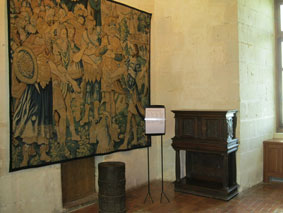
The interiors have been furnished in the style of the period.
 .
. 
Rooms of Cosimo Ruggieri (astrologer) and Catherine de Medici
 .
. 
The Council Room
 .
. 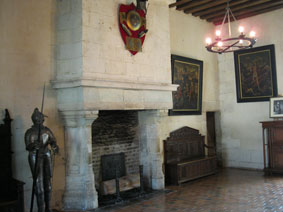
Guard Room
 .
. 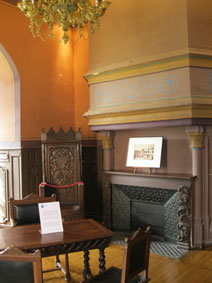
Diane de Poitiers' bedroom, and the King's chamber
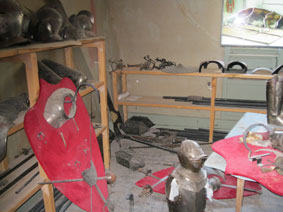
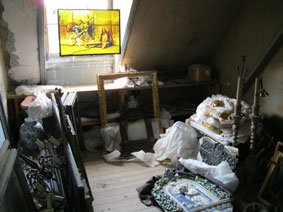
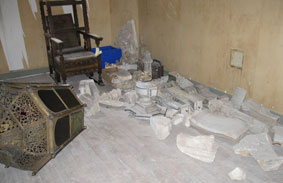
Through an art exhibit, it was possible to visit attic rooms full of
discards
 .
.  .
. 
 .
. 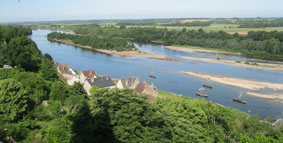
The 19th century stables were the finest in the world; magnificent view of
the Loire River from the castle
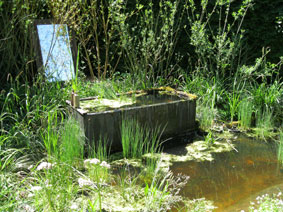
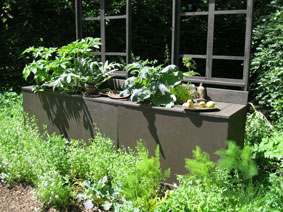
In the extensive gardens, there was an international garden festival, with
gardens on the theme of visions of the future and biodiversity
 .
.  .
. 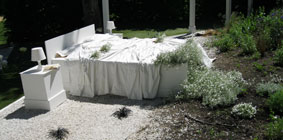
My favorite was a house with bathroom, kitchen and bedroom overgrown by
plants
A visit to a wine cellar in Vouvray and dinner at a fine restaurant in Tours
concluded the day.
CHINON
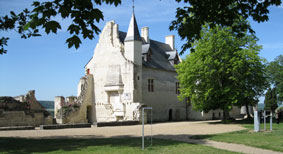
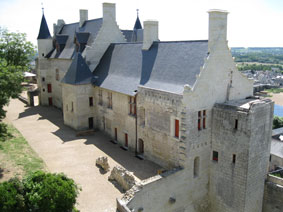
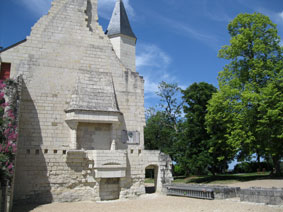
After visiting a local potter, we toured the Chateau of Chinon which has
been extensively restored since our visit 50 years ago
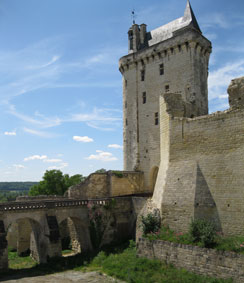
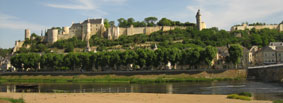 The castle from across the Loire River
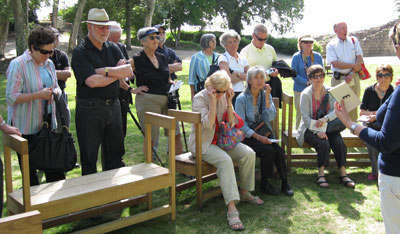
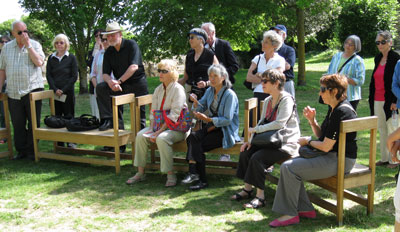
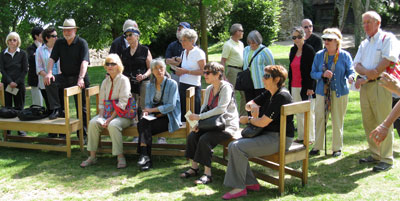
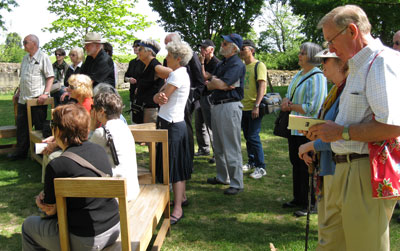
The Tours III group at Chinon (with a few other visitors)
 .
. 
 .
. 
 .
. 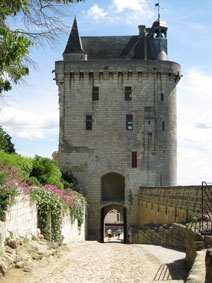 Entrance to the castle
 .
.  .
. 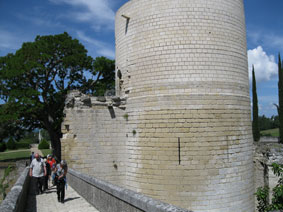
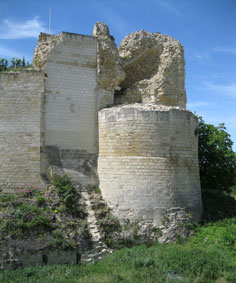
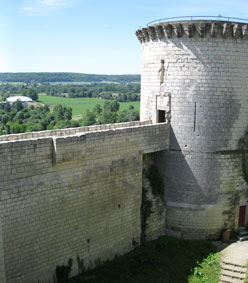
The three parts of the castle are surrounded by massive walls, with a high
Keep in the last bastion
 .
.  .
. 
The royal quarters have been partly restored, with audiovisual exhibits
telling the history of the castle
 .
. 
 .
. 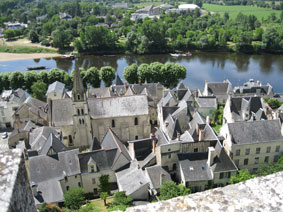
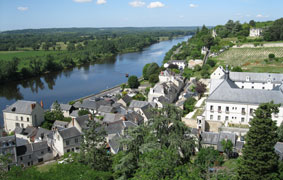
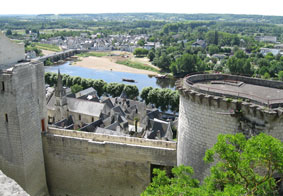
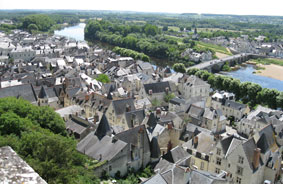
The castle dominates the village of Chinon, now accessible by an elevator
SACHE
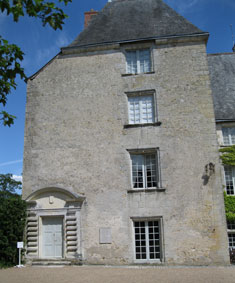
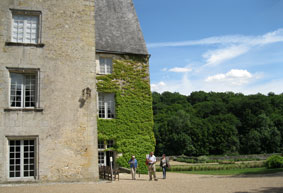
In the afternoon we visited the Chateau of Saché, where Honoré de Balzac
wrote some of his books, now a Balzac museum
 .
. 
NOHANT
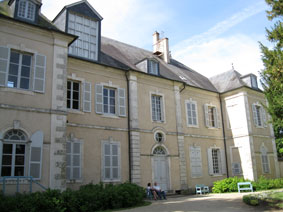
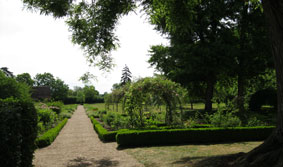
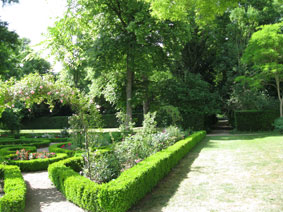
The next morning we traveled south 3 hours by bus to visit Nohant, the
residence of 19th century author and feminist George Sand. It remained in
the family until 1961, and has been preserved largely as it was in the
author's time, with such innovations as central heating installed in 1850.
The visit made the person as well as the author more real and accessible.
 .
.  .
. 
PRIEURE D'ORSAN
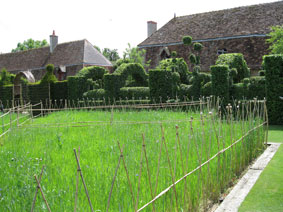
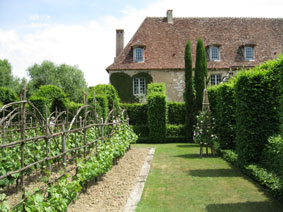
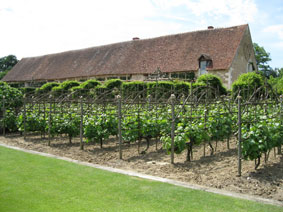
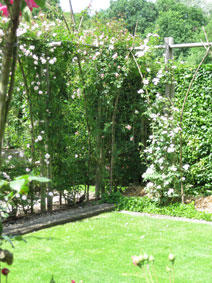
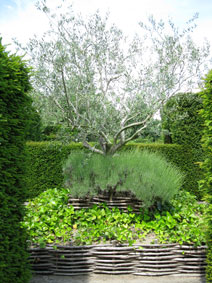
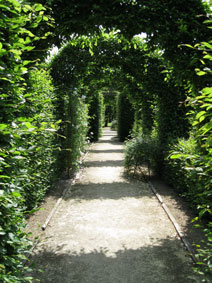
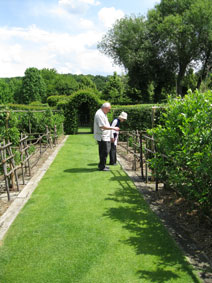
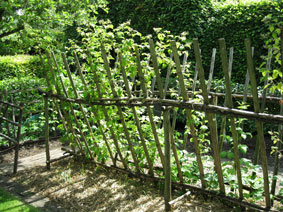
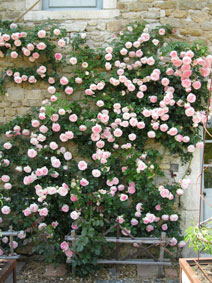
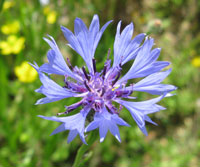
Our last visit was to the Prieuré Notre-Dame d'Orsan, where the gardens have
been restored as they were in medieval times
 .
.  .
. 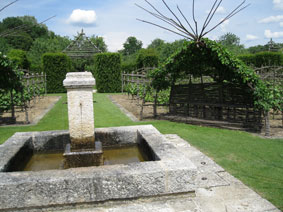
Le Carré des blés (wheat); Le Cloître des Charmilles with grape vines and
fountain
 .
.  .
. 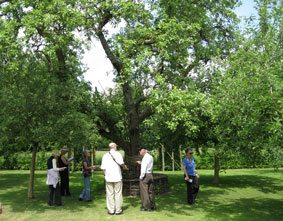
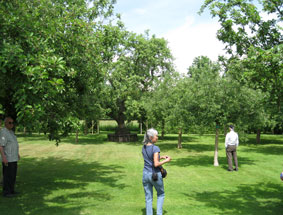
Grape vines, and Le Verger des Pommiers (apple tree orchard)
 .
.  .
. 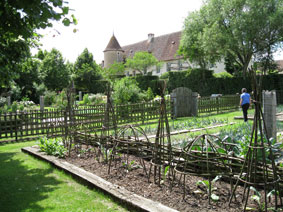
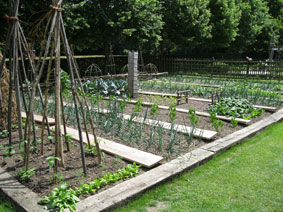
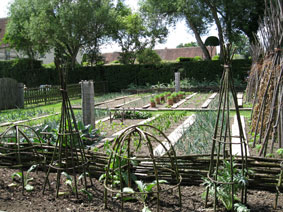
Le Potager (vegetable garden)
 .
.  .
. 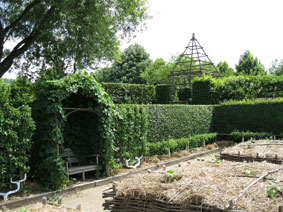
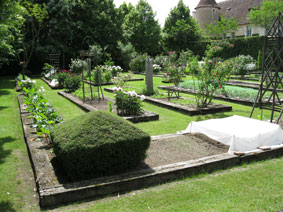
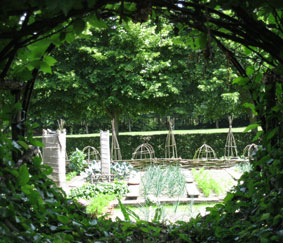
other gardens, including Le Potager surélevé (raised vegetable garden)
 .
.  .
.  .
. 
La Pergola
 .
. 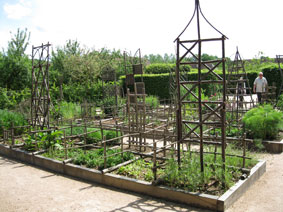
Les petits fruits (small fruits) and Les Simples (medicinal plants)
 .
. 
COUNTRYSIDE OF CENTRAL FRANCE
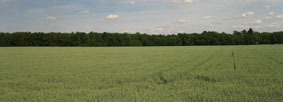
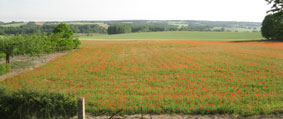
The countryside dotted with villages and woods was mostly covered in wheat
fields, with rapeseed and sunflowers just coming up. One field was orange
with poppies.
 .
. 
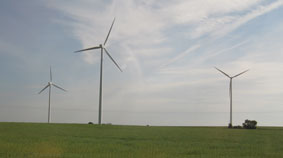
There were also the beginnings of renewable energy