PILGRIMAGE to the BAHA'I WORLD
CENTRE, ISRAEL
Arthur Lyon Dahl - 1-9 February 2010
Pilgrimage to the Bahá'í Holy Places at the World Centre of the Bahá'í
Faith in Haifa, Israel, is an opportunity for spiritual renewal, to pay
homage at the shrines housing the remains of its founders, and to see many
of the places and objects associated with Bahá'í history. It is a reminder
of how close we are in time to such a stupendous event in history as the
founding of a world religion.
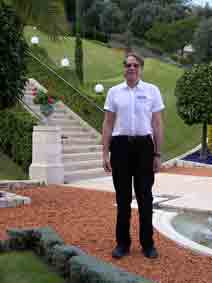 This
was my second pilgrimage, since I visited with my parents and brothers 50
years ago in April 1960. Then, we were a family of 6 from the West, plus 9
Eastern Pilgrims. My other visits to Haifa were for the August 1968
commemoration of Bahá'u'lláh's arrival in the Holy Land, and a personal
visit in 1972. I had not been back since 1972, so much had changed.
This
was my second pilgrimage, since I visited with my parents and brothers 50
years ago in April 1960. Then, we were a family of 6 from the West, plus 9
Eastern Pilgrims. My other visits to Haifa were for the August 1968
commemoration of Bahá'u'lláh's arrival in the Holy Land, and a personal
visit in 1972. I had not been back since 1972, so much had changed.
I arrived from Geneva on the afternoon of 31 January 2010 and took a
sherut (collective taxi) from the airport to Haifa; 6 of the 10 sherut
passengers were Bahá'ís arriving for pilgrimage. I stayed in a simple
guest house on Ben Gurion Avenue, below the Bahá'í Gardens in the German
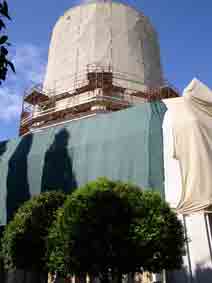
Templar Colony. On my first view of the Shrine of Báb at night from the
sherut, I mistook it for a giant water tank because it was covered in
scaffolding for restoration.
Monday 1 February
The 25 minute climb up the mountain included the Hakramin (134 steps) and
Shifra (236 steps) stairs near the terraces (I had to stop to rest several
times - not in shape). We registered at the Pilgrim Reception Centre (PRC)
which has a kitchen and dining rooms and places to rest. I returned up the
370 stairs to the PRC in the afternoon for a orientation presentation at
the International Teaching Centre Auditorium (up more stairs). We were the
smallest pilgrim group in recent memory, only 95 divided into four groups
for the visits (but 350 are expected for the next group). We made our
first visit to the Shrines of the Báb and 'Abdu'l-Bahá as a group.
 .
.  -
- 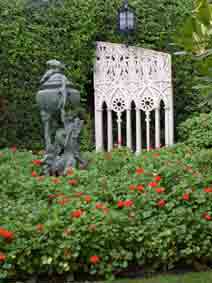
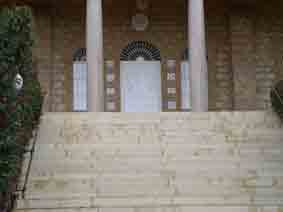
Shrine of the Báb covered in scaffolding for restoration; a door to
the Shrine; element of Wilmette Temple in the garden
 .
.  .
. 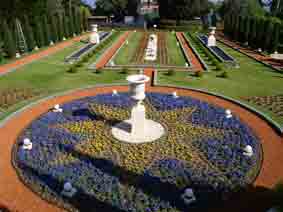
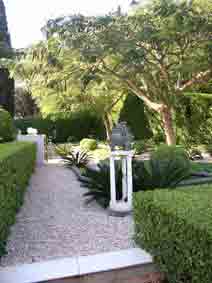
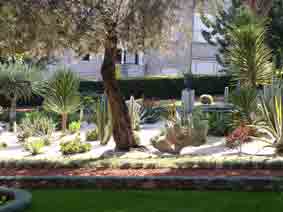
Gardens around the Shrine of the Báb
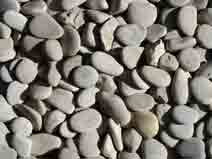
Everywhere we saw young volunteers working in the gardens and offices,
keeping everything perfect (cleaning the gravel paths, removing yellowed
leaves from the plantings, assisting in the Holy Places and providing
security). The white pebbles on the main paths are hand collected on the
shores of the Sea of Galilee, formerly by some Arab families, and now by
excursions of young World Centre volunteers. Most of the other paths are
covered with fragments recycled from roof tiles. Everything radiates love
and beauty, and is an example for us all.
Tuesday
2 February
I climbed the stairs to the PRC for an early bus to Bahji for a visit to
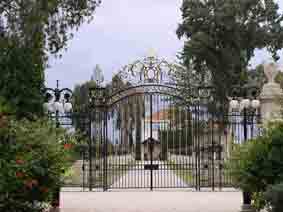
Bahji Visitor's Centre and the Shrine of Bahá'u'lláh. From the new North
Gate, there is a long path through the gardens to the Collins Gate, the
Haram-i-Aqdas, and the entrance to the Shrine of Bahá'u'lláh, with its
lovely interior garden. There are now side rooms open in the shrine
so there is more room to pray. Otherwise inside it is just as it was in
1960 and I felt the same strong spiritual power.
 .
.  .
. 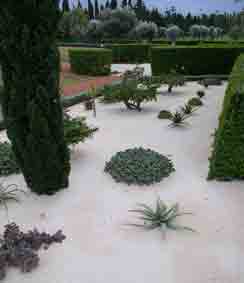
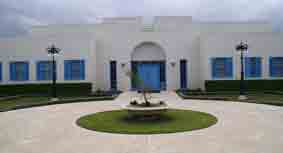
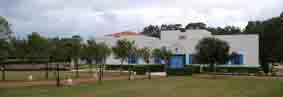
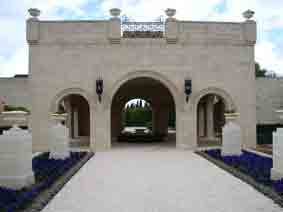
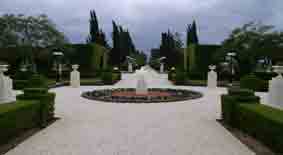
Bahji Visitors Centre and some of its gardens
 .
.  .
. 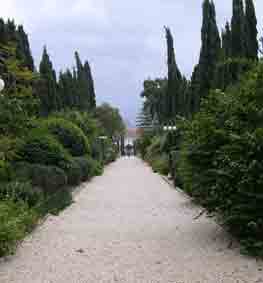
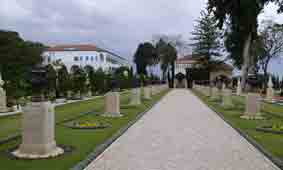
North Gate to Bahji, with the path leading towards the Shrine of
Bahá'u'lláh
 .
.  .
. 
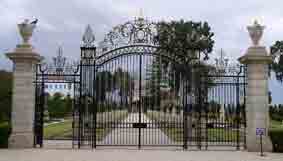
Collins Gate to the Haram-i-Aqdas and the Shrine of Bahá'u'lláh
 .
.  .
. 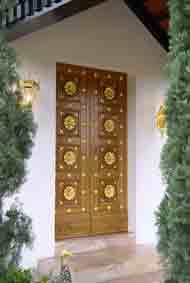
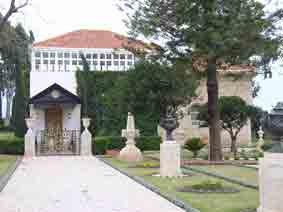
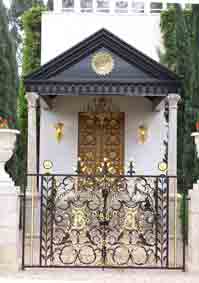
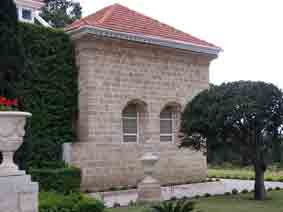
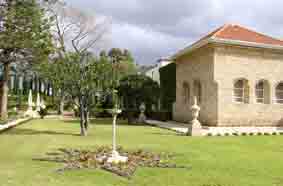
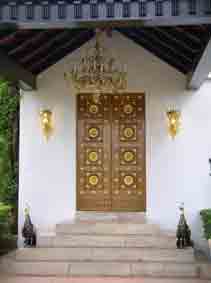
Entrance to the Shrine of Bahá'u'lláh
 .
.  .
. 
Shrine of Bahá'u'lláh, the room in which he is buried, qiblih
(point of adoration) of the Bahá'í world
Returning to Haifa, there was time for a quick sack lunch at the PRC,
then a meeting with our knowledgeable Italian guide. We walked to the Seat
of the Universal House of Justice and were received by seven House of
Justice members, with one giving a welcome talk to the pilgrims. Then we
were personally greeted by each House member.
I climbed down to Ben Gurion Avenue for dinner, then up the stairs to the
International Teaching Center Building (ITC) for our first evening
presentation by a Counsellor from the ITC. She referred to this place of
great beauty and even greater sacredness, shared some news from the Bahá'í
world, and talked about our higher purpose. She concluded by saying that
pilgrimage is a period of renewal, a time to free ourselves of burdens,
and to find new avenues of service.
Wednesday
3 February
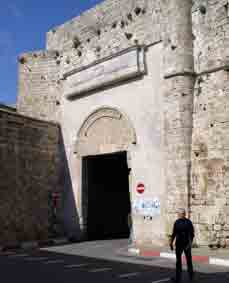
We went by bus to Akka, the old Crusader fortress and prison city around
the bay from Haifa. We walked through the land gate, past the local prison
and the white market to the prison in the Citadel.
 .
.  .
. 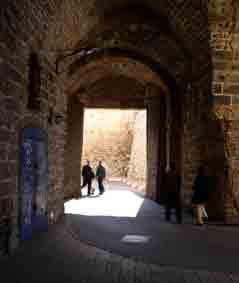
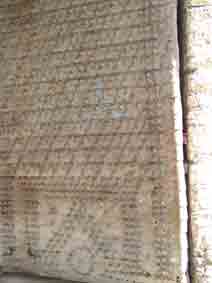
The Land Gate, Akka, and its ancient door studded with nails
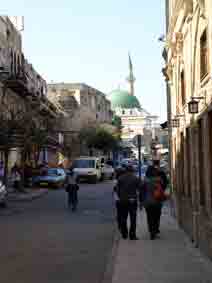 .
. 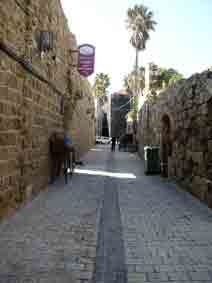 Streets of Akka, with the mosque in the distance
We visited the prison cell of Bahá'u'lláh, and the place where His son
Mirza Mihdi fell through a skylight to his death. Our next visit was to
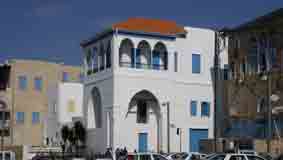
the House of 'Abbúd, where Bahá'u'lláh and his family were lodged after
his release from 2 years and 9 months in solitary confinement. The
suffering of Bahá'u'lláh was so present in these places.
 .
.  .
. 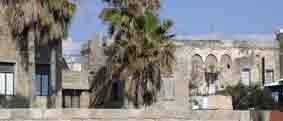
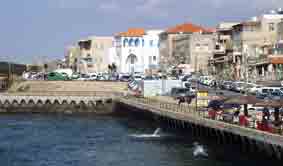
House of Abbud, and another part of the city where Bahá'u'lláh
stayed
We returned to Haifa in the late afternoon, and climbed the stairs for an
evening meeting with the Counsellors of the International Teaching Centre.
One Counsellor spoke for the ITC about human resources development. The
true purpose of our activities is to develop spiritual faculties in
children, to release the powers of young people and develop their
spiritual identity, and in study circles to develop our capacity for
service. He shared stories of transformation, of powers multiplied and
directed to purposes, building a civilization that will be both materially
and spiritually prosperous. I walked down the stairs for a late dinner.
Thursday 4 February - rain during
the night, but only showers during the day
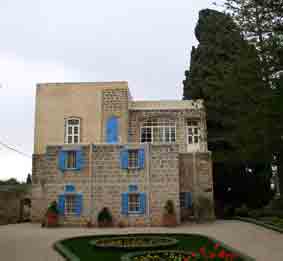
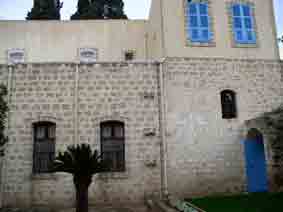
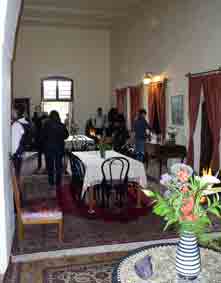
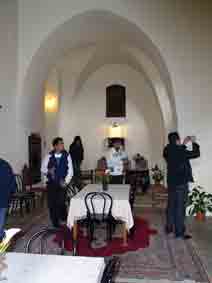
I was up very early for our visit to the Mansion at Mazra'ih north of
Akka where Bahá'u'lláh first lived after being allowed to leave Akka.
 .
.  .
. 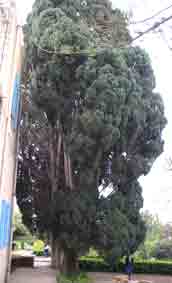
Mansion at Masra'ih, with trees from the time of Bahá'u'lláh
 .
. 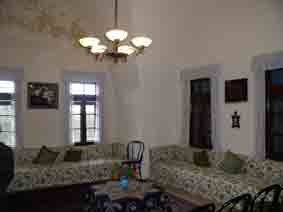
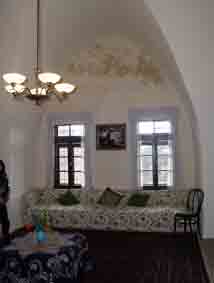
Masra'ih downstairs reception area
 .
.  .
. 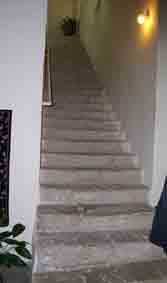
Masra'ih downstairs, and stairs used by Bahá'u'lláh
 .
.  .
. 
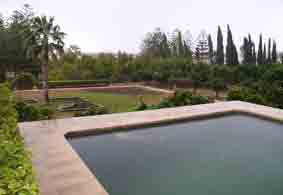
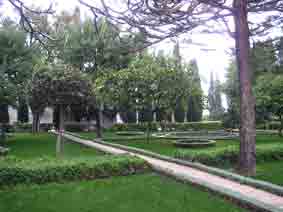
The mansion was built along the old aquaduct carrying water to
Akka, with a reservoir and inner courtyard
 .
.  .
. 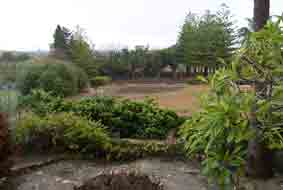
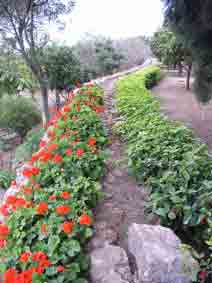
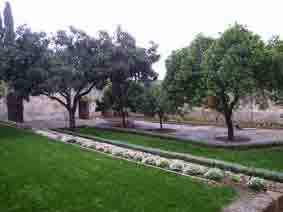
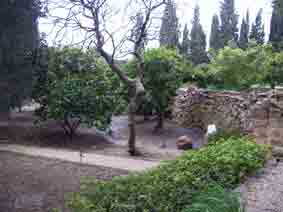
It is surrounded by beautiful gardens and fruit trees
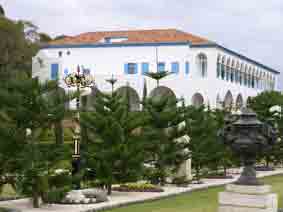
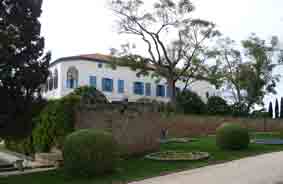
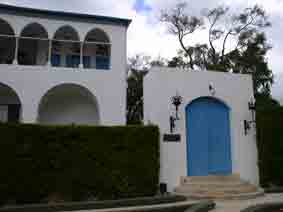
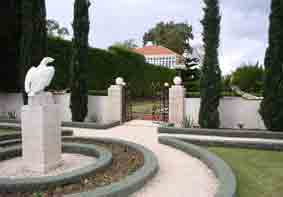
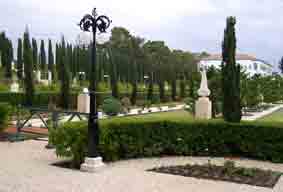
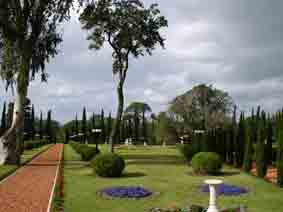
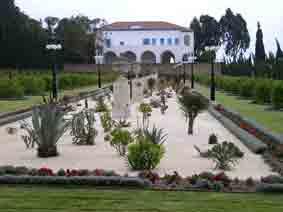
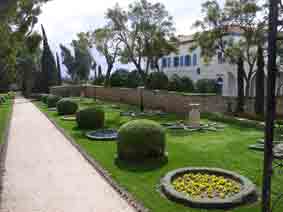
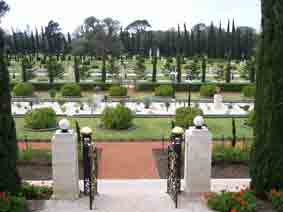
Then we went to the Mansion of Bahji where Bahá'u'lláh lived the last 13
years, and where He ascended in 1892. We prayed in the room of
Bahá'u'lláh, and had time for a quick visit to the other rooms. The
afternoon was set aside for prayers at the Shrine of Bahá'u'lláh and
visiting the beautiful gardens around the Shrine and the Mansion.
 .
.  .
. 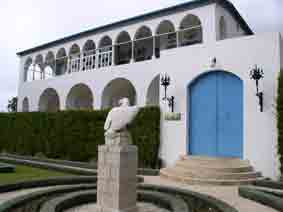
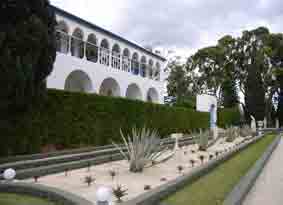
The Mansion of Bahá'u'lláh at Bahji
 .
.  .
. 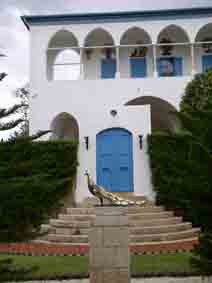
The doors to the Mansion
 .
.  .
. 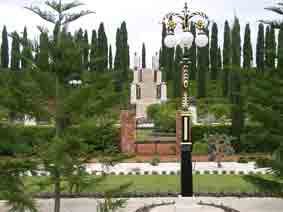
Beautiful gardens surround the Shrine of Bahá'u'lláh and the
Mansion
 .
.  .
. 
 .
.  .
. 
 .
.
 .
. 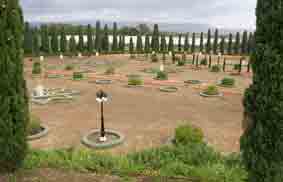
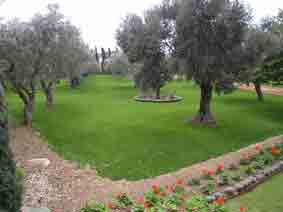
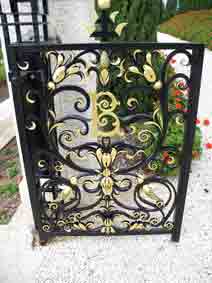
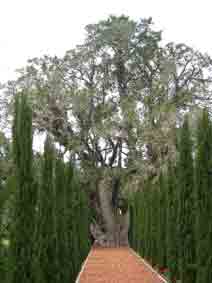
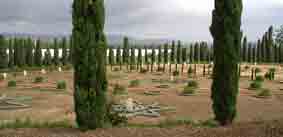
A thousand-year-old sycamore; new extensions of the gardens
We returned to Haifa in the late afternoon.
Friday
5 February - overcast
There was nothing formal planned until the evening, so we were free to
visit the Holy Places. In the morning I climbed up the nine lower terraces
taking pictures and then walked back down again. I then walked up the
outside stairs to the PRC, talked for a while with the pilgrims, and then
took the city bus to the Bahá'í Cemetery, where many wonderful Bahá'ís
that I had met are buried. After lunch, I visited the Haifa Pilgrim House,
and looked at photo albums from pilgrimages of 40 years ago, with pictures
of many friends and my wife-to-be, two weeks before we met in New
Caledonia.
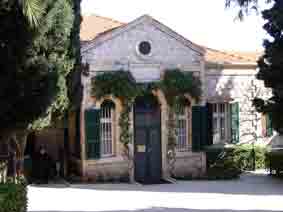 Haifa Pilgrim House
When the Shrines of the Báb and 'Abdu'l-Bahá opened, I went there to
pray. Afterwards I climbed down the stairs to my hotel to have dinner with
a young volunteer whom I had met in Geneva and who wanted to discuss
environmental careers. Then we rushed up the 370 stairs to be on time for
the evening presentation at the ITC (I reached the top first, so I must be
getting into shape). A member of the Universal House of Justice gave a
beautiful talk on our responsibility after pilgrimage to go back and share
the spirit in our communtities. He emphasized the need to go from
understanding to action, the importance of the learning process and our
evolving potential, like cells becoming united in a body or an embryo
developing. We cannot all at once overcome all prejudice in the world, but
we must learn and keep advancing.
Saturday
6 February - free day - cold (12°C) but clouds cleared early, so
mostly sunny.
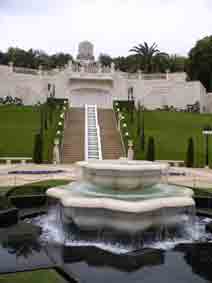
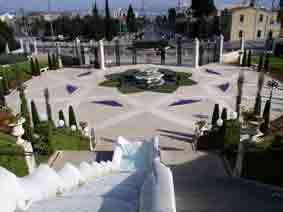
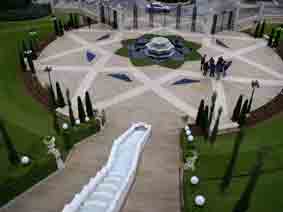
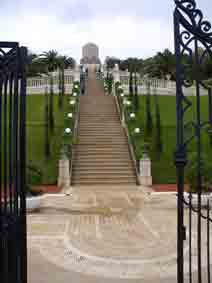
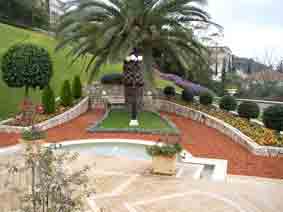
I had to take advantage of the good light to climb the 19 terraces and
take pictures. I reached the top of Mount Carmel in an hour, and went back
down in 45 minutes, taking pictures along the way. There was such beauty
everywhere, at all scales from majestic vistas to miniature gardens and
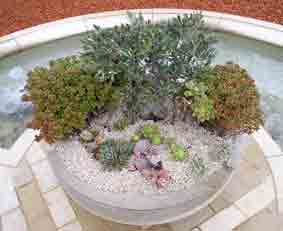
bonsai in vases.
 .
.  .
. 
First terrace at the head of Ben Gurion Avenue, and the view up the
nine lower terraces to the Shrine of the Báb
 .
.  .
. 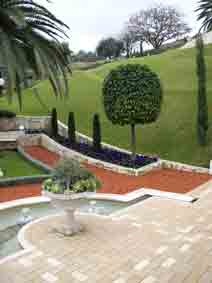
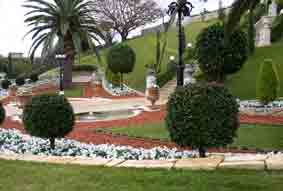
The lower terraces
 .
.  .
. 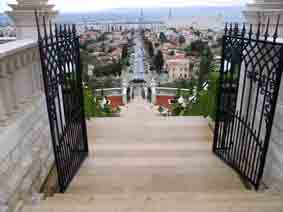
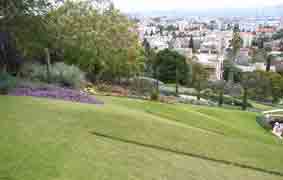
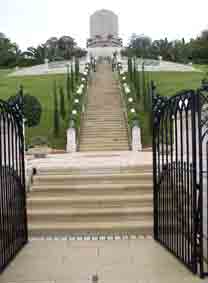
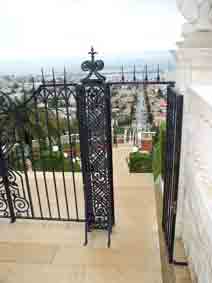
To the side, the gardens blend into the mountainside; view down the
terraces to Ben Gurion Avenue and the port of Haifa
 .
.  .
. 
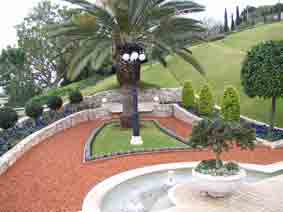
Lower terraces
 .
. 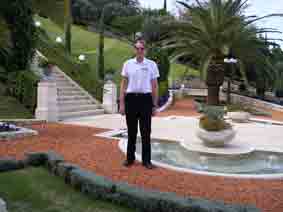
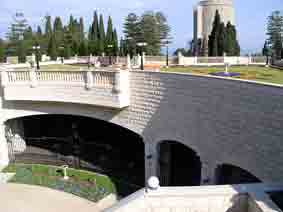
Hatzionut Avenue was lowered to pass under the terraces; Arthur
Dahl on the terraces
 .
.  .
. 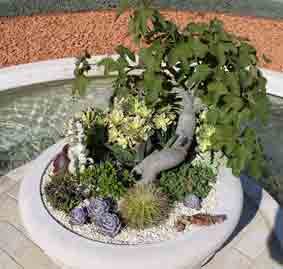
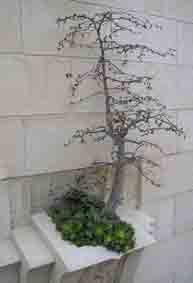
Bonsai arrangements in vases and by the bridge
 .
.  .
. 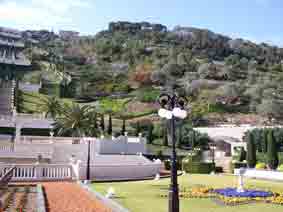
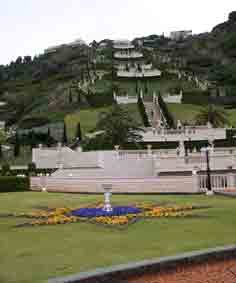
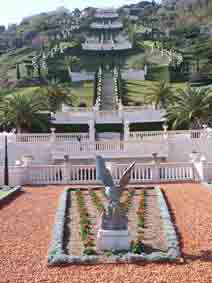
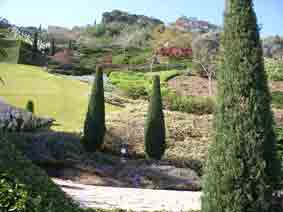
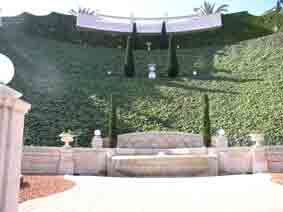
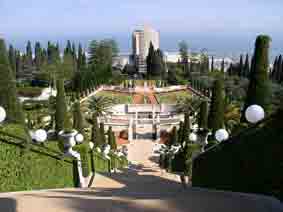
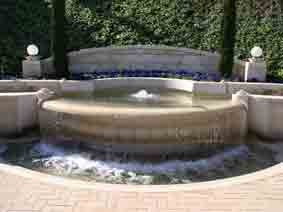
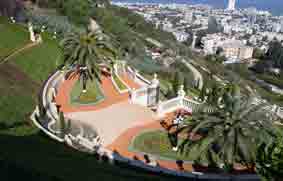
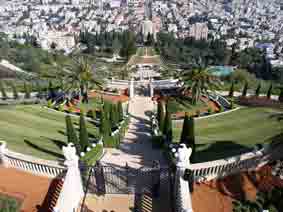
The nine upper terraces climb up to the top of Mount Carmel; to the
sides, the gardens blend into the mountainside vegetation
 .
.  .
. 
Upper terraces
 .
.  .
. 
Upper terraces
 .
.  .
. 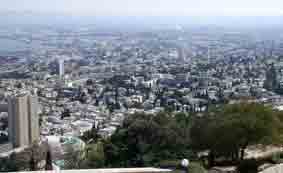
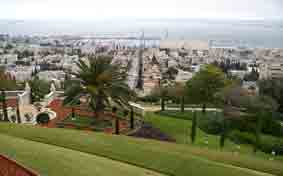
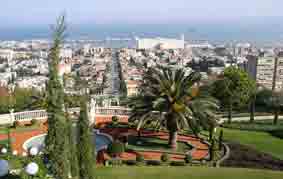
Views of Haifa from the terraces
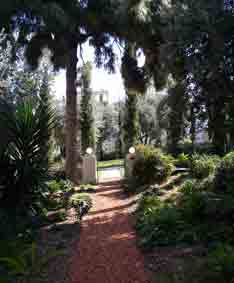
At the bottom again, I visited the little garden with trees where
Bahá'u'lláh pitched his tent.
 .
. 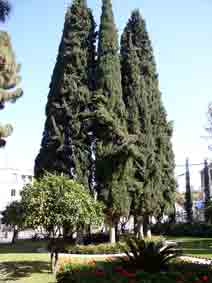
Garden near the first terrace, with trees where Bahá'u'lláh pitched
his tent while visiting Mt. Carmel
Then an old friend from France drove a few of us to the prison-city of
Akka. We visited the Land Gate where everyone used to go in and out, the
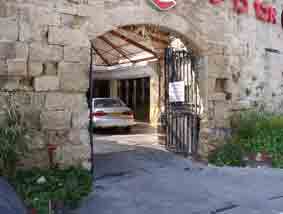
Sea Gate (now a restaurant) where Bahá'u'lláh and His family first arrived
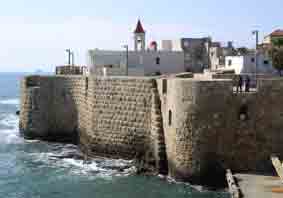
as prisoners in 1868, the ramparts of the Crusader fortress, and the
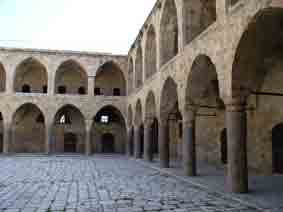
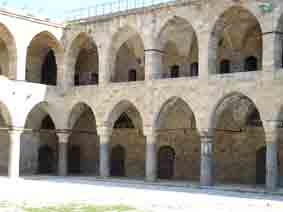
Caravanserai of Khan-i-Avamid where many Bahá'ís stayed at the time.
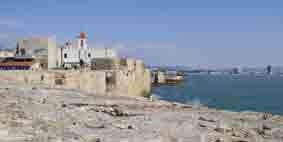 .
.  .
. 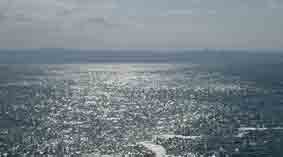
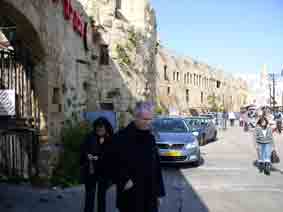
Walls of Akka, with view of Mt. Carmel across the Bay of Haifa
 .
.  .
. 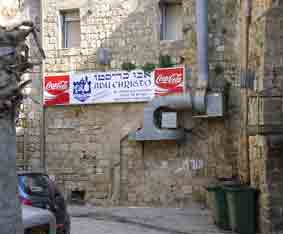
The former Sea Gate through which Bahá'u'lláh entered Akka, now a
restaurant. The back entrance is walled up.
 .
.  .
. 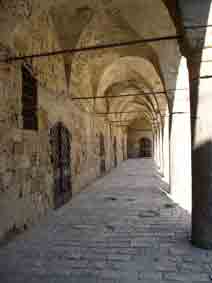
Caravanserai of Khan-i-Avamid where many Bahá'ís stayed in the time
of Bahá'u'lláh
Then we drove to Bahji. I visited the pilgrim house, as well as the room
of 'Abdu'l-Bahá. There was time for another more complete visit to the
Mansion, and then for what were my last prayers in the Shrine of
Bahá'u'lláh. Then we returned to Haifa.
Sunday
7 February - sunny and a bit warmer (16°C)
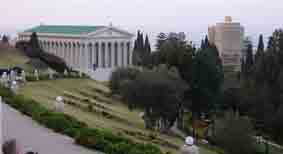
Our group visited the newly reopened Archives Building in the morning. It
was beautifully arranged, with new display cases better able to preserve
the objects. We viewed the portraits of Bahá'u'lláh and the Báb, selected
Holy Writings, clothing of Bahá'u'lláh, the Báb and 'Abdu'l-Bahá, and
relics of their lives and the early history of the Faith. It was all very
moving.
 Archives
Building
Archives
Building
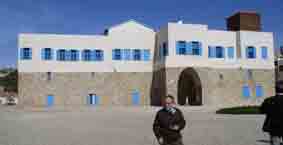
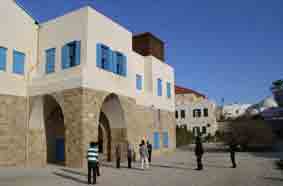
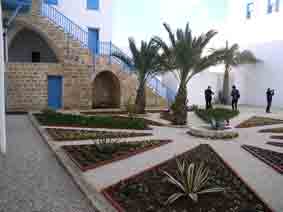
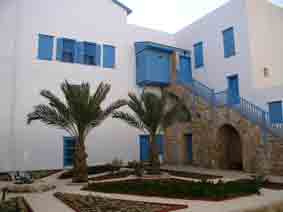
Then we took the bus to Akka to visit the House of Abdu'llah Pasha, where
'Abdu'l-Bahá lived from 1896 to 1910, first Western pilgrims visited, and
Shoghi Effendi was born. It was beautifully restored, and much bigger than
I expected.
 .
.  .
. 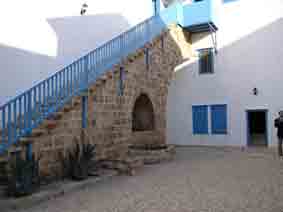
House of Abdullah Pasha, 'Abdu'l-Bahá's residence in Akka
 .
.  .
. 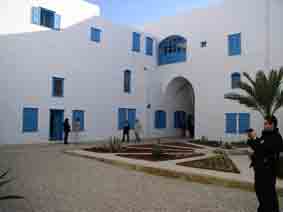
House of Abdullah Pasha, inner courtyard with stairs to different
parts of the building where 'Abdu'l-Bahá's family lived
 .
.  .
. 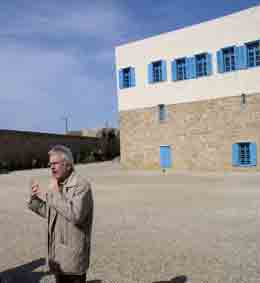
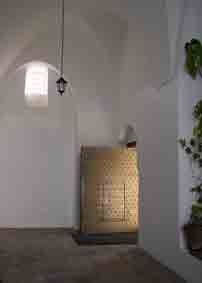
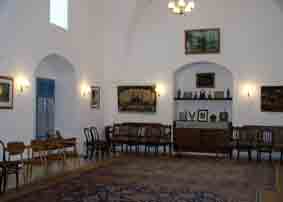
Entrance to the House of Abdullah Pasha, downstairs reception area,
and our guide
 .
. 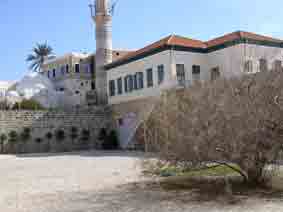
Exterior courtyard in from of the House of Abdullah Pasha, stables
and Governor's residence
We then returned to Haifa.
In the evening, a member of the Universal House of Justice spoke,
reflecting on pilgrimage and what is happening in the Bahá'í world. We
need such a special time, away from our busy life, to meditate on our life
and spiritual development and make plans for the future. We make a
connection with God, develop spiritually, leap forward, and become
different people. These connections will remain even when we are far away;
love unites us with the centre.
Monday
8 February - overcast and cool
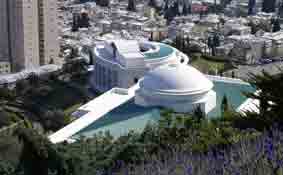
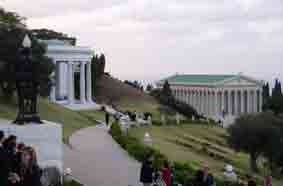
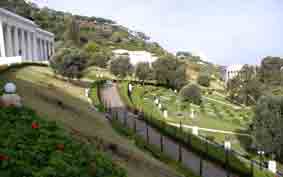
Early in the morning we visited the buildings on the Arc on the slope of
Mount Carmel, surrounded by the Bahá'í Gardens, that make up the World
Centre of the Bahá'í Faith.
 .
.  .
. 
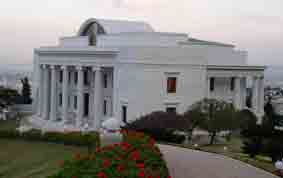
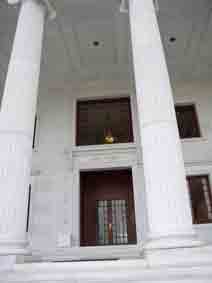
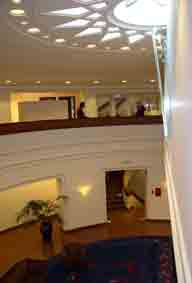
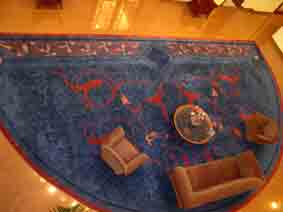
We started with the International Teaching Centre (ITC) building, where
we had already met in the auditorium in the evenings for the various
presentations. We visited the public reception areas of each building, and
our guide explained the functions and told stories about their
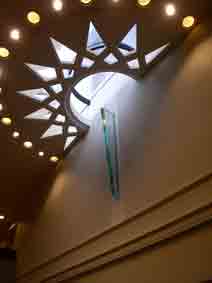
construction and their occupants. The ITC building was designed so that
light flows through it, even with a prism in the wall of the International
Teaching Center council chamber. It has a number of stories below ground
level.
 .
.
 .
. 
 .
.  .
. 
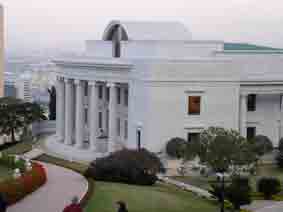
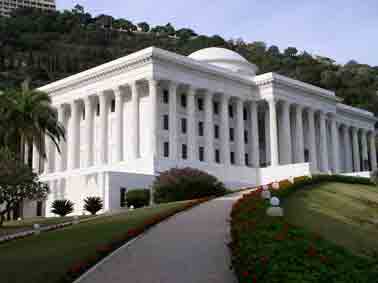
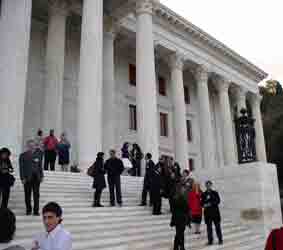
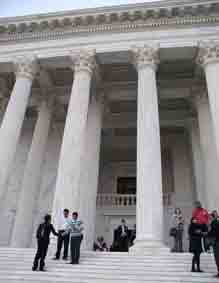
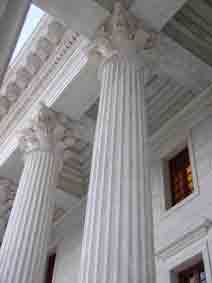
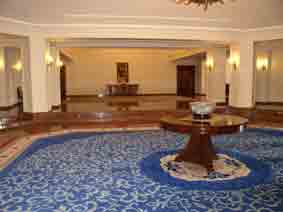
We then visited the reception area of the Seat of the Universal House of
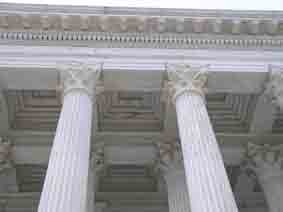
Justice, with its 58 magnificent Corinthian columns. The marble is the
same as for the Parthenon in Greece, and was taken to Italy for carving,
when old stone-carvers had to be brought out of retirement to do the work.
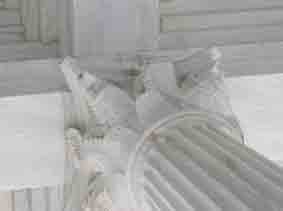
They symbolized their effort by adding a bee to one of the capitals. There
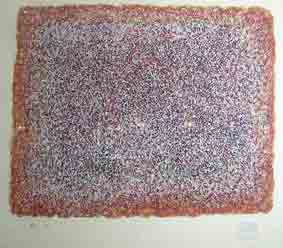
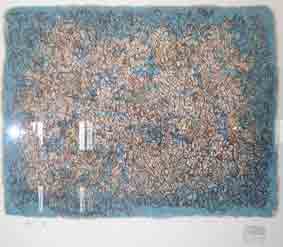
are 4 Mark Tobey lithographs on the walls of reception area; I recognized
them from a distance.
 .
.
 .
. 
The Seat of the Universal House of Justice
 .
.  .
. 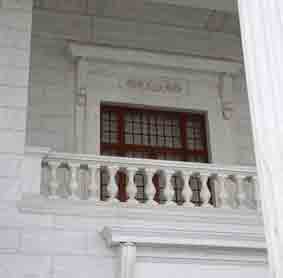
The magnificent columns, and the balcony of the meeting room of the
House of Justice
 .
.  .
. 
Superb Corinthian capitals, including one where the carvers added a
bee for their work; stairs up to the meeting room
 .
.  .
. 
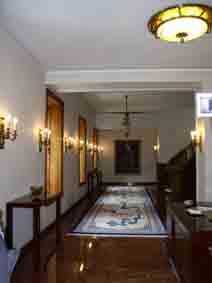
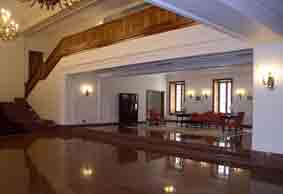
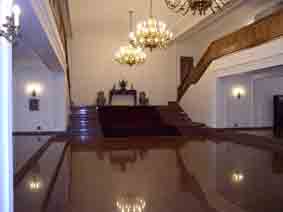
Reception area of the Seat of the Universal House of Justice
 .
. 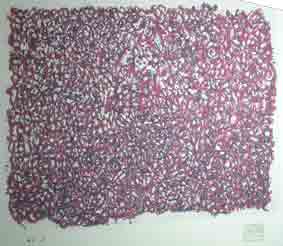
Four lithographs by Mark Tobey hang in the reception area
 .
. 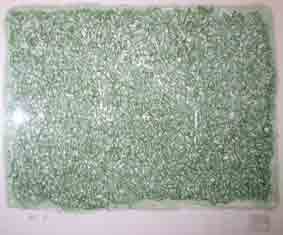
(these were difficult to photograph under glass, so some
reflections could not be avoided)
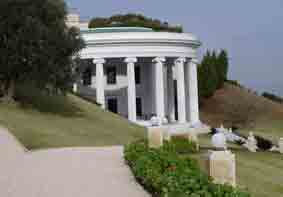
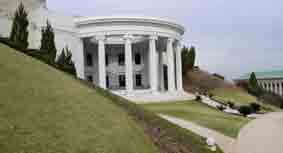
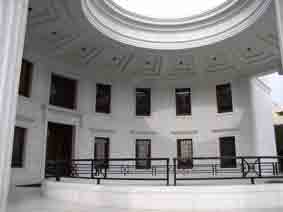
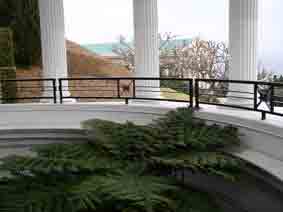
The Centre for the Study of the Texts assists the House of Justice in
preparing legislation by checking the existing texts and interpretations.
Its building has 8 stories rising up the mountain behind it, with light
wells to the bottom. The library occupies the bottom floor around a
central fountain and garden.
 .
.
 .
.
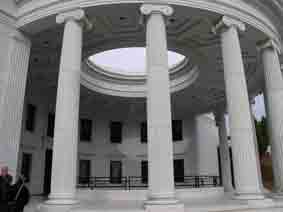
Centre for the Study of the Texts
 .
.
 .
.
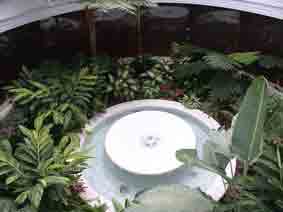
Entrance and sunken garden and fountain with the library around it
 .
. 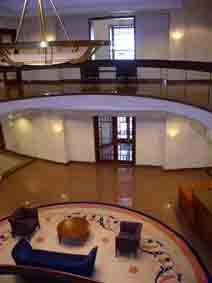
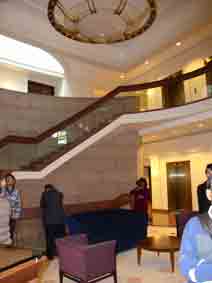
Interior reception area, Centre for the Study of the Texts
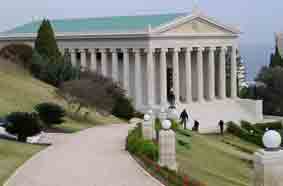
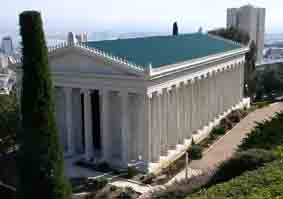
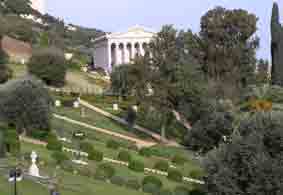
At the end of the Arc is the Archives building which we visited
yesterday, and beside it the entrance to the Archives set back into the
mountain.
 .
.  .
. 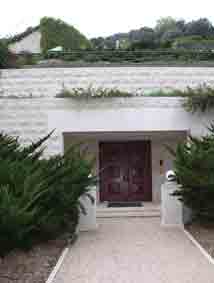
Archives Building and Archives
 .
.  .
. 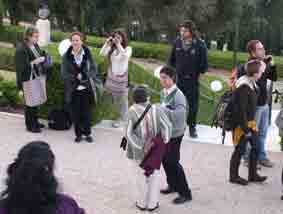
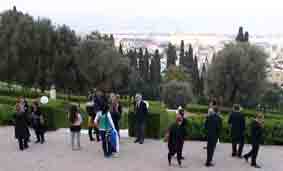
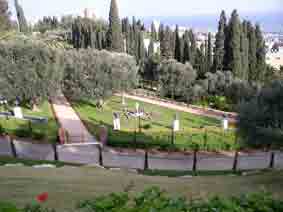
There are beautiful gardens between the Arc and the Monument
Gardens below, which the pilgrims enjoyed
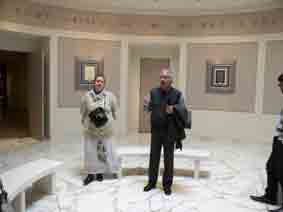
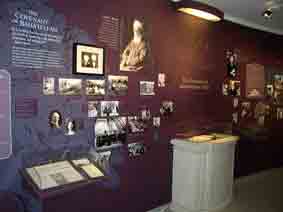
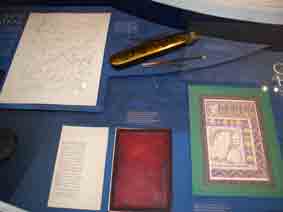
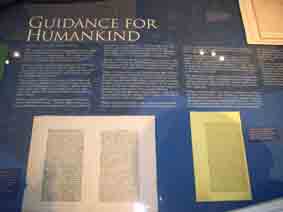
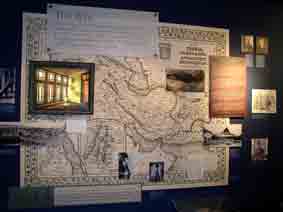
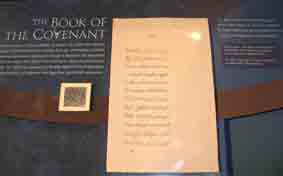
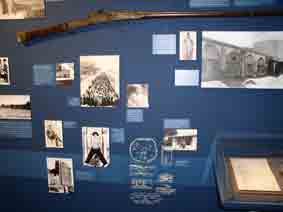
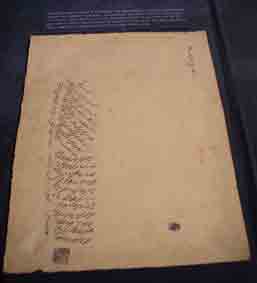
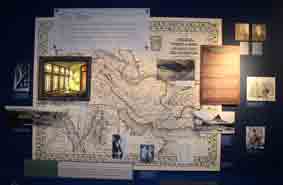
We went on to visit the Office of Public Information and its Visitors'
Centre under the terraces where the bridge crosses Hatzionut Street.
Exhibits there tell the history of the Bahá'í Faith simply and
beautifully.
 .
.  .
. 
 .
.  .
. 
 .
.  .
. 
In the afternoon, we walked down to Haparsim Street (street of the
Persians). We first visited the grave of Amatu'l-Bahá Ruhiyyih Khanum, and
the building at 4 Haparsim that was the first Western Pilgrim House
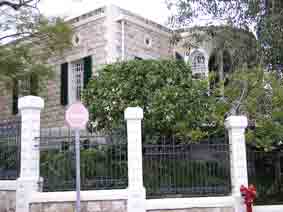
(1910-1926) where many early Bahá'ís stayed. Just up the street at 10
Haparsim is the Western Pilgrim House (1926-1963) where we stayed on our
first pilgrimage, which was the first seat of the Universal House of
Justice, and is now the offices of the Bahá'í International Community.
 .
.  .
. 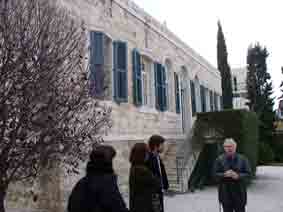
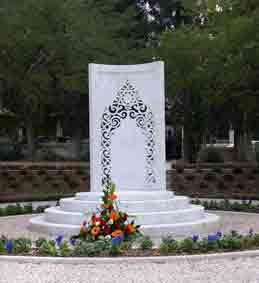
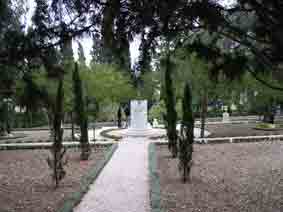
Grave of Amatu'l-Bahá Ruhiyyih Khanum (wife of Shoghi Effendi);
first Pilgrim House at 4 Haparsim Street
 .
. 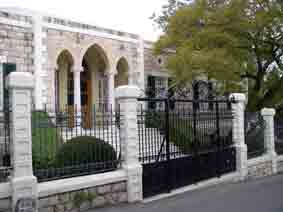
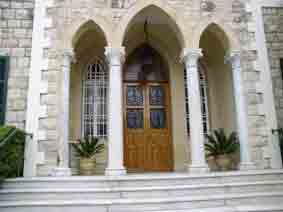
10 Haparsim Street, former Western Pilgrim House, offices of the
Bahá'í International Community
 .
. 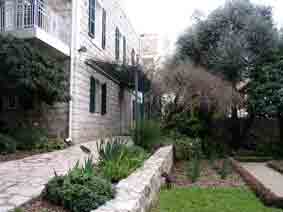
10 Haparsim Street
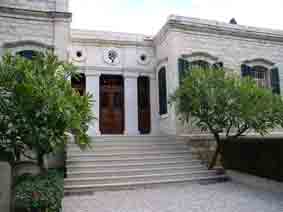
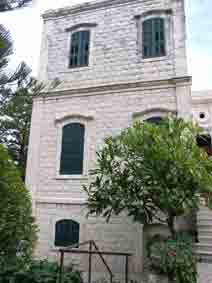
Our last Holy Place to visit was the House of 'Abdu'l-Bahá, where he
lived from 1913 to 1921, and which also was the residence of the Greatest
Holy Leaf (his sister), the Guardian, Shoghi Effendi, and his wife
Ruhiyyih Khanum. Many important events took place there, including the
election of the first Universal House of Justice. We prayed in the rooms
where 'Abdu'l-Bahá and The Greatest Holy Leaf ascended.
 .
.  .
. 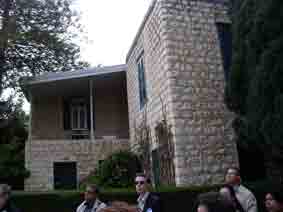
House of 'Abdu'l-Bahá
 .
. 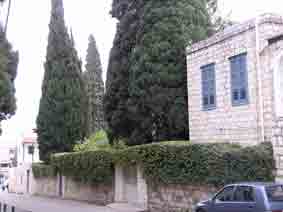
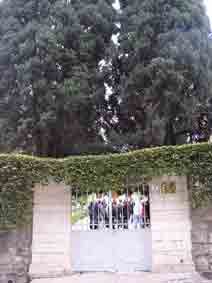
Gate to the House of 'Abdu'l-Bahá
The time had flown, as they said it would, and we had to start to prepare
emotionally for departure.
In the evening presentation, a Counsellor of the ITC told the story of a
rebellious youth who became a Bahá'í, traveled to Haifa, was transformed
on meeting 'Abdu'l-Bahá, stayed as his secretary, and became a famous
scholar and diplomat. This illustrated that the only limitation is our
capacity. We are strong on the scientific source of knowledge, but need to
strengthen religion. We have to look at all the work that has to be done,
building a system to raise people quickly to become partners in this
enterprise, and find our sphere of usefulness in the framework of action.
Tuesday
9 February
There were no planned activities until the evening Pilgrim Farewell. I
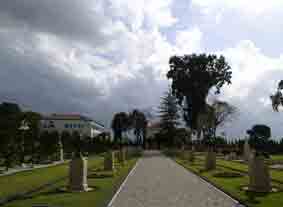
climbed the lower terraces and visited the Monument Gardens.
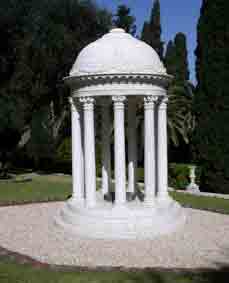 .
. 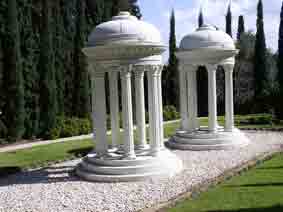 .
. 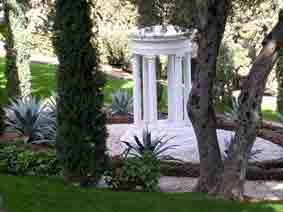
Monuments to the Greatest Holy Leaf, the Purest Branch, Navvab, and
Munirih Khanum
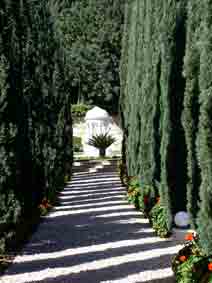 -
- 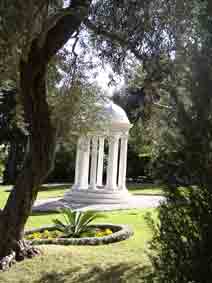
Monument Gardens
After lunch, I had an appointment with a member of the Universal House of
Justice about the activities of the International
Environment
Forum. In the late afternoon, I went to the shrines of the Báb and
'Abdu'l-Bahá for prayers, then to the Haifa Pilgrim House where all the
pilgrims gathered with some members of staff. We all went to the Shrines
one last time. After final farewells at the Pilgrim House, I returned to
my hotel. The pilgrimage was over.