As a biologist and ecologist, as well as a Bahá'í, contact with the natural world and its beauties is very important for me. The natural environment of Brameloup and its vicinity is one of its attractions. Here I want to share some of beauty I have observed, the things I have discovered that pleased me, and some of the living things with which I share my environment. Most of the botanical beauty of my forest, particularly the wildflowers, is shown on the seasonal pages for Spring, Summer, Fall and Winter.
PLANTS
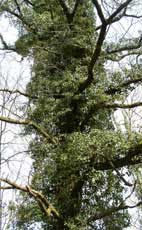
The orchids and lilies are the most remarkable flowers (see also Spring and Summer) but there are many others, as well as a mixed forest of many kinds of trees: oak, maple, false acacia (Robinia), poplar, walnut, yew, beech, hazelnut, hawthorne and many ash. Ivy is a common ground cover and often reaches high into the trees as well. Mosses and lichens are also very common.
Orchids
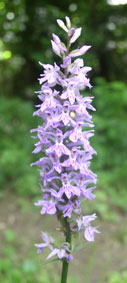
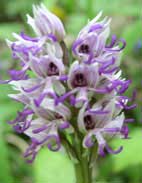 Orchis militaris Military Orchid - Orchis militaire
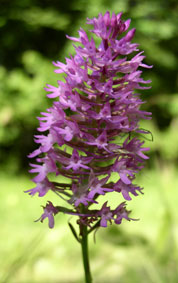 Anacamptis pyramidalis
Pyramid Orchid - Orchis pyramidal
Anacamptis pyramidalis
Pyramid Orchid - Orchis pyramidal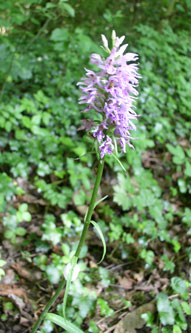 .
.
 .
.  .
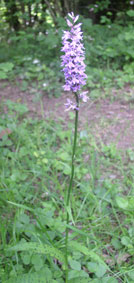
. 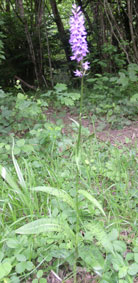 Orchis mascula Male orchid - Orchis mâle
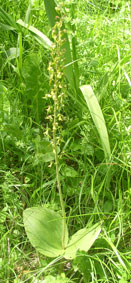 .
. 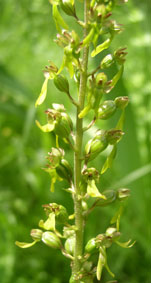 Listera ovata Big Listera orchid - Grande listère
This is the most common orchid in my upper meadow
 .
.  .
.  .
. 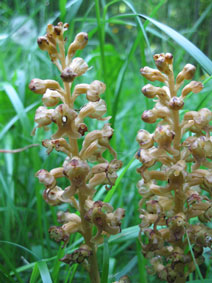
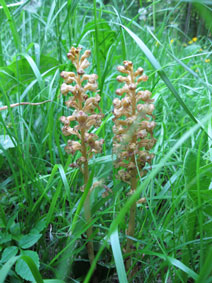
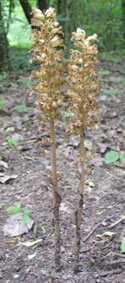
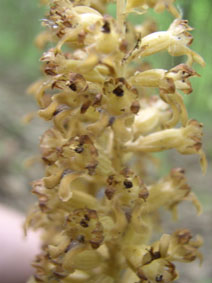
Neottia nidus-avis Birds nest neottia - Néottie nid-d'oiseau (saprophyte)
This unusual orchid does not photosynthesize, but lives in symbiosis with soil fungi
Lilies
 .
. 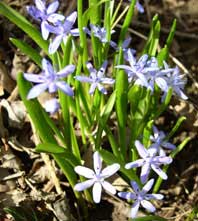 .
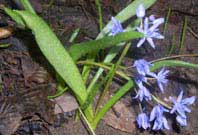
. 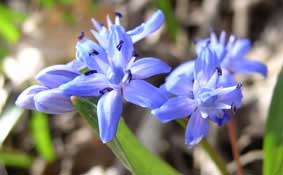 Scilla bifolia Scille à deux feuilles
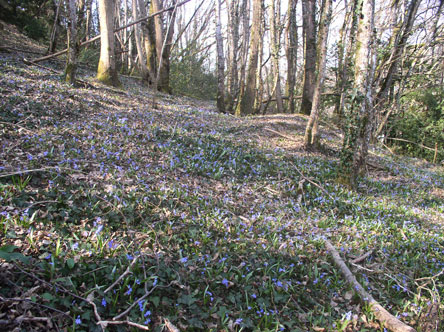
The forest at the western end of my property is carpeted with these small bright blue lilies that bloom in early spring, before the leaves come out on the trees.
 .
. 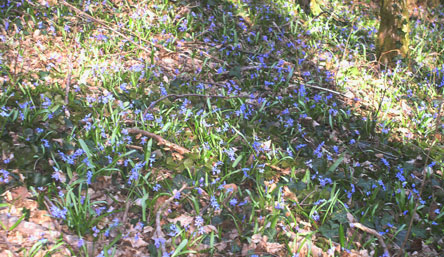
Forest floor carpeted with Scilla lilies
 .
.  .
.  .
. 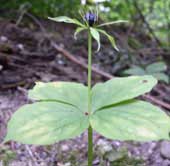
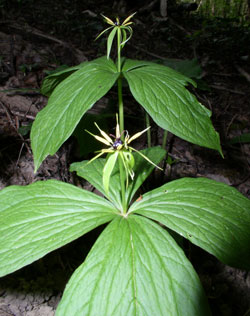
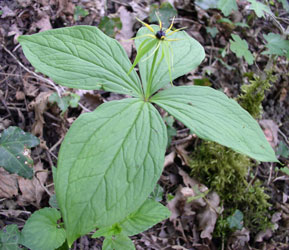
Paris quadrifolia Parisette à 4 feuilles
 .
.  .
.  .
. 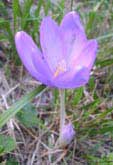 .
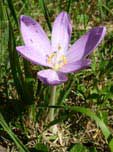
. 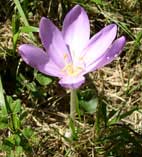 Colchicum autumnale
 spring autumn
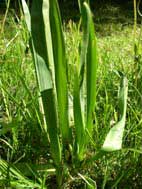
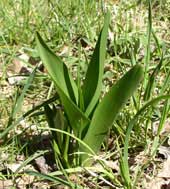
This unusual lily, sometimes called autumn crocus, produces green leaves and then seed pods in the spring, which disappear by July. The beautiful flowers usually appear out of the ground in August. It is common in my upper and lower meadows.
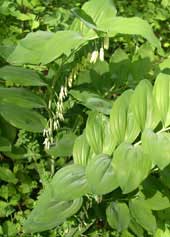 .
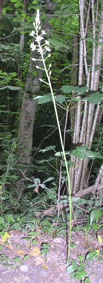
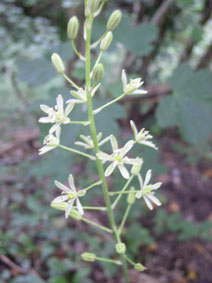
. 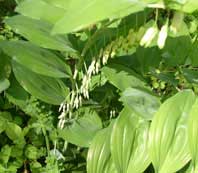 Polygonatum odoratum Solomon's Seal - Sceau de Salomon
 .
.  .
. 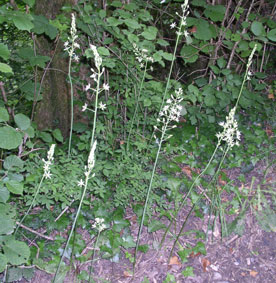 Ornithogalum pyrenaicum
Aspergette
Ornithogalum pyrenaicum
Aspergette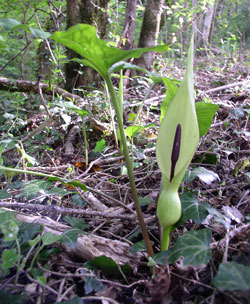 .
.
 .
.  .
. 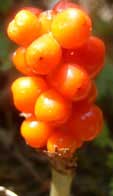
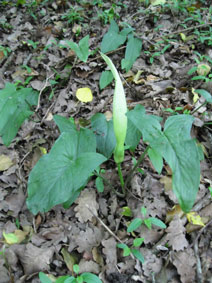
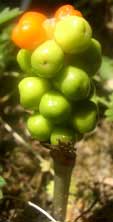
Arum, with white flowers and orange fruits
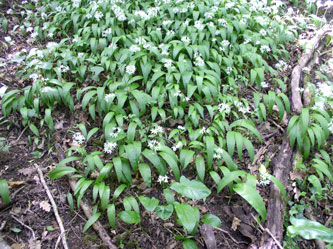
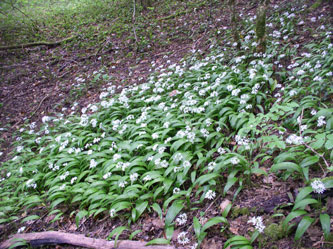
There are two patches of "Bears' garlic" above and below my western forest, a sign of underground water
 .
.  .
. 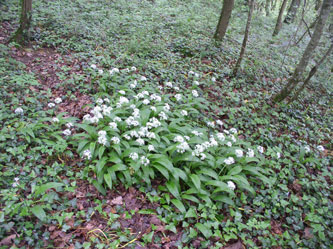
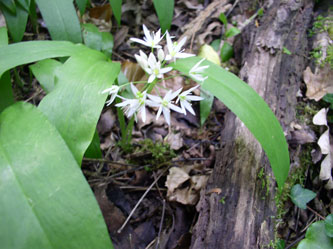
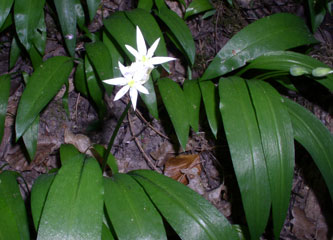
Allium ursinum Ail des ours - Bears' garlic
 .
.  .
. 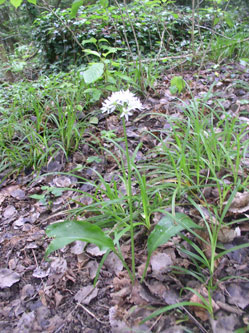
Allium ursinum Ail des ours - Bears' garlic; right: one of two plants growing by a trail in my own forest
Wildflowers
 .
. 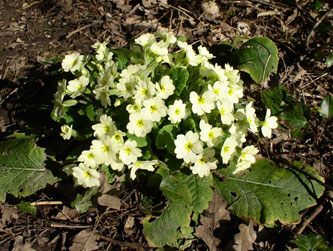 Primula veris Primrose - Primevère officinale
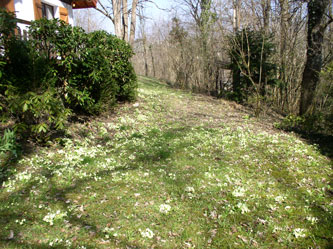
 Primrose is very common in my lawns in early spring
 .
.  .
.  .
. 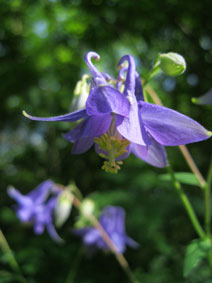
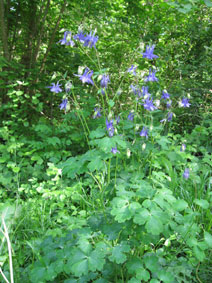
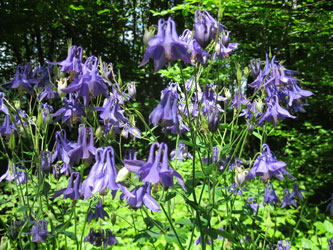
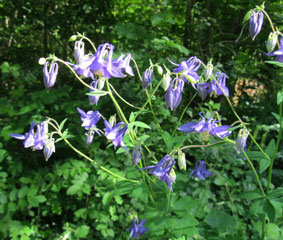
Aquilegia vulgaris Colombine - Ancolie commune
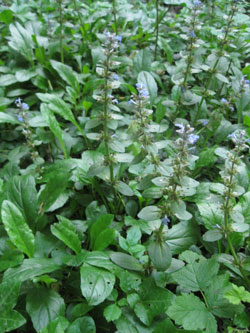 .
. 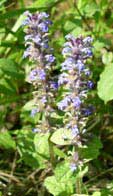 Ajuga reptans
 Ajuga is common in my lawn; in California it was a cultivated groundcover in our garden
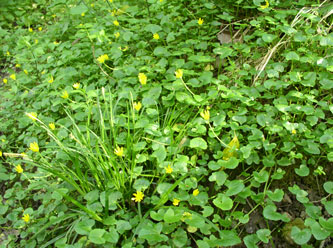 Ranunculus ficaria Ficaire - fausse Renoncule
The banks of Brameloup stream at the top of the ravine are carpeted with these delicate green leaves and bright yellow flowers in spring
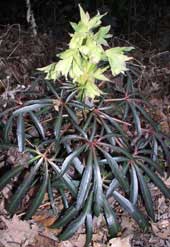 Helebore (Christmas rose) blooms in the winter
 .
.  ? jack in the pulpit
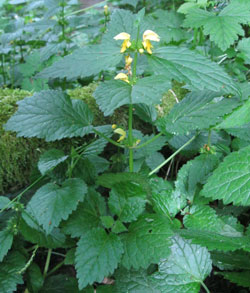
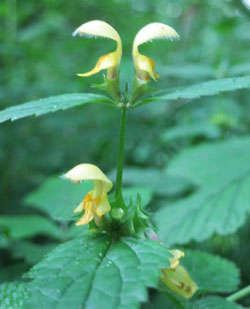
Lamium galeobdolon Lamier galéobdolon or yellow nettle (but not a nettle)
Other plants
 .
. 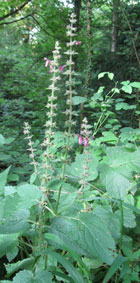
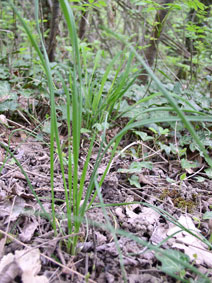
Wild chives smell like onion when mowed in the spring; nettles are common in shady areas
 .
.  .
.  .
. 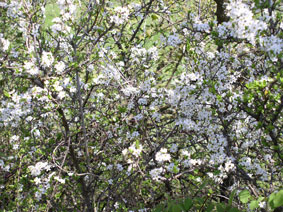
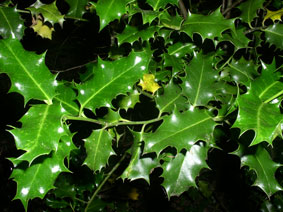
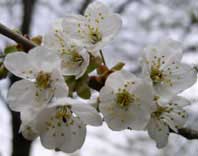
Ivy in a tree Holly Cherry blossoms - Cerisier Hawthorne - Aubepine
 .
. 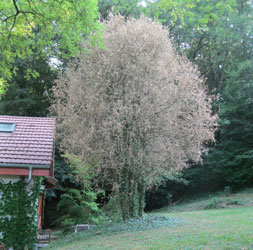
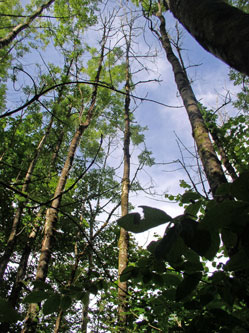
Some ash trees in my forest are dying; the large boxwood in front of my chalet was defoliated by caterpillars in 2018
 .
.  .
. 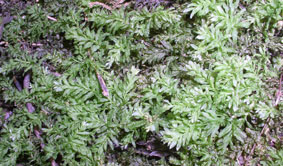
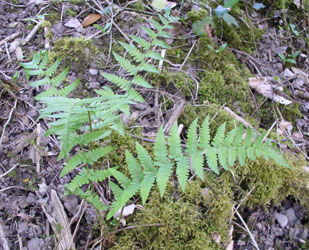
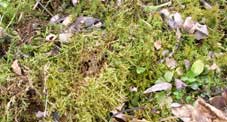
Ferns and mosses
For other flowers, see the seasonal pages
THE FUNGI
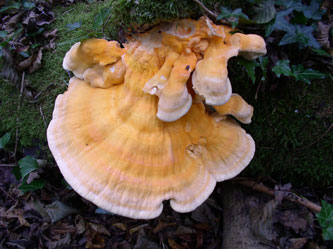
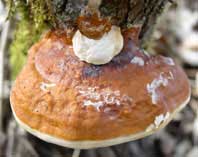
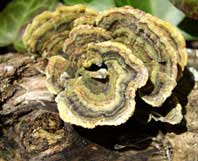
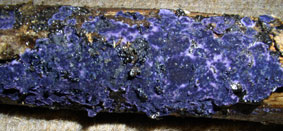
While there are mushrooms in the forest, I have never learned to recognize those that are safe to eat (except for a delicious morrel), and would not try. For beauty, it is the shelf fungi that grow from rotting wood that are the most aesthetically pleasing, but the bright colours of fungi on rotting wood are also spectacular.
Shelf fungi
 ,
,  .
.  .
. 
 .
. 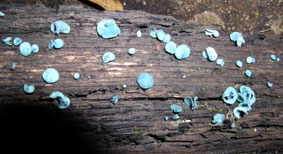
Blue and turquoise fungi on rotting wood
 .
.  .
. 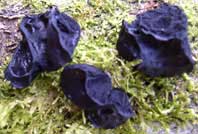
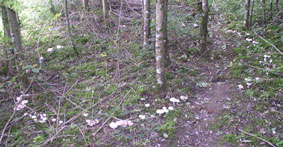
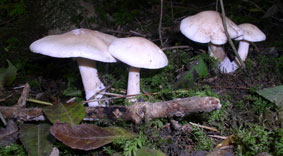
A mushroom circle; some mushrooms from the circle; black mushrooms
THE LICHENS
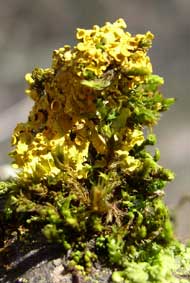
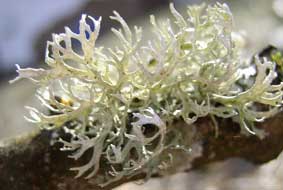
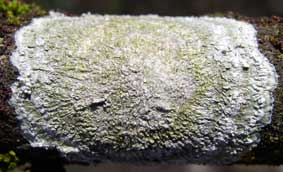
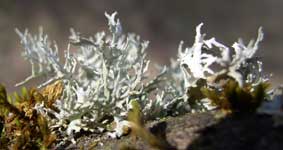
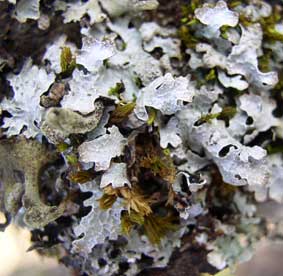
Most tree trunks and many other surfaces have lichens (associations of fungi and algae) growing on them. When you look closely, they can be surprisingly beautiful.
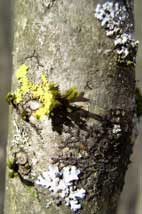 .
. 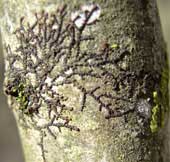 .
. 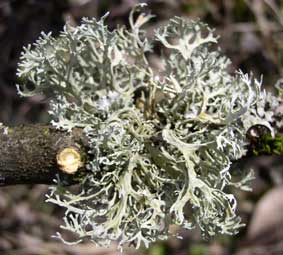 .
. 
 .
.  .
. 
INSECTS
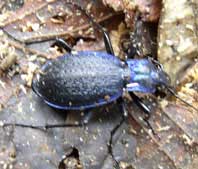
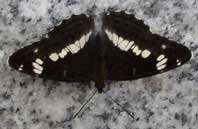
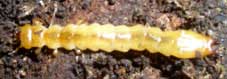
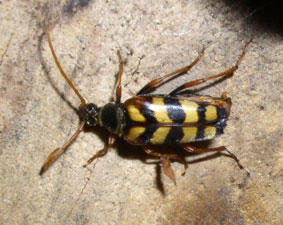
From butterflies and moths, to beetles, spiders, and grubs under the bark of fallen trees, insects are everywhere (not to mention mosquitos, mites, ticks, biting horseflies and blood-sucking deerflies that are less welcome dimensions of the natural world).
 .
.  .
.  .
. 
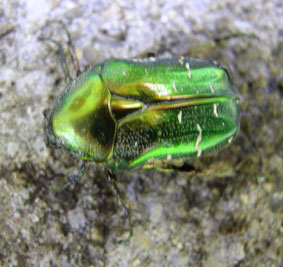 .
. 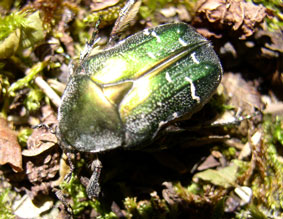 Cetonia aurata Cétoine dorée
There were several of these metallic green beetles in the ashes of my stove when I cleaned it in the spring
 .
. 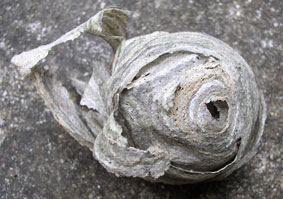
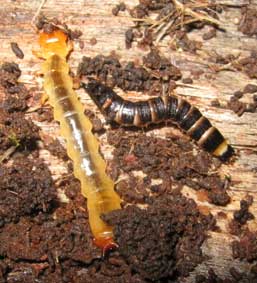
Grubs live under the bark of dead trees; the nest of paper wasps
Photo by Nabil Stendardo
 .
.  .
. 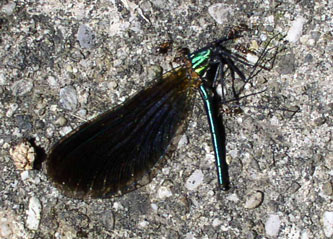
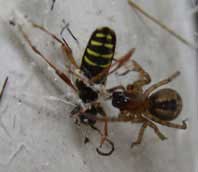
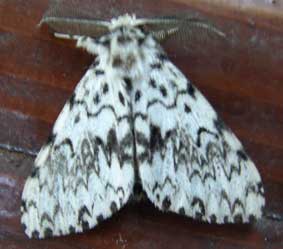
Spider catching a fly Moth with peace symbol; Ant pulling a dragonfly
 .
.  .
. 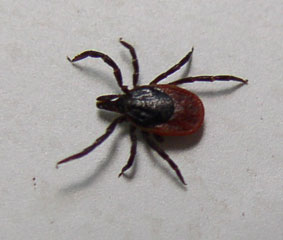
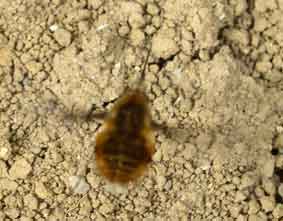
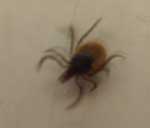
Fly that hovers like a hummingbird; ticks were common in 2010, 2014 and 2017 (one gave me Lyme disease - Boreliosis)
 .
.  .
. 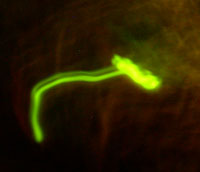
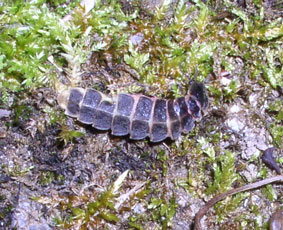
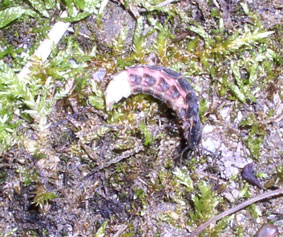
Glow worm in the garden at night in June; underside with two glowing segments; the glow at night that attracted my attention
MOLLUSCS
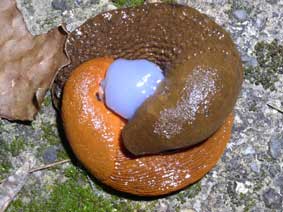
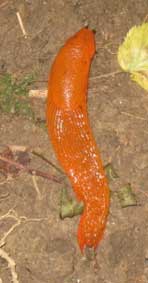
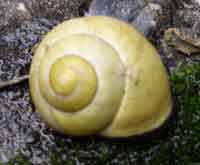
There are different kinds of snails including some that are bright yellow, but the slugs are most common. They particularly like the flowers in my garden and voraciously consume any vegetables that I try to grow.
These slugs appear to be copulating outside my front door ---->.
 .
. 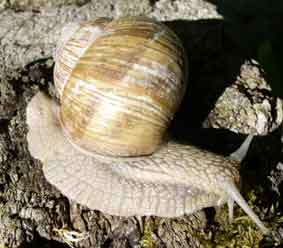
Arion rufus Limace rouge; Helix pomatia Escargot de Bourgogne
Photo by Nabil Stendardo
 .
. 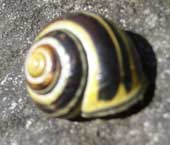
Cepea nemoralis Wood snail - Escargot des bois ou des haies - The local snails come in various colours
AMPHIBIANS
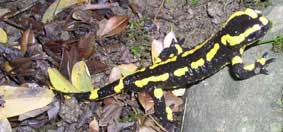
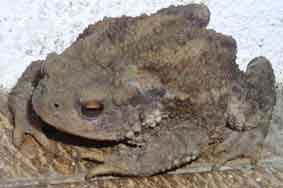
Since the river is not too far away, there are frogs and toads in the forest and garden. In the fall, I sometimes find black and yellow salamanders on my patio or in the garden.
 .
. 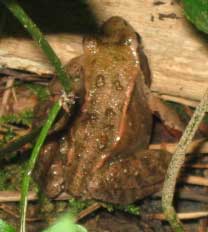
Spotted salamander Frog
 .
. 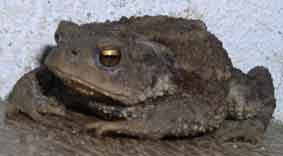
Toad on my doorstep
REPTILES
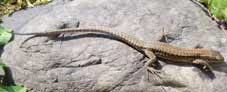
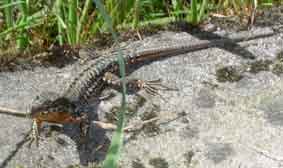
Lizards are very common around the chalet, particularly on the balcony and patio. I found a brown garden snake sleeping under a tile, but it slunk away before I could photograph it.
BIRDS
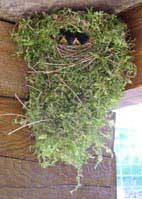
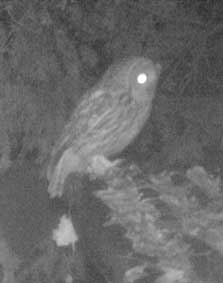
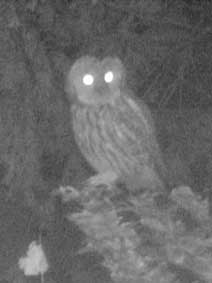
There are numerous birds around the chalet, but they are not easy to photograph, except the babies in a nest under my balcony. There are occasional fallen nests. The numerous bird songs include blackbirds and cuckoos, and owls at night. My wildlife camera has caught owls visiting at night.
 .
. 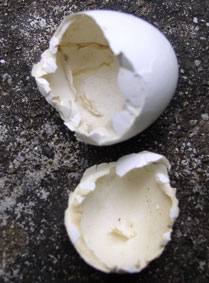
Bird's nest with babies; the eggshell found on a trail seems to have been opened from the outside
 .
.  .
. 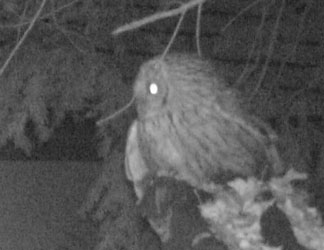
Owls at night
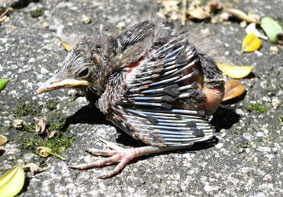
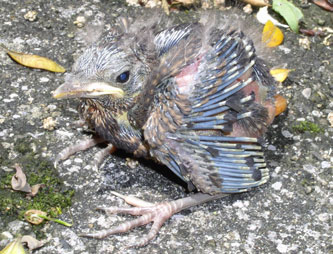
A baby bird fell from its nest just outside my front door. I picked it up in a gloved hand and put it back in its nest, where its parents continued to feed it.
 .
. 
MAMMALS
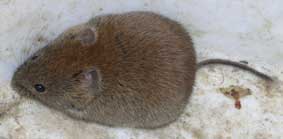
I have occasionally caught glimpses of mice, deer, foxes, martens, hares, squirrels and badgers at Brameloup, and often see their footprints along my paths and in the snow, but they and the birds are not easy to photograph except with a wildlife infrared camera. There have been some signs of wild boar (something dug up my tulip bulbs). Dormice (nocturnal fruit-eating animals about the size of a squirrel) were permanently resident in my chalet when I moved in, including nests with babies. They would often run around the rooms while I was in them. I finally closed all the openings, but they are still resident in the tool shed and build their nests in boxes. One family of dormice came to a tragic end in 2011 when all seven fell down a downspout and drowned in my rainwater tank, and two more drowned there in 2016, along with a marten. The mouse at right fell into a bucket, which made it easy to photograph.
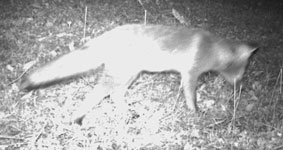
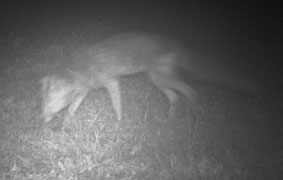
FOXES
 .
.  .
. 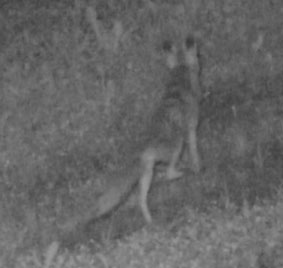
The foxes (renard) come around regularly. These pictures were taken at night with an infrared wildlife camera in front of my chalet
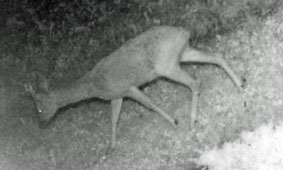
ROE DEER
 .
.  .
. 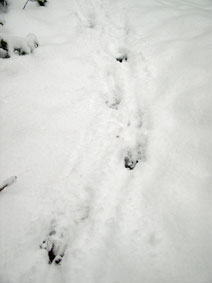
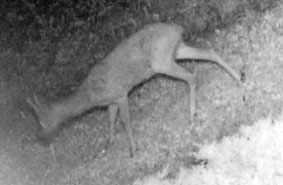
Roe deer (chevreuil) come by at night, and also leave footprints in the snow
SQUIRRELS
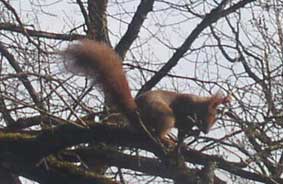
In early spring, a squirrel busied itself building a nest in the tree next to my chalet. These photos were taken from my window.
 .
. 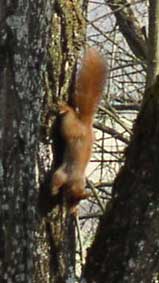
Red squirrel
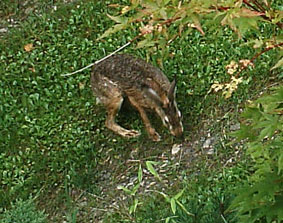
HARES
 .
. 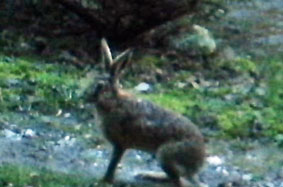
Hares are active both summer and winter
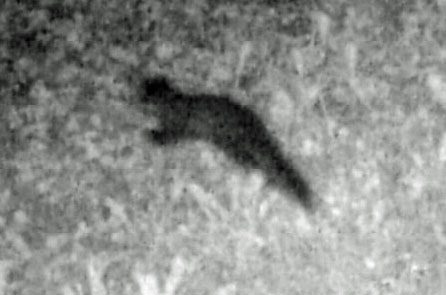
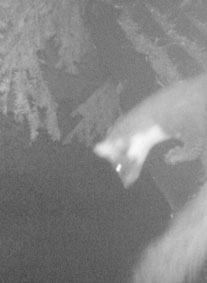
MARTENS
 .
.  .
. 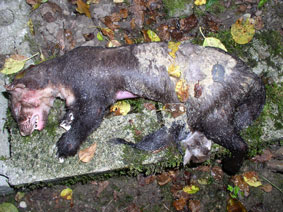
I have only glimpsed a live marten (fouine) once, but my wildlife camera has caught them at night, and one drowned in my rainwater tank after the cover was taken off by vandals
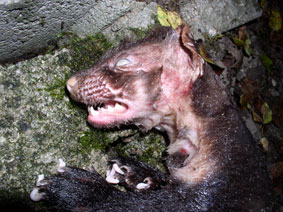
Drowned marten
DORMICE
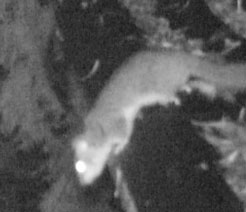
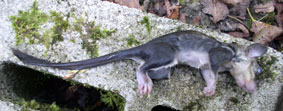
Dormice were common in my chalet when I first bought it, running around the living room and nesting under the sink or in a box of tissues. It was only when I could close all the holes through which they entered that I could finally keep them outside. They were cute but not toilet trained, and ate any fruit left out.
 .
.  .
. 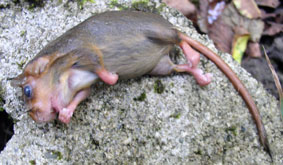
Dormice are nocturnal; drowned adult and baby dormice
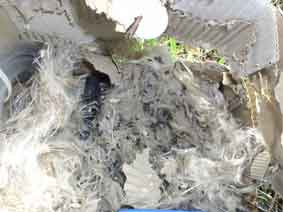 Dormouse nest in a box
 BADGERS
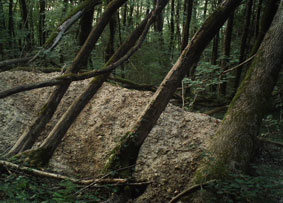
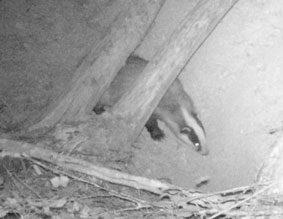
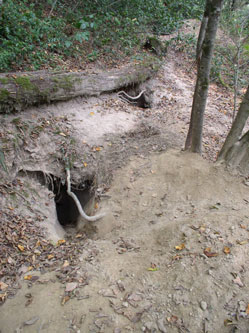
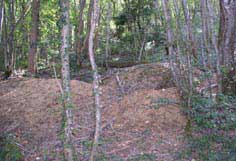
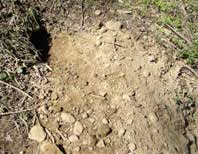
At the far end of my property there are extensive badger dens with large heaps of soil like mine workings. The different entrances are regularly maintained, with the new soil from one creating a kind of chute like a bobsled run.
 .
.  .
. 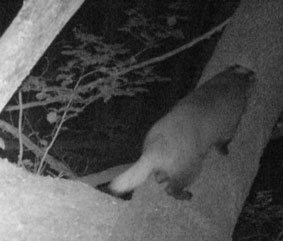
Using an infrared camera at the entrance to the badger den, I caught the badger (bleareau) coming out at night
 .
.  .
. 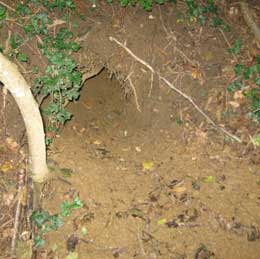 Photo by Nabil Stendardo
Badger dens
 .
. 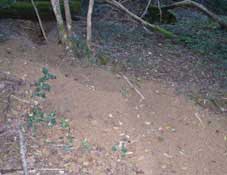
the excavated soil looked like a bobsled run
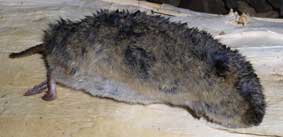
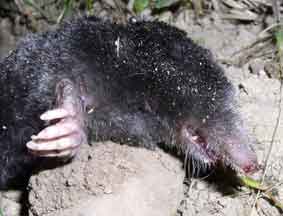
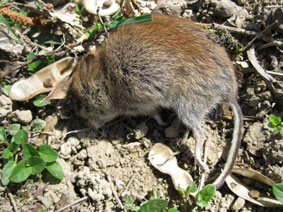
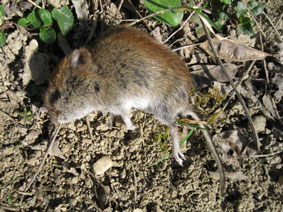
Some wildlife I only discover when they are dead. In mid-winter, I found a dead gopher on one of my forest trails, as well as a mole and a shrew. Gophers devoured most of my potato harvest and jerusalem artichokes in 2012, collecting many as a reserve for the winter in a hole at the end of the garden. Gophers are North American in origin, and have no local names in Europe, so I am surprised to find them in my garden. I also found a vole dying after being wounded by a predator, possibly an owl. While I have never seen a wild boar, one left footprints when it dug up a newly graded trail that I built in the forest.
 .
.  .
. 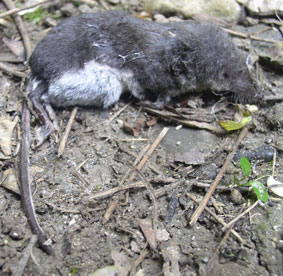
Gopher Mole - Taupe Apodemus sylvaticus Shrew - Mulot sylvestre
 .
.  .
. 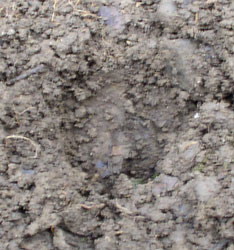
Microtus arvalis Vole (field mouse) that died after being injured by a hawk or owl (Campagnole des champs); footprint of a wild boar (sanglier)